Tag: PowerApps

  • Why You Should Become a #PowerAddict

    Why You Should Become a #PowerAddict

    Recently I was tagged to do a “confession” in the #WeArePowerAddicts challenge, started by MVP Vivek Bavishi. There’s been a massive amount of support for this over on Twitter, where many of the finest members of the community are enforcing the message that is bringing all of us together. In this post I’ll cover three aspects that I find so intriguing with this movement that is forming around Microsoft Power Platform and why professionals with a Dynamics 365 Customer Engagement / XRM background should seriously consider getting involved with it.

    The Return of the Community

    Community was the biggest single reason why Dynamics CRM became such a defining part of my professional life, starting way back in 2005. Sure, I had already earlier enjoyed the business/marketing side of customer relationship management, but it wasn’t until I had to dive deep into a specific technology that I realized the massive value of an active, global user community. The growing blogosphere around Dynamics CRM and especially the social layer of #MSDynCRM Twitter on top of it first empowered me to turbocharge my own speed of learning, then later presented me a medium for expressing my own thoughts. And here we are now.

    Lately I’ve been having this feeling of premonition combined with dejavu. Like being special agent Dale Cooper, investigating the events that are taking place in a strange town in Pacific Northwest, far away from your normal surroundings, encountering The Giant in a dream sequence and being told that “it is happening again”. Only this time the Giant is Power Platform and the place isn’t Twin Peaks but rather Redmond. Big things are happening and it’s still difficult to see exactly how the story line will play out, but you just can’t wait to see what the next episode will reveal.

    The cast of this show isn’t just made up of Microsofties. Just like in Season 1 that brought us Dynamics CRM (and XRM), the biggest stars are actually the community members who keep you engaged with exploring the many wonders of this new world of Power Platform that Community Season 2 has introduced. They eagerly demonstrate their skills with the cloud toolkit of PowerApps, Flow, Power BI, CDS, Connectors, Azure services, in combination with the more familiar Office and Dynamics products, infecting you with their enthusiasm. Some would call them PowerAddicts.

    Be a Maker, Not a Customizer

    When implementing a CRM system based on Dynamics 365, you’re always more or less adjusting the functionality of an existing application to meet the specific needs of the customer’s business processes. The starting point is always the same, and the end result depends on how much budget you’ve got for customizing the OoB experience. In general, the CRM systems deployed for various different organizations resemble one another far more than you might have initially expected, considering the great amount of effort invested in the projects to build them. It’s not a bad thing – especially since many customization requirements may not end up delivering a positive ROI anyway.

    Switch from the preconfigured first party Dynamics 365 apps into the pure platform play of PowerApps and it’s a completely different ball game. PowerApps Canvas apps start with a blank canvas, just like the name suggests. There is nothing in the tool itself that would dictate how exactly your app is supposed to look like and what features it should contain. With this massive power comes a great deal of responsibility, as you truly are the maker of the application that needs to have a vision of what you’re building as well as the capabilities to make it all come alive.

    To come up with a vision of your own, the most important ingredient is exposure to the work of others. You need to see what the #PowerAddicts community has built, get inspired by it, and then take a shot at building something new from those pieces + the ideas and requirements that are unique to your project. You may well need to have a number of hobby projects, too, since delivering a made-to-order application without first practicing how to work with your tools is going to be tough. The concept of Maker Culture describes the community’s approach to Power Platform quite accurately:

    “Maker culture emphasizes learning-through-doing in a social environment. It emphasizes informal, networked, peer-led, and shared learning motivated by fun and self-fulfillment. Maker culture encourages novel applications of technologies, and the exploration of intersections between traditionally separate domains and ways of working.”


    Wikipedia

    Sure, it’s not like you didn’t need the forums and search engines as a basic survival kit in Dynamics 365 projects, too. That’s still more of a unidirectional way of using the community to get the job done, whereas how this new generation of Power Platform Makers seems to have an intrinsic motivation to build things together.

    Escape from Planet CRM

    Dynamics 365 as a product family is constantly evolving and the number of different applications in it is growing like never before. Despite of all these exciting new opportunities that the technology stack and Microsoft’s commercial offering seem to be opening up, in the everyday life of a consulting organization it’s still frighteningly easy to fall back into doing “just CRM”. What I mean by this is the process of repeatedly solving the same problems for different organizations, through pretty much the same methods as before, just with an updated version of the tools you’ve been using for years. While it may sound like a lucrative business area, in the long run such repeated problem solving via manual labor (i.e. burning your cognitive fuel reserves) really ought to be taken over by machines – be it an app, an “AI”, or simply an innovative, repeatable service offering delivered by a commercial machine instead of a project team.

    After 13 years of Dynamics CRM experience under my belt, I often find myself torn between the value of my accumulated knowledge and the burden that it imposes on me. I pretty much know in advance what challenges a customer will have with Dynamics 365 Customer Engagement when hearing about their expectations for a CRM system and how it should fit with their organization’s existing tools and practices. I’m painfully aware of the ever expanding solution areas I don’t know well enough to give the right answer immediately when presented with a specific problem. Sure, there are the many small victories to celebrate when I can use my prior knowledge to solve problems – be it a blog article by myself on the very topic, or the ability to quickly find the right link where someone else has presented the solution. Still, with the scope of work included in a typical CRM projects it feels like I’m at a saturation point where it’s no longer possible to gain new generalist skills without starting to lose my grip on the skills I’ve gained earlier. This is of course the point where a common sense advise would be to go specialize on a more narrow area to further advance your skills – but what if you just find the role of a generalist more fulfilling in the grand scheme of things?

    What Power Platform offers to people like me is a fresh new start. Here we have a toolkit that comes with zero hard dependencies on doing things the way they’re done in the CRM business. You can take PowerApps and build a solution to pretty much any business problem that revolves around improving the processes between the employees of an organization and the data sources they have access to (or should have). There are no assumptions here about the right way to solve such problems, unlike with CRM where you are in a way competing against the long legacy of prior systems, processes, best practices. It’s not a vacuum of course, as there are always alternative solutions out there.

    The important difference here is that the boundaries of your work are truly undefined at this moment. No one knows how far these things will go, but if you have faith in the competitiveness of Microsoft cloud and its ability to attract both the right kind of commercial players to form an ecosystem as well as those inspired professionals that build up the community around it (hello #PowerAddicts!) then you know it’s going to be far bigger than CRM ever could have reached.

    Power Platform allows the seasoned CRM professionals to return back to the role of a student. With new tools like PowerApps and Flow you are pretty much starting from scratch and you need to ramp up your skills in the same way as you might have done with MSCRM vX.0 back in the days. If you just can mentally position this work the right way and approach it primarily as a learning experience instead of a ToDo item in a project backlog, then OH MY GOD how much fun it is! Seriously, these tools can give a motivated citizen developer the kinds of superpowers that I couldn’t have even imagined just a couple of years ago. It ain’t all just marketing – it’s the real deal.

    Now’s Your Turn

    If what I’ve said here resonates with you and you’ve been hoping to find a way to get back into the game 100%, then you owe it to yourself to get truly involved with the Power Platform. Become an Addict.
  • Building The Platform for Every Developer

    Building The Platform for Every Developer

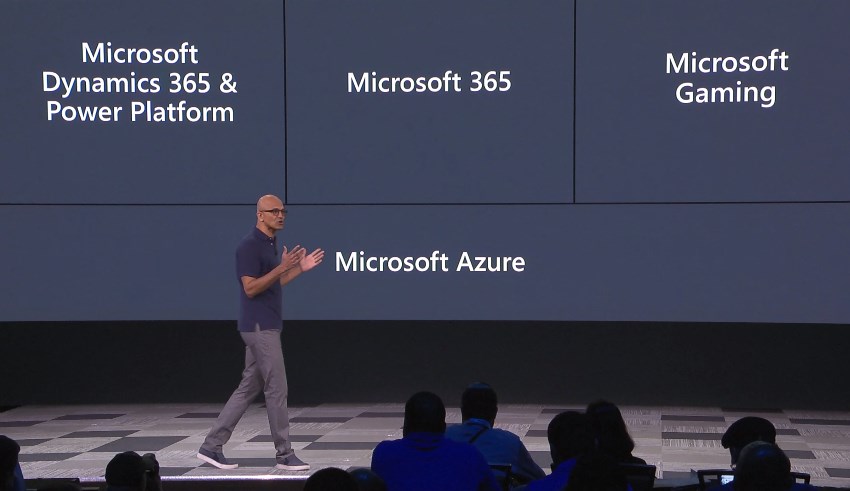
    For the first time ever at Microsoft Build conference, the Power Platform was presented right at the start of Satya’s keynote this year! Woo-hoo!

    Of course this time last year there wasn’t yet the name “Power Platform” to even reference at Build. We had only just seen the merger of XRM and PowerApps into something that was a bit of a puzzle to communicate to partners, let alone customers. Well, the puzzle hasn’t exactly been solved yet, but it is still quite remarkable how far we’ve come in one year already.

    Last year’s sessions at Build 2018 were mostly about introducing the concepts like Common Data Service to a .NET developer audience that probably had zero hands-on experience with any Dynamics product for the most part. Not a whole lot of noise was made about this entry into the #MSBuild space. Fast forward to 2019 and now the vision of uniting pro developers with “every developer” is already touted at the keynote sessions. Not just that, but Satya is saying that recent re-architecting of Dynamics 365 on top of Azure infrastructure and services should be examined as an excellent reference for anyone who’s planning to build their own products on SQL Azure.

    During the week of Build, the product team behind Citizen Application Platform (“CAP”) puts aside their Citizen caps and pulls on the pro dev hoodies to talk about topics like solution management, PCF component development, Azure Functions, DevOps pipelines and all the nerdy stuff that would scare away the folks who normally create PowerApps. It’s inevitable that as the tools for app makers get more mature the next barrier to world domination will be in getting not just the IT admins to build the necessary automation and governance around Power Platform in enterprise environments but also in finding a way to make pro-coders play with low-coders.

    If you look back at XRM, then there’s really nothing new about this division of roles. It has always been the case that code illiterate business analysts do the point & click configuration work for data models and business processes, while the XRM developers spend their time with the SDK enabled client-side extensions, server-side logic and system integration tasks. Fundamentally what the Power Platform does is it enables everyone to level up in their game. Application design on the UI level and interfaces to connected data sources can now be handled by those business analysts who are willing to learn new low-code tricks. Similarly, the developers get to break free from the boundaries of the IIS and SQL Server boxes, to harness the amazing power of The World’s Computer (Microsoft’s nickname for Azure) to hook into new AI services and crunch the contents of The Real Common Data Service.

    If the app builders are about to step up their game, so must the sales machine of Microsoft. The big push from Redmond is now on ensuring that an ecosystem will emerge on top of Power Platform. The new partner program for Business Application ISVs, lead by Steve Guggenheimer, is trying to make a bigger splash by combining the earlier models of Azure Marketplace and the Dynamics 365 focused AppSource into a single channel that could actually serve the grand vision of a no-cliffs development platform. As always, you should check out what The Other Steve has to say about the upsides to the new program, before making your conclusions on whether it’s just a new tax on ISVs or an opportunity worth pursuing for a growing number of MS partners.

    To summarize the announcements and buzz around Power Platform at Microsoft Build 2019 conference, I’ve compiled this handy lil’ Twitter Moment for you to enjoy:

  • PowerApps “Starter” Plans Capabilities Demystified

    PowerApps “Starter” Plans Capabilities Demystified

    There are many ways to get started with PowerApps on the cheap. What I mean by cheap here is the types of licenses that have certain limitations on what you’re allowed to do with the PowerApps platform and apps, in exchange for their lower cost. In other words, “less than PowerApps P2 capabilities.” In this article I’ll try to illustrate what these limitations are, especially when working with data in the Common Data Service (CDS).

    As was announced already one year ago, PowerApps Plan 2 at $40/user/month is the official platform SKU that allows you to build and run highly complex custom applications, on top of the same platform that also powers Dynamics 365 Customer Engagement (CE) applications. If you have a license for any CE Enterprise App or Plan, you’ve also got the full power of PowerApps P2 at your disposal. As long as you can afford to fork out at least $95/user/month, then you’ll get both the first party Dynamics 365 App plus the unlimited platform usage, which of course is the best scenario in terms of how to digitally transform your business processes with the help of MS Cloud.

    When building custom PowerApps, often times the audience that would need to have access to these apps is much larger than your team of sales people who would use the CRM application manage customer interactions and sales pipeline, for example. The apps may be replacements of legacy Excel sheets or even paper forms, which are not all that complex when compared to full Enterprise Sales applications, and they might not even be used that often per single user. However, you may still need to enable each and every employee in the organization to use the application to complete the task it’s designed to manage.

    For these kind of scenarios the licenses should preferably fall more into the Office 365 (or Microsoft 365) territory, so that they can be standardized as the tools that all information workers in the company have at their disposal. Luckily there is a plan called “PowerApps for Office 365” that already provides the basic capabilities for app building and usage bundled into the license that almost everyone has these days. The limitations are that it’s really meant only for working within the Office 365 stack of services. The next level up from there, PowerApps Plan 1, is also priced at $7/user/month which is only a fraction of the price of Enterprise Sales App, for example. Here you get access to CDS and various types of connectors to other systems where your business data may reside.

    Up until this point, the PowerApps plans and capabilities line up nicely into a stacked Venn diagram with these layers:

    Where it starts to get more complex is the Dynamics 365 CE licenses that are below the Enterprise Apps and Plans. These do NOT include the PowerApps P2 capabilities but a different plan called “PowerApps for Dynamics 365 Applications”. In the CE product portfolio, this plan is included with the following licenses:

    • Dynamics 365 for Team Members ($8)
    • Dynamics 365 for Customer Service Professional ($50)
    • Dynamics 365 for Sales Professional ($65)

    You should look into the PowerApps & Flow Licensing Guide to get the full details about what the limitations for different plans are. Now, since these type of long documents aren’t great at highlighting what the “gotchas” in the licensing model are, here’s my attempt at drawing a picture around these lower end PowerApps plans and key capabilities. Please note that I’m only covering the Team Member license here when referencing the “PowerApps for Dynamics 365 Applications” plan, as it’s more in line with the price range of the aforementioned “starter” plans.

    Let’s start from the left, meaning the one capability that is included even in the “PowerApps for Office 365” plan: run standalone Canvas apps. For some peculiar reason, this is not allowed for users with the “PowerApps for Dynamics 365 Applications” plan. The only thing that they can do is “run extended first-party Dynamics 365 (Model-driven) apps within the context of the application use rights”. So, an embedded Canvas app on the account entity form is allowed, but launching any app directly from either web.powerapps.com or the PowerApps mobile app is forbidden.

    This leads to an interesting scenario, because essentially the “PowerApps for Dynamics 365 Applications” plan doesn’t give the users the right to run any type of app that says “PowerApps” in the header bar. Only the applications with “Dynamics 365” branding are within the boundaries of this plan, which makes you wonder why it even need to be a plan in the PowerApps licensing model when the Dynamics 365 licensing should in theory cover it.

    (more…)
  • The Real Common Data Service Emerges

    The Real Common Data Service Emerges

    When Microsoft announced one year ago that XRM would become CDS v2.0 (officially Common Data Service for Apps), there wasn’t yet any big system redesign implemented to make this a physical reality. Today we are much further down that road where CDS truly becomes a Service that has less and less to do with the familiar XRM databases that we’ve previously been working with. In this blog post I’ll explore the three data related dimensions that give us an indication of where CDS is heading as a part of the Microsoft Power Platform.

    CDS is now Dataverse!

    While reading this article, you can translate the term “Common Data Service” to now refer to its new name, Microsoft Dataverse. See this post for comparison between CDS vs. Dataverse.

    Dynamics 365 Storage Model Changes

    As a part of the April 2019 release train, MS is changing the way how data storage is managed for both Dynamics 365 and PowerApps customers. It hasn’t been an official feature bullet on the release notes document, but that doesn’t mean its significance would be any less than what the shiny apps demonstrated in the April 2nd Virtual Launch event have.

    A new version of licensing guides for Dynamics 365 and also for PowerApps and Flow (for the first time ever!) was released in April. This outlines the commercial impact of the new model to customers, which is probably what most of us will have first paid attention to. Yeah, whenever the pricing mechanism of a widely used MS cloud service changes, it will be a big deal. What makes it even trickier is that MS considers storage as a “subscription add-on” for which they don’t publicly disclose any per GB list prices. I’m not entirely sure this model is beneficial for their ambitions of turning Power Platform into an actual foundation for building third party and customer specific apps, but I guess the shadow of the old CRM and ERP world still looms above this world when it comes to licensing and pricing practices.

    Let’s forget licensing for a moment and focus on the technical changes for Dynamics 365 online environments. All of the existing data that used to be stored in the Azure SQL relational database will in the future be divided into three specific storage types: database, file, log. This should have no immediate impact to customers, as the migration will be taken care of by MS. Their promise is that nothing should change in the way how users and developers work with data, since the APIs that govern access to this data will remain unaffected.

    File data will be in Azure blob storage, as this is the most efficient way to handle miscellaneous documents, images and other “stuff” that may end up inside a typical Dynamics 365 system via features like email tracking that carries over the attachments. Why would you ever store this in a relational SQL database to begin with? Well, the simple reason is that the original on-prem architecture of XRM had no other secure place to put these items, so it was all lumped up there. Now when CDS is a native cloud service, there are much more options available.

    Log data will be in Cosmos DB. This will probably offer a more suitable architecture for managing things like plugin trace logs, audit data and other items of similar nature. What should be noted is that Microsoft’s plans don’t just stop at this IT admin activities level. In a recent podcast by MVP Mark Smith, we heard the General Manager of Power Platform, Charles Lamanna, describe this storage type to be designed as the future place for other types of observational data, too. Charles referred to things like IoT device sensor data, which should give you an idea of how this again is data that is A) relevant to many CRM use cases and B) in no way optimal to be stored inside that relational XRM database.

    One significant and very welcome change that is introduced as a part of this new model is that there will no longer be any license cost tied to the number of instances you have in the cloud. Previously you had to buy add-on licenses for acquiring production and non-production (sandbox) instances for developing, testing, training and in general managing your complex Dynamics 365 online environment. Once the new subscription terms kick in, you’ll have the ability to create as many instances as you like, provided that you have sufficient database capacity available. A major driver behind this change is surely the PowerApps side, in which the licensing terms already granted any user with PowerApps P2 license to create 2 CDS environments for their applications. (For more details, see my presentation on Demystifying Dynamics 365 & Power Platform licensing.)

    In the short term, this storage model change should not result in much functional changes for the Dynamics 365 customers. Depending on when your current subscription renewal date is, the new terms will be applied either at that point in time or the renewal after that (if you choose to hold on to the old model for one more subscription period). Any new customer will likely be leveraging the new pricing model starting from April 2019.

    It’s important to understand that the actual data storage technology change and the commercial terms that are applied are not tied to one another. Migration of your Dynamics 365 data to the new database/file/log model will probably take place much sooner than what you’ll see in your subscription fees. Refer to the admin documentation on Common Data Service storage capacity for details on how you’ll be able to analyze and manage your storage consumption in this new model.

    Diving Into The Data Lake

    When looked at purely from the storage license model changes for Dynamics 365 customers, the story would end here, with the three storage types. However, the bigger picture of how data is used as a part of the Customer Engagement systems that cover various digital touchpoints is much broader. Or should I say “bigger” as in Big Data? As much as I dislike the casual use of tech marketing hype terms like Big Data and Artificial Intelligence, there’s no escaping the fact that the familiar world of CRM systems founded on SQL databases is being disrupted by what machine learning models and big data systems can offer today.

    (more…)
  • Demystifying Dynamics 365 & Power Platform Licensing: Part 2

    Demystifying Dynamics 365 & Power Platform Licensing: Part 2

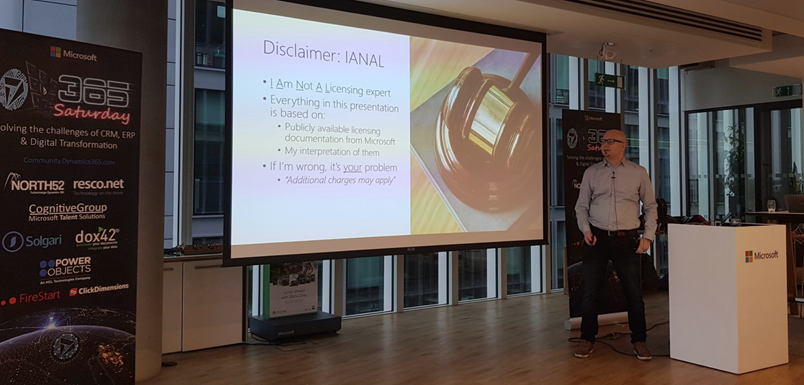
    In the previous post I highlighted some of the recent updates on Dynamics 365 licensing. Now let’s have a look at how the birth of Power Platform has further expanded the licensing options for delivering business applications to customers. Just like before, the content is taken from my session at Dynamics Power 365 Saturday London 2019 and you’ll find the complete slide deck on SlideShare my Slides archive:

    PowerApps vs. Dynamics 365 CE licensing

    Common Data Service for Apps (CDS) environment is essentially the same as a Dynamics 365 Customer Engagement instance, just without the first party apps from Microsoft. If you can get CDS both via PowerApps license as well as Dynamics 365, then it’s important to understand what the subtle differences there may be. Currently at least these features are missing from a pure CDS environment when you provision it for PowerApps and not Dynamics 365:

    There are interesting differences in how the licenses grant you resources when comparing Dynamics 365 CE and PowerApps. On the storage side you get the same starting 10 GB per tenant and as you purchase more user licenses they give you more storage quota. As for the actual instance/environment count, on the Dynamics 365 side you need to pay for additional sandbox and production instances (roughly €125 & €460 per month). PowerApps is far more generous in this sense, as each P2 user license gives you 2 environments. With 100 users you could therefore have 200 environments for your organization, which sound like a ludicrous amount if you’d think of them as CRM instances. That’s where the broader business application scope of Power Platform and the citizen developer mindset clearly differs from the Dynamics way of doing things in a controlled, centralized manner.

    One area which Microsoft has left very unclear in their licensing documentation is what level of PowerApps user rights are included in the non-Enterprise Dynamics 365 licenses. A recent presentation finally listed the restrictions that licenses like Team Member, Sales Professional and Customer Service Professional face in their ability to leverage PowerApps. With the new feature that allows embedding canvas apps into model-driven app forms, the rights of all Dynamics 365 licenses now do include access to these embedded experiences. However, running any standalone PowerApps canvas app is NOT included in these cheaper licenses, so you’ll need a separate license for those scenarios (like PowerApps P1, or the rights bundled in Office 365).

    Looking at it the other way around, what Dynamics 365 style of functionality you get access to with a PowerApps license, the differences between P1 and P2 can be a bit tricky to understand in real world scenarios. Sure, P1 is limited to canvas apps usage only, but also on that side we have exclusions for restricted entities and complex entities. The concept of “complex business logic” is the real gotcha, though, as enabling real-time workflows or plug-ins for an entity will instantly switch the requirement level to P2 license. Here’s how you might fall into this trap:

    For anyone who’s either been building more advanced apps or has planned to do this and has stayed within the PowerApps & Flow licenses bundled in with Office 365 subscriptions, you’ll need to pay close attention to the updated license terms that came into effect on February 1st. In short, usage of custom connectors, HTTP custom actions and on-premises data gateway were moved to PowerApps P1 level and are no longer “free” with Office 365 plans. For a deeper dive into the practical implications of this change, be sure to check out this comprehensive licensing guide to Microsoft Flow and PowerApps by MVP Jussi Roine.

    The push for getting organizations to adopt CDS environments as the basis for their PowerApps canvas apps and therefore upgrading their license package to the paid tier of PowerApps P1 will be a milestone Microsoft undoubtedly wants to reach. This can initially be a hard sell if there aren’t that many apps in production use and the cost of these advanced features would have to be absorbed into their business case calculations. However, if this can be viewed as a proper platform story that is about acquiring licenses for the common foundation of hundreds of apps to come, then the math is far more favorable.

    Model-driven apps and P2 of course represent another big jump in the relative cost of a single license vs. P1 and “free” Office 365 license. Then again, when viewed from a Dynamics 365 perspective, the ~€34 price of P2 is so much cheaper than a Sales Enterprise app license at €80 (and with none of the Sales Professional limitations) that even building your custom Sales app on top of the platform becomes an interesting scenario. That’s one of the changes that has take place with the Dynamics 365 licensing guide wording, as the earlier restrictions about replicating existing 1st party app features have been removed:

    That’s it for the licensing mysteries that I had the pleasure of covering in my 365 Saturday session. Grab the full deck from SlideShare and keep in mind that by the time you read it these licensing terms may well have changed already! For example, the PowerApps licensing page on docs.microsoft.com was updated on Feb 1st and there was a new January 2019 version of the Dynamics 365 Licensing Guide published already.

  • What’s Coming in April 2019? Start from PowerApps & Flow

    What’s Coming in April 2019? Start from PowerApps & Flow

    As promised, Microsoft published the release notes for the April 2019 release wave on January 21st. Instead of just a high level blog post, there’s a huge list of items in 16 top level categories at the docs.microsoft.com site. If you want to consume the content in an offline mode, there’s a PDF version available of the same content, with 315 pages of April 2019 release notes.

    315 pages? Ain’t nobody got time for that!

    Yeah, I know. Whether you’re working with Dynamics 365, PowerApps or Power BI, you probably aren’t just sitting around, waiting for some work to come your way. These are all high demand technologies that pull in pretty much all of the available consulting resources into actual project work with the tools. To make things worse, the communities around them grow larger every day and flood our social streams with blog posts, podcasts, videos, webinars, conferences full of “can’t miss this” information.

    The problem is, though, that you haven’t got all that much time to get into grips with April 2019. It may sound far away, but the preview availability of many of these features (but not all) will start already on February 1st – 10 days from now at the time of writing. What’s even more important is that this time the features will be rolled out immediately to all customers, once Microsoft thinks they are ready. There’s also a date available for this particular moment and that is April 5th. You’ve got around 2 months from preview to GA.

    How should an ex-XRM pro / Dynamics 365 Customer Engagement specialist then optimize the available time to learn the important parts about April 2019 release? I’ve got one tip for you, which may sound unintuitive at first, if you spend your working days mostly with things that say “Dynamics”. Here goes: Start reading the release notes from where it says “PowerApps”:

    For real? Yes. We no longer live in a world where PowerApps would refer to the quickly generated mobile apps that you’d connect with SharePoint lists. It is the platform on top of which much of the “Dynamics 365 for X” products listed at the beginning of the release notes now live. Whereas each of these 1st party apps touches just those environments that happen to be using them, PowerApps and Flow are relevant for everyone. Common Data Service for Apps a.k.a. CDS is bundled within those two topics. If you’re operating in Dynamics 365 Online environments, you are working with CDS.

    In the PowerApps section you’ll find platform and customization features like:

    • New form and view designers GA
    • Canvas app embed in model-driven apps GA
    • PowerApps Control Framework (PCF) preview
    • Unified Interface as the default UI
    • Offline data access
    • Azure AD Groups for security roles & record sharing
    • New tooling for plug-ins and solution packaging

    Those are examples of the traditional XRM side of the house being extended under the new PowerApps brand. Microsoft Flow is equally important for any Dynamics 365 CE system customizer going forward, due to enhancements like:

    • Parity with CDS (XRM) asynchronous workflows
    • Calling XRM workflow actions from Flow
    • Batch operations for CDS records
    • Transaction support via change set scopes
    • Calling child Flows
    • Multiple trigger events
    • Flow parameters inside solutions

    Sure, there are great new features and improvements listed for each of the Dynamics 365 apps, too. Also a wealth of opportunities for further expanding our Dynamics pro footprint in business application development on the Office 365 side (thanks to PowerApps, Flow). Not to mention the growing data integration capabilities via CDM, or the whole world of BI and big data. Still, we know that there’s probably not enough time to try and absorb these things right away. Which is why my recommendation is to start by looking at what the common business application platform is forming into. Then once the preview is available, update your sandbox into the latest bits and start experimenting with these things in practice (and possibly hunting down those features that actually shipped in the preview version).

    OK, I have to admit it: even I didn’t dive straight into PowerApps myself, instead spent a bit of time with the full release notes document. If you want to know which items caught my eye, then you’ll find them in this Twitter Moment collection.

  • Top 3 Themes for Dynamics 365 in 2018

    Top 3 Themes for Dynamics 365 in 2018

    This time last year I wrote my Top 3 themes of 2017 article on what were the major events and directions from the year for the Dynamics 365 ecosystem. The start of a brand new year always feels like the logical moment to reflect back on the past 365 days, so this sounds like a worthy tradition to keep going. Here are my Top 3 picks from 2018 and some thoughts on how they might influence the direction of the year 2019 ahead.

    Power Platform

    The biggest single announcement of 2018 came in March when the Dynamics 365 Customer Engagement and PowerApps platforms were merged into one. It wasn’t until July that we began to see the Power Platform term used in describing this new suite of tools that now is the way to extend both Dynamics 365 and Office 365 apps, as well as building brand new apps for customer specific scenarios.All of a sudden the technology that had been bubbling under in the Dynamics CRM corner room is now brought onto the main stage of MS business software show.

    The immediate impact was that XRM became CDS 2.0 (Common Data Service for Apps),which probably hasn’t been all that easy for non-Dynamics professionals to understand if they only paid attention to official MS information sources covering the topic. For the Dynamics partners a nice upside in this merger was PowerApps P2 becoming the “naked XRM” platform license they had been asking for many years (compared to the earlier Dynamics 365 Plan license for bundling CRM + ERP, which I don’t think was in as high demand).

    A more subtle but equally important change was the birth of model-driven app and canvas app concepts. No, not the marketing terms nor the division into two app types, rather the fact that these different client technologies now had a clear need to start approaching one another in terms of how they behave, what data sources they support and how they are administered. Examples of these have become visible through recent announcements like:

    It would be perfectly justified to call 2018 “the year of the platform”, considering how significantly the investments from MS side seem to have shifted from Dynamics 365 to the Power Platform. During 2019 we’ll see if the partner channel can follow along, to transform their offering into something more in line with the PowerApps story than the traditional CRM business models that have mostly been just revised for the cloud based environments during recent years.

    A similar challenge awaits the professionals who’ve been working in this business and now need to figure out how to put their existing skills into use in projects that may not even mention the Dynamics product name anywhere. Plenty of new skills will also need to be acquired for leveraging the broader toolkit. The recent announcement of Dynamics 365 exams certifications to be retired gives an indication of the looming new requirements that await the MCP’s wanting to remain current with their certification record.

    One Version

    My Nr. 2 theme from 2017 was the App/Plat separation that largely took place as part of version 9 release. Now that Dynamics 365 CE is running purely on Azure after all orgs get to v9, the next logical step is to start delivering new releases on it the same way a modern cloud native product would. PowerApps, Flow and Power BI have already been operating as a service with a single version for all customers and now the platform underneath Dynamics 365 as well as the Apps on top of it are set to transition into this model. The July announcement of how Microsoft plans to deliver predictable updates with continuous deployment for both Customer Engagement and Finance & Operations is another major event of 2018 that will shape the future of these product lines and introduce a new reality for customers who build their digital business processes on top of them. The old CDU process for version update scheduling is no more and everyone will get the April 2019 update bases on the public release schedule.

    (more…)
  • Ignite 2018 & The Power of Microsoft’s Platform

    Ignite 2018 & The Power of Microsoft’s Platform

    Just like last year, I was fortunate to be able to escape the chilly Finnish autumn weather to sunny and warm Orlando this September, to attend the Microsoft Ignite 2018 conference. This time my visit to Florida did not contain a whole lot of sunlight, though, as my stay in that region was focused strictly on the days of the event, which meant I was mostly wandering back and forth the endless corridors of Orange County Convention Center. With 1600+ sessions crammed into 5+1 days, you’re always going to have a packed agenda at a conference like Ignite where 30,000 fellow Microsoft geeks are swarming around to gather the latest announcements and demos from their favorite technologies and evangelists.

    I’ve written a summary over on LinkedIn of what were the main themes I picked up from Ignite this year. In short, Power Platform was front and center in the story of how Microsoft is further helping organizations to digitally transform their business processes. Not just from the traditional CRM and ERP scope of Dynamics 365 but on a much broader scope that speaks to the audiences that might not have otherwise ended up exploring how PowerApps, Flow, Power BI and CDS can connect their existing Office tools into a more automated flow of data through predefined pipes – as opposed to the more free-form processes that information workers previously had to agree on, to efficiently collaborate with their colleagues.

    On the one end we saw a lot of praise for the unlikely heroes that have managed to pick up a toolkit like PowerApps without any developer background or formal position in IT, and build applications that their organizations have adopted into their day to day routines. Even though these citizen developer scenarios may not seem all that complex for professional software people, the key lesson is that these manual processes would have been unlikely to get digitalized with off-the-shelf or custom built software anytime soon. Making the tools for digital problem solving accessible to the people who intimately know the problem is what’s really shortening the time to value, which in turn drives the growth of the community around the Power Platform. It’s not capped by the number of companies looking for a CRM deployment project, rather it’s fueled by the amount of data and cloud based services that make this data available to the platform via connectors.

    At the other end of the spectrum there was the true enterprise scale where this data needs to be harnessed with advanced tools and technologies to remain competitive in today’s global business. AI is the kind of buzzword that cloud was in the beginning of this decade, but in the same way as cloud computing became an everyday commodity, we’re bound to see if not artificial intelligence (AI) but at least machine learning (ML) algorithms find their way into everyday tools in the very near future. All of the major apps in the Dynamics 365 CE suite recently received their AI extensions that aim to bring intelligence built into the packaged applications, not just via Cognitive Services from Azure that developers and data scientists must plug into the business applications. Another example of the enterprise application providers’ focus on squeezing more value out of data was the Open Data Initiative by Microsoft, SAP and Adobe that took the center stage in the opening keynote were the three CEO’s explained why it’s in their best interest to help customers “deliver unparalleled business insight from their behavioral, transactional, financial, and operational data.” It’s really interesting to see that the Common Data Model (CDM) may be evolving into something that actually connects applications across big tech vendors.

    Among all these tech giants, there was also a 20 minute slot where an ordinary Dynamics 365 guy like me got a chance to tell a bit about what we’re building in this small country of ours. My session was called “Onboarding customers to Microsoft Dynamics 365 for Sales via PowerApps” and you can catch the YouTube recording of the session or just check out the slides if you’re interested in knowing how we at Elisa aim to make use of the Power Platform as part of our product offering. It was the first time for me to be a speaker at an event the scale of Ignite, so a big thanks to Microsoft for providing me this exciting opportunity!

    Even though Ignite wasn’t really a Dynamics 365 themed event like the Business Applications Summit a couple of months earlier, there were a lot of interesting demos about the brand new functionality rolling out as a part of the October 2018 release shortly. I compiled some of the highlights tweeted out on the #MSIgnite hashtag during the event onto this Wakelet collection for you to check out if you missed the live event excitement.

    Just like in previous Microsoft conferences, the learning doesn’t stop with the closing of the venue doors. The Ignite on demand sessions provide a library of videos and slides that you definitely should be browsing through to keep up with the latest news around what’s coming to Microsoft Business Applications and the many connected products. Now, if you just happen to be located in Helsinki next week, then I have to promote the brand new Finland Dynamics User Group (#FDUG) and our very first Meetup event on October 18th where I’ll be doing a “whole Ignite in 30 minutes” summary of what I found most interesting in the various Power Platform related sessions I attended. See you there!

  • Winter in July: Release Notes for Next Dynamics 365 Version

    Winter in July: Release Notes for Next Dynamics 365 Version

    While I’m over in Finland enjoying the biggest and longest heatwave ever, some of my fellow MVPs and Dynamics 365 community members were attending the first ever Microsoft Business Applications Summit this week on the other side of the globe in Seattle. As much as I would have enjoyed sitting in cold & dark conference rooms instead of trying to hide from the burning sunlight, this time I had to rely on the others to share the latest news from #MSBizAppsSummit while I attempt to enjoy the summer vacation.

    A large share of the conference’s announcements are covered in the October ’18 Release Notes, which you can download in PDF format right here. This is a massive “drop” that follows the format of what we already saw with the previous April ’18 release. Even though it’s been made available during the summer heat, it’s actually a list of features that Microsoft intends to (mostly) make available between October 2018 and March 2019. So, winter came early this year, which is a positive thing, since now we have several months of advance notice of what’s in the product team’s pipeline. These release notes essentially replace the earlier roadmap.dynamics.com website, which in itself was kinda cool (running on top of Dynamics 365 Portals and all) but didn’t communicate the actual road ahead all that well. So, these twice a year PDF releases with ongoing updates to their detailed content is the thing you need to pay attention to now.

    One small but notable difference is that Microsoft is no longer calling it “Dynamics 365 Release Notes” but “Business Applications Release Notes”, which together with the Summit’s name reflects the new context in which we all should approach whatever parts of the toolkit we use in our end user solutions. Recently also the Microsoft Most Valuable Professional program updated its terminology, and now the previous Business Solutions MVPs are in the Business Applications MVP category.

    The previous April 2018 release was the first time when we saw the new organizational structure of Microsoft Business Applications Group (“BAG”) bringing previously separate product offerings under one roof, with CRM & ERP products being represented in the same release notes list as PowerApps, Flow, Power BI. That also was the time when things like the Common Data Service for Apps were announced as replacements for what XRM previously stood for. However, from a raw functionality level there appeared to be a greater urgency in reaching GDPR compliance before the May 25th deadline than to actually push out new integrated features for the CDS for Apps platform.

    Reading through the October 2018 release notes, this time it’s very different. There are huge steps being take to bring together the “ex-XRM” technologies with the newer products and make it truly one Power Platform. Here are selected highlights:

    • PowerApps Canvas Apps and Flows can now been included inside CDS for Apps solutions, giving them the ALM story for enterprise grade deployment across different dev/test/UAT/prod instances. This clearly makes them no longer a “power user” focus tool but a building block for credible business applications.
    • PowerApps Canvas Apps can be embedded inside the model-driven app entity forms. The traditional UI of XRM apps that was generated from metadata will get a touch of pixel-perfect design options that the Canvas Apps have always been about. This ability coincides with the new options to freely set the app size instead of earlier phone/tablet format limitations.
    • Flow is promised to reach parity with async workflows. Even though the transactional capabilities of real-time workflows (similar to plug-ins) is not yet within October 2018 scope, that’s one bold step to make the XRM workflows history and move their logic into Flows.
    • Power BI reports & tiles can be embedded onto CDS for Apps entity forms and the record context as well as any record attribute can be passed to them for data query and visualization filtering. Surely pretty much anyone has at one time wished “gee, wouldn’t it be sweet if instead of working with this limited ASP.NET chart XML from Dynamics CRM 2011 we could leverage those modern Power BI charts instead”. Well, that day is getting closer!
    • PowerApps Canvas Apps will FINALLY offer native support for lookups, option sets and datetime fields. For anyone who’s tried to replicate pretty much any CRM functionality with PowerApps, this will have been a very early stumbling block. Not so easy to solve with separate product teams inside MSFT apparently, but within the new Business Applications Group these gaps for real life solutions can now be filled.
    • There will be a single mobile “player” for both Model-driven Apps and Canvas Apps. When previously the Dynamics 365 Customer Engagement mobile app for Unified Interface and the PowerApps apps lived behind separate app icons on your phone, soon the users may no longer see any difference when switching between different business applications.

    These are only a few items in the long list of upcoming features that the 239 pages of October 2018 release notes contain. A lot of important unification is also taking place in the author and admin experience of how Dynamics 365 Customer Engagement apps, CDS for Apps platform, PowerApps Canvas Apps and Flow can be used together for your solution design needs. Similarly, a lot of advances are being made on the UCI front, with the legacy web client being more and more replace with Unified Interface. Then there’s the whole CDS for Analytics side of things coming up, with promises for new AI apps and capabilities. You’re going to need to read through a wealth of blog posts to grasp the full spectrum of what Microsoft is planning to launch, so a good place to start is the Scott Durow Top 10 favourite features in this release.

    The April 2018 release for Dynamics 365 CE was a bit of a surprise due to the fact that it wasn’t officially a major release like v10 or even v9.1, instead it was only a v9.0.2 update. Deployed automatically to your v9 instances, with no CDU process to schedule the update from the available time slots. Now in July we got a confirmation from Microsoft that this reflects the way all future updates will be rolled out, in the blog post Modernizing the way we update Dynamics 365. Looking at how the Power Platform will increasingly be consisting of functionality that isn’t found in the “XRM server”, the automatic updates make a whole lot of sense. It remains to be seen how the remaining on-premises customers will be serviced with the updates and to what extent there will be feature parity. At least we now got a confirmation at the Business Applications Summit 2018 that there will be a new on-prem release this fall, so there appears to be a plan to bring things like UCI available for those who still prefer to run their own business application servers.

  • Business Application Platform at Microsoft Build 2018

    Business Application Platform at Microsoft Build 2018

    Build is the lead event for all things developer related in the Microsoft ecosystem. This year was the first time that the Business Applications side of MS’s stack also had dedicated tracks in the event agenda. While I didn’t attend the event myself (the Elisa Microsoft developer community was of course represented in Seattle), I was quite curious to see what kind of story is being told to the dev crowd about CDS for Apps, Dynamics 365, PowerApps, Flow and Power BI. Luckily there’s the virtual Build Live experience for viewing the live streams from the event these days.

    What’s not so fortunate is that the Build site doesn’t seem to provide a very good experience for discovering the specific content from a particular technology. At least the content selector for “Business Apps” doesn’t really show all too many relevant sessions at the time of writing:

    The good news is that us virtual attendees can also access the session catalog for My Build, which allows to perform either free text searches or filter the content to products in the Business Application Platform category:

    Once we know the IDs for the sessions we’re interested in, we can then dig the content from from Channel 9’s Build 2018 page. There we can continue our journey to the YouTube videos of session recordings and SlideShare for the presentation decks. Not really all that hard for anyone who’s accustomed to navigating the maze of portals that MS partners encounter, but of course it might be a bit tricky for newcomers into the ecosystem. So, just for the sake of convenience I though it might be useful to have the most relevant Business Applications content fro Build 2018 collected onto a single page. Which is what this blog post essentially is about.

    Accelerate your SaaS App development using the power of the Business Application Platform (BRK3411)

    “Join this session to learn how the Business Application Platform can accelerate the time to market for your next Line of Business SaaS app. Through the lens of an ISV/software developer, we will walk you through the entire application development process showcasing what it takes to build a new, composite app from the ground up using out of the box no-code/no-code tooling, to extending with custom code and connectors through to packaging and publishing to AppSource allowing you to reach 120M+ monthly active users. During this session we will also touch upon the value of the Common Data Service for Apps as it applies specifically to you as an ISV, how you can extend and contribute to the ISV ecosystem flywheel and greatly reduce both cost and time to market for new SaaS apps.”

    A good introduction to what the steps for app development are when working on the Business Application Platform (BAP) as opposed to other environments. Includes a demo of the development path as well as discussion on what investments are being made to deliver a more seamless app delivery experience in the future.

    Be sure to check out the slides if you want to see the “before” and “after” architecture of XRM, PowerApps + CDS 1.0, and the final Common Data Service for Apps (a.k.a. CDS 2.0):

    There are more ways than ever for partners to work with the platform, now that it also encompasses PowerApps and CDM:

    Watch the session recording on YouTube, then view the presentation on SlideShare:

    Extending PowerApps and the Common Data Service for Apps with custom controls and server side logic (BRK3403)

    “Professional developer extensibility is a key capability to the Business Application Platform. We’ll focus on enriching model-driven PowerApps solutions with server-side code and custom controls on the Common Data Service for Apps. We’ll utilize the developer toolkit and write code for native plugin development, use of functions and logic apps, Web API, Administration API, and the Virtual Entity subsystem.”

    Whenever Matt Barbour delivers a session, you’re going to want to pay close attention. This session is no exception, as Matt talks through the story how XRM evolved into CDS for Apps in his candid manner and explains to us what decisions and choices were made along the way. No matter if you’re an XRM old timer or only starting to look deeper into app development story of CDS for Apps, you need to watch this session.

    While the logical architecture of CDS is quite familiar to friends of the XRM SDK, the important bits are about how plug-ins will eventually be replaced by Azure Functions, how Microsoft Flow now owns the Business Rules story, and all these details about future investment areas that you can pick up from Matt’s presentation. After all, the former XRM solution management system will be how you’ll deploy also Canvas Apps, Flows, connections and gateways from one instance to another in the future, so it’s far more relevant to an ever larger audience.

    Watch the session recording on YouTube. No slides available so far, but Matt only had a few anyway and mostly focused on the demo side.

    Build and extend applications for Office 365 with PowerApps and Flow (BRK2303)

    “Come discover the capabilities of PowerApps and Flow as the unified high productivity application development and workflow platform across Office 365 and Dynamics 365. As the successor to InfoPath and Access Web Apps, PowerApps enables users to build both simple forms to advanced, feature-rich apps, while Flow as the successor to SharePoint Designer Workflow, enables users to build automated workflows for a range of scenarios from notifications to approvals. In this session, we’ll cover integrations with SharePoint, Dynamics 365, Microsoft Teams, Microsoft Graph, Excel, and more. Start extending and building apps and workflows for Office 365 and Dynamics 365 today!”

    If the earlier presentations were more developer focused platform discussion, this is a more citizen developer themed session that demonstrates the built-in integration points of where the different MS provided apps meet each other. If you have less hands-on experience with the non-Dynamics side of things, then have a look at these demonstrations to catch up on things.

    The slide deck contains a lot of good reference material for you to store on your hard drive for customer facing presentations. There are also updated product roadmaps for PowerApps and Flow that are always interesting:

    Watch the session recording on YouTube, then view the presentation on SlideShare:

    Automating business processes and approvals with Microsoft Flow (BRK2302)

    “Use Microsoft Flow to easily add business process automation and approval processes to your solutions. You’ll learn to build Flows with a few simple clicks and extend your learnings to more advanced techniques and expressions used to build complex workflows. Finally discover how you can take it up to Azure Logic Apps when it makes sense.”

    Stephen Siciliano has been doing great presentations on Microsoft Flow that sort of work as the missing manual to how us citizen developers can approach scenarios where Flow doesn’t quite offer any obvious ready-made features – yet there are capabilities hidden in the tool that could solve the problem. Judging by the slides, this looks like another information session where you’re bound to learn many things you thought Flow couldn’t even do.

    Funnily enough, Stephen’s deck actually seems to offer the best answer to the question that most Microsoft Build attendees probably would present when encountering this Business Applications side of MSFT for the first time: how does the Business Application Platform differ from the Azure platform?

    Check out the slides below, and the session recording on YouTube.

    Deep dive into building apps on Common Data Service for Apps (BRK3404)

    “In this session, we’ll deep dive into the concepts needed to build applications on CDS for Apps, whether you leverage it PowerApps or in your custom built solutions. We’ll cover all the fundamentals like entity modelling, business rules, business processes, and include an introduction to extensibility options like Plugins, Virtual Entities, and more.”

    No one can escape the Digital Feedback Loop slide, not even the developers. This is a demo-heavy presentation where a sample app is built and the various capabilities of Model-driven Apps are explained. All pretty familiar to anyone who’s done app building with XRM.

    Video only, no slides.

    More Business Application Platform content from Build

    For session recordings that touch upon parts of the platform we’re working with, here are some more that I picked up from the Build 2018 catalog:

    Did I miss any session that you think is worth watching? Then be sure to leave a comment!