Category: News and events

  • Update Rollup 27 has been… Seriously, guys!

    Got a Dynamics CRM blog? Like to tweet about all things Microsoft Dynamics? You’re in luck, because Microsoft is providing you a steady supply of topics in the form of CRM Update Rollups (or UR’s if you prefer acronyms). Right now Microsoft Dynamics CRM 4.0 is on level 13 and will certainly continue to receive plenty more until the end of its support lifecycle. In January 2009 Microsoft stated that they aim to release a new update rollup every 8 weeks. If you multiply 13 x 8, that gives you 104 (two years), which means the actual release schedule is even tighter.

    When a UR comes out, you’ll be certainly well informed about it through the Dynamics CRM community, as this tends to generate a massive number of blog posts, tweets and retweets in celebration of the event. Having new hotfixes is of course important for anyone working with CRM, but has the whole UR phenomena gotten a little bit out of hand by now? The recent tweet by Jerry Weinstock from CRM Innovation highlights the issue perfectly:

    Let’s make one thing clear: there is no newsworthy content in just posting that “Update Rollup X has been released”. Nada. It’s like stating that a new copy of Wired is now available at the news stands.

    I’ve seen a countless number of practically abandoned Dynamics CRM blogs where the author no longer has the time or energy to produce original content. Yet they see it as their duty to keep posting UR notifications one after another. Wow, writing a blog has never been so easy! Ok, so you guys may have way more posts than I do, but do you really think you’re contributing to the CRM community in a meaningful way?

    I’m not saying that UR’s cannot be meaningful topics for a post, but you absolutely must provide some editorial content of your own, in addition to the KB article cut&paste. Tell about your experiences with the update, what was the reason why a particular hotfix was significant for you, what possible problems the UR installation may cause etc. Say something that not every one of us CRM geeks out there wouldn’t already know through their RSS feeds and Twitter lists.

    The amount of great information you can acquire just by following a Twitter hashtag like #MSDYNCRM is truly incredible and I don’t want to play down the value of an active Dynamics CRM community in any way. Quite the contrary, that’s the one thing we should all celebrate. All I’m asking is that the next time you see the news about a new UR, think for a moment how likely it is that all your followers and readers have already received the news through their own channels. And if you RT, at least put a funny twist on it!

    As for the UR release process in general, I propose that Microsoft registers the @UpdateRollup account on Twitter and we can all just start following it. Or better yet, replace the old Announcements section inside Dynamics CRM with a dashboard of all the official MS Dynamics CRM tweets in one convenient place. Of course in CRM 2011 we’ll already be able to configure those dashboards ourselves.

  • Dynamics CRM 2011 in all its (beta) glory

    The truth is now out there, as Microsoft Dynamics CRM 2011 beta was released for the public on Thursday, September 9th. As a result, the NDA for the Early Adopter Program is no longer stopping me from sharing some of my thoughts and experiences on the latest and greatest version of CRM. Instead of trying to cover each and every new feature in a bullet list, I’ll focus on the topics which have caught my attention the most.

    The Ribbon

    Some love it, some hate it, but here it is anyway! In an application like CRM where the actions one can perform on a record tend to keep on growing over time as more and more customizations and integrations are applied to the system, the context sensitive ribbon with it’s graphical icons is much more important than in traditional Office apps. While not everyone is happy that CRM 2011 has lost form its tabs after the entity form was changed into one long page with sections, the tabs have infact found a new home on the ribbon. With this UI shift in mind, it’s easy to see why having two alternative levels of tabs was not really an option from usability perspective. In this new fluid ‘n flat world of CRM 2011 the custom tabs on the ribbon will offer a great customization point to insert shortcuts and custom actions that will help the user navigate inside the application.

    There are already many nice shortcuts included in the default UI to reduce the number of clicks, which has previously been a common complaint from Dynamics CRM users. One convenient new feature is the Recently Visited button on the CRM main window, which shows a list of previously opened items and lets you pin down the favourite links that are most frequently accessed.

    The ease of customization

    Usability is a big factor not just for the system end users but also administrators, developers and any type of consultant that needs to spend a significant share of his working day interacting with the application. Back in the previous versions of CRM the number of clicking you were required to do in modifying customizations and various system settings was infuriating at times. I’m very glad to see that the UI enhancements in CRM 2011 have also been extended to the “engine room”. (more…)

  • Dynamics CRM summer news round-up

    The number of blogs, forums and news sites revolving around Microsoft Dynamics CRM can feel somewhat overwhelming, especially when you’ve spent some time being “unplugged” from the constant feed of information that surrounds our everyday lives. During my four week summer vacation I did managed to keep my hands off CRM most of the time, but the news and posts accumulating on my Google Reader still kept me quite firmly in the loop. Here’s a summary of a few Dynamics CRM related topics that caught my attention this summer.

    Refreshed Virtual PC image with Portal Accelerators

    Microsoft released an updated version of the VPC image that comes with Dynamics CRM 4.0 preconfigured, available for download on CustomerSource or PartnerSource. There’s more on it than just CRM, check out the following list for all the goodies:

    • CRM 4.0 with Update Rollup 11
    • Windows Server 2003 R2 SP2
    • SQL Server 2008 SP1 – SSRS, SSAS
    • SQL Server 2005 Express Edition
    • Office SharePoint Server 2007
    • Office Communications Server 2007
    • Office PerformancePoint Server 2007
    • POP3 Server
    • Visual Studio 2008
    • IE8
    • Office 2010 SP1
    • Windows Mobile 6 SDK and Activesync

    The image has been tweaked to include two virtual hard drives (VHD), allowing the swap file to be physically located on a USB drive, which is promised to improve performance by ~30%. How that figure has been determined is beyond me, but the environment works quite well on my Core i3 2.26GHz, 4GB, Win7 x64 setup. It would of course have been super nice to get your hands on a SharePoint 2010 environment, but the hassle of x64 environment virtualization with Hyper-V instead of Virtual PC would have not been worth all the trouble (although I’ve heard VirtualBox should be able to run also 64-bit images without Windows 2008 hosts). Let’s just settle for MOSS 2007 with Office 2010 client components.

    What made this VPC image especially interesting to me was the latest versions of the Portal Accelerators. Now, I never really had hands-on experience with the first wave of Portal Accelerators released for CRM 4.0, but from what I’ve heard the results delivered didn’t quite live up to people’s expectations. This new breed of accelerators, on the other hand, is based on the technology found in the commercial products of Adxstudio, who have built a full blown content management system on top of Dynamics CRM. I simply had to test drive the Customer Portal and Partner Relationship Management Portal, after seeing them promoted in Convergence 2010 Atlanta. (more…)

  • Dynamics CRM 2011 and the world of (cloud) apps

    On July 12th it was announced in the Microsoft Worldwide Partner Conference (WPC 2010) that there will be no CRM 5.0, instead we will have a product called Microsoft Dynamics CRM 2011. Not a huge surprise, considering the other Dynamics products like AX and NAV had already moved to this naming convetion followed by the Office family for quite some time now (actually 15 years, if we exclude the odd Office XP release in the middle).

    So much for the branding. Underneath it all we will have the “CRM5” engine evolving from CRM 4.0, with quite a few important improvements on how the application can be utilized as a platform for developing your own custom applications, a.k.a. the XRM mantra that Microsoft has been heavily promoting and showcasing between the product version releases. While this side of the coin will surely play an important part in gradually turning Dynamics CRM into part of the core enterprise infrastructure like SharePoint has become, the first thing most new users will see from the application will still be the Outlook client and traditional customer data management functionality. Which is why there have been some big investments from the Redmond boys on developing that side of the CRM product, as you can see from the picture below.

    Instead of merely wrapping the web client page into an Outlook frame, the new rich client interface introduces whole new components that attempt to follow the faimilar Outlook UI experience. Tabs will help in keeping the number of pop-up windows under control while the preview pane we’ve learned to take for granted in processing our email inboxes is now also available in the scope of CRM entity forms. Since Dynamics CRM 2011 now comes with the ribbon interface like most other MS products, the CRM functionality now blends into the Outlook toolbar and gets presented in all its context sensitive glory. (more…)

  • Greetings from Microsoft Convergence 2010 in Atlanta – Part 2

    In Part 1 I shared some thoughts and observations on what role cloud computing was playing at Convergence 2010 Atlanta. I also promised to get back on the other hot topic, which should not be a surprise to anyone. No, it’s not XRM. But if we’d follow a similar naming convention, I guess it could be called SocialX, meaning “social anything”.

    If the cloud computing movement is about the shift in technology, then the social web revolution is all about the people and their new forms of behaviour. Sure, it’s powered by some tech innovations from Web 2.0, but it would be a stretch to claim that the source code behind services like Facebook or Foursquare contains the magic ingredients that have caused the eruption of the social media volcano. To prove my point, just take a look at the following slide:

    This “social customer stack” is taken from the Deriving Value from Social Networks session by Nikhil Hasija and Paul Greenberg. It was the best 60 minutes spent during Convergence 2010, hands down (even better than The Return at Tabernackle or The Geeks Band at Hard Rock Café). One particularly great thing about it was that there were absolutely no sceenshots of Microsoft applications, like in all other Convergence presentations. No attempts to push products like the Social Media Accelerator or anything else MS branded. Everything was built around the core message: what has changed since the invention of traditional CRM and why the customer is now in charge.

    (more…)

  • Greetings from Microsoft Convergence 2010 in Atlanta – Part 1

    This year’s main event for Microsoft Dynamics product line is now over and done with. It was the second time I attended Microsoft Convergence, and the first one on US soil. Here are some of my miscellaneous notes and thoughts on the event.

    First of all, getting to Convergence 2010 in Atlanta this year was not easy, as I’m sure many fellow Europeans noticed. No, the problem was not in acquiring tickets or hotel accomodation, it was in the physical act of getting to Atlanta through the volcanic ash cloud that paralyzed the airspace in most of Europe the week before Convergence was set to start. I was in Kuala Lumpur at the time of the eruption and had to re-route myself directly from Malaysia to United States, without visiting my home base in Helsinki. The one week trip in South-East Asia turned out to be a three week trip around the world, which was a bit of a rough ride, but I’m glad to have made it to all the meetings I had planned, attended Convergence for the whole duration of the event and returning safely back home (with a huge pile of laundry in my luggage).

    (more…)

  • Driving towards the cloud through the CRM mist

    Driving towards the cloud through the CRM mist

    This week I attended the fifth annual CRM user days by Mepco Oy. This time the line-up included also international guests from Microsoft US and UK, namely Kim Smith and Patrick Pando. Not surprisingly, their presentations included a hefty dose of the MS Software-plus-Service mantra, presented from the Dynamics CRM perspective. The slides had a few interesting points that I thought were worth blogging about.

    Both Kim and Patrick stated that the pull from the customers’ side on Microsoft offering an online version of Dynamics CRM has been tremendous. Given that CRM has been designed as a pure web application since day one, it’s no wonder that especially smaller companies today would be questioning what exactly they need their own server for, since so much of the competition is using a purely hosted strategy in delivering their flavor of customer relationship management apps.

    Although it may seem like Microsoft has been somewhat conservative in their efforts to roll out their CRM Online offering, this may rather be an indicator of how serious they actually are about ensuring that their cloud experience lives up to the hype. The following quote from Brad Wilson highlights the strategic importance of CRM Online to Microsoft:

    “In three years, 100% of our CRM business will start with an Online experience.”

    To me that prediction makes perfect sense. Gone are the days when you could sell business software armed with a website full of marketing bullets and some on-site sales presentations with selected screen shots of how the application looks like, “if you buy” or “if you commit to a PoC”. Today the rules of the game are quite simple: give me a demo account and a URL to log in. What, your application requires me to install something? Hmm, well maybe I’ll try it sometime later then.

    If you can present your application through a browser, getting your foot through the door can be so much easier. This seems to be precisely what Microsoft is planning to use CRM for. Patric’s presentation included a cycle that presented the typical order in which they expect the customers to adopt cloud based services. Microsoft considers Dynamics CRM to be the most likely entry point for companies to try hosted replacements for their existing business applications. Once the customer data is in the cloud, presence (OCS) and document collaboration (SharePoint) are quick to follow into the palette. After that, having your own Exchange will start to feel outdated etc. etc.

    Will this gateway theory work in reality and bring new business to Microsoft? If anything, it does at least sound like a plan where the phases are in the correct order. There would appear to be fairly little functional benefits in moving existing monolithic services like Exchange into the cloud, but going there with a customizable and extensible platform such as Dynamics CRM offers a whole lot more opportunities. As long as CRM Online manages to build an attractive ecosystem around the core product and pull in services that demonstrate the benefits of building integration in the cloud, as opposed to behind the firewalls, it has a great chance for stealing the momentum in business application development.

    Will Microsoft make more money out of SaaS than it’s traditional licensing model? That may not be the right question to ask. In order to keep on makin’ money like they have, MS must first find a way to fight the new competition, just like it fought off Lotus & WordPerfect back in the days when the battle was on the C-drive. If Dynamics CRM gains more mind share as a result of this brand new warfare, so be it.

    Patric ended his presentation with the following bullets on the key considerations companies should focus on when planning their investment in the cloud:

    1. Know where and how cloud services fit into your company’s IT architecture. (strategic or tactical)
    2. Prepare your company for the changes associated with cloud services. Prevent anarchy, just because you can sign up to anything doesn’t mean you should sign up to everything. Remember: integration still is key.
    3. Attend to your identity management system. User access, security, and integration.
    4. Choose the right apps. Most companies will move into the cloud gradually, so it’s a matter of deciding where to get started.
    5. Select the right cloud service provider.

    While many of the points may sound somewhat obvious, they are all too easy to forget at the high peak of the hype cycle that cloud computing has been riding on. Yes, the cloud will change almost everything, except the mistakes that we will repeat all over again.

  • Looking ahead at Microsoft Dynamics CRM 5: screenshots from PDC

    Back from a long time of inactivity, I decided to resurrect this blog with some content taken from the recent PDC09 sessions. Just like last year, presenting the feature set of the upcoming CRM version wasn’t really the main point in PDC (that’s what Convergence is for), but when someone gives a developer demo using the new platform, there’s always going to be interesting snippets of information also for us non-developers. So, last night I watched the three CRM/xRM related session recordings and took some notes and screenshots from them (which explains the low image quality, sorry about that).

    On the technical side, CRM 5 will be running natively on .NET Framework 4.0, which means it will be riding on the wave of the latest .NET version released, unlike CRM 3.0 or 4.0. In the presentations there were talks about WCF (Windows Communication Foundation), .NET RIA Services, system types and all kinds of developer lingo that goes way above my head. There’s a great summary article here by Marco Amoedo.

    Now, let’s move on to the CRM application itself.

    Basic UI

    CRM5_GetStartedWithAccounts_small

    We’ve all seen the upcoming ribbon UI in CRM5 already, so that wasn’t big news. Looking at the start page ribbon content, there’s a button called “Add connection”, which hopefully is about the creation of ad-hoc relationships between any entities, but none of that was shown in the session. Another interesting thing was the “Get started with accounts” instructions pane. That might be just a feature of CRM Online, which was used for the demo, but I sure would welcome a better way to provide customized instruction links to users right within the CRM UI.

    CRM5_Cases_small

    More of the same here under the Service menu. The out-of-the-box views don’t seem to have evolved, but it would be interesting to see what’s behind that Views tab on the top. The order of the Quick Find box and the views dropdown menu was somehow messed in this early version of CRM5.

    (more…)

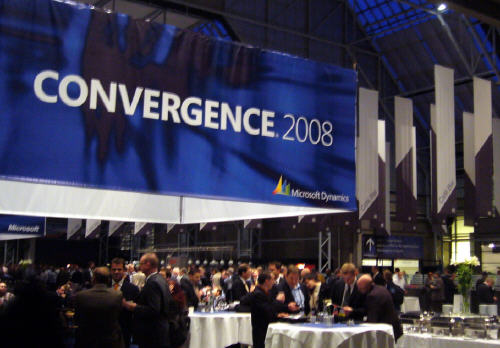
  • Convergence 2008 EMEA

    This was the first time I attended Microsoft’s Convergence, the conference for their Dynamics product family. The event turned out to be quite a positive experience. Sure, there was more than enough marketing hype for MS products, but it certainly wasn’t the only item on the agenda. Plenty of practical examples and real life success stories were included, allowing you to catch interesting details about the future direction of the CRM product and even honest comments about it’s current shortcomings.

    Convergence 2008 EMEA

    I was pleased to see a strong focus on application usability and user experience improvements in many of the presentations. Seems like Microsoft is serious about leveraging its decades worth of experience from producing software for the consumer market and using that understanding as a weapon against its competitors on the business applications playing field.

    Once I’ve managed to grab the presentations and review them, I though I’d share some of my Convergence 2008 session notes here in this blog. Most of the truly valuable information is usually not in the PowerPoint slides but rather in what is said during the presentation. It would be interesting to also read what the other session attendees wrote down, just a shame that the Dynamics Community site is so poor that I’ll probably need to hunt down this information in various CRM blogs around the net.

    Copenhagen was a nice city to visit, check out my Picasa Web Albums for some of the pictures I managed to take during the conference and the afterhours downtown. Would be fun to go back there on a warmer time of the year, so you could truly enjoy all the different flavors of Tuborg beer. Since next year’s Convergence will not be in Denmark anymore, I guess I’d need to pay for the trip myself then.