Tag: newsletter

  • The internet made me do it

    The internet made me do it

    Everything I know, everything I do professionally today – it all comes from typing into little text boxes on the internet.

    Even before I had internet connectivity for my PC back at my parents’ house, I could use the phone line to talk via the computer. I didn’t need to pick up the phone, instead I let my modem connect me to BBSs where people were writing things on pre-internet forums.

    A classic V.34 modem. No, not mine. It’s from the internet, of course.

    Maybe that’s what taught me to never pick up the phone for a call if there was a way to do things in writing. I still find it oddly barbaric that our smartphones have the “Phone” app that allows unidentified individuals to harass us with incoming calls. Why isn’t the EU protecting its citizens from threats like this?

    We trained your AI

    I’ve previously shared my history, stats and thoughts on blogging. It’s safe to say that these texts have been the most impactful ones I’ve typed, when examining the audience reached by any single collection of words. Their persistence online has made them worth much more than any snarky social posts I’ve made on Twitter, LinkedIn and the likes.

    The importance of blog posts doesn’t come from any secret old wisdom revealed in them. It comes from the fact that they can be seen. They can be discovered. They don’t cease to exist when people leave the room.

    Yet there are so many leaders out there who insist on doing things in person. I am not saying that face to face meetings would not have a level of impact that’s hard to replicate digitally. But what I am saying is that their impact evaporates rapidly. The words are lost in thin air the moment your lips spell them out.

    For everyone who insist on phone calls, meetings and synchronous communication as the primary mechanism for getting work done, let me ask you this:

    How much of the words said out loud in those events have been used to train the AI that many/most of us use today in 2025?

    The answer is likely: none whatsoever.

    Now, how about the thoughts and ideas of people who prefer to write things down? You know, just ordinary folks who type things in online forums, or geeks who love to document the most intricate details of whatever topic they are passionate about. What are the chances that the LLMs used today have seen their words?

    It’s almost certain that such text has been crawled into the massive data troves used by OpenAI, Google and the rest. Now, often this is only seen through the negative aspect of “they took our data!”, which is a rightful concern. However, have you ever stopped to think about the possible impact?

    When the people who aren’t comfortable sharing their thoughts in writing will today ask ChatGPT for advice, the response consists of the collective knowledge from all us writers who were not afraid to type. No one asked the talkers what they thought about anything. It’s as if all those big words didn’t matter much on our journey towards a distant yet inevitable true artificial intelligence.

    Thinking through writing

    It’s not merely the publicly available text that can be impactful. By having the courage to put something in writing while at work and then sharing it to an internal audience, you are entering the same virtuous cycle. Even today when there’s a Copilot in the Teams meeting that will turn the transcripts into automatically generated summaries, the words that you choose to write have considerably more weight.

    Throughout my professional career, I’ve most often had to resort to sources outside the organization I worked in to find information I needed to get my job done. Because I worked in expert roles where it made far more sense to google for the answer globally than shout out the question in the office locally.

    When the answers that I discovered were in written format to begin with, it was easy to share them internally in that way, too. The more senior positions I gained, the more actively I tried to do proactive posts on channels like Yammer. Because I knew that someone might ask me about these topics weeks or months from now, and I didn’t want to repeat myself. Not the search, nor the act of typing or speaking.

    This shaped the person that I became, in many ways. Yes, there was the upside of being knowledgeable in the eyes of others. Jukka always had “a link for that”. I was pretty darn good at knowing what info was where. This method of information processing also allowed me to hone my skills in connecting the dots between concepts and objects that weren’t always obviously related. Some may call it systems thinking.

    It also made me a difficult person at times. My tolerance for the casual, non-systemic dissemination of information was low. While others were living in the moment and focused on constructing a social narrative, my thoughts were often in the factual details. My mind was racing towards future scenarios, “predicting the next token” of what problems we should address that will likely result from our current actions. Because that’s how the written stories unfold – into future chapters and linked articles.

    Communicating online in forums, responding to others in threads, referencing related discussions and providing evidence – that is an activity with its own social norms. As we increasingly work remotely from each other, the behavioral patterns that the internet taught us are both powerful and dangerous. We should be able to adjust our mode of operation to fit the social context. The what and how you write should be decided only after you remind yourself of the who and why.

    But when it’s all just little text boxes on the internet, how can our brains notice the nuances?

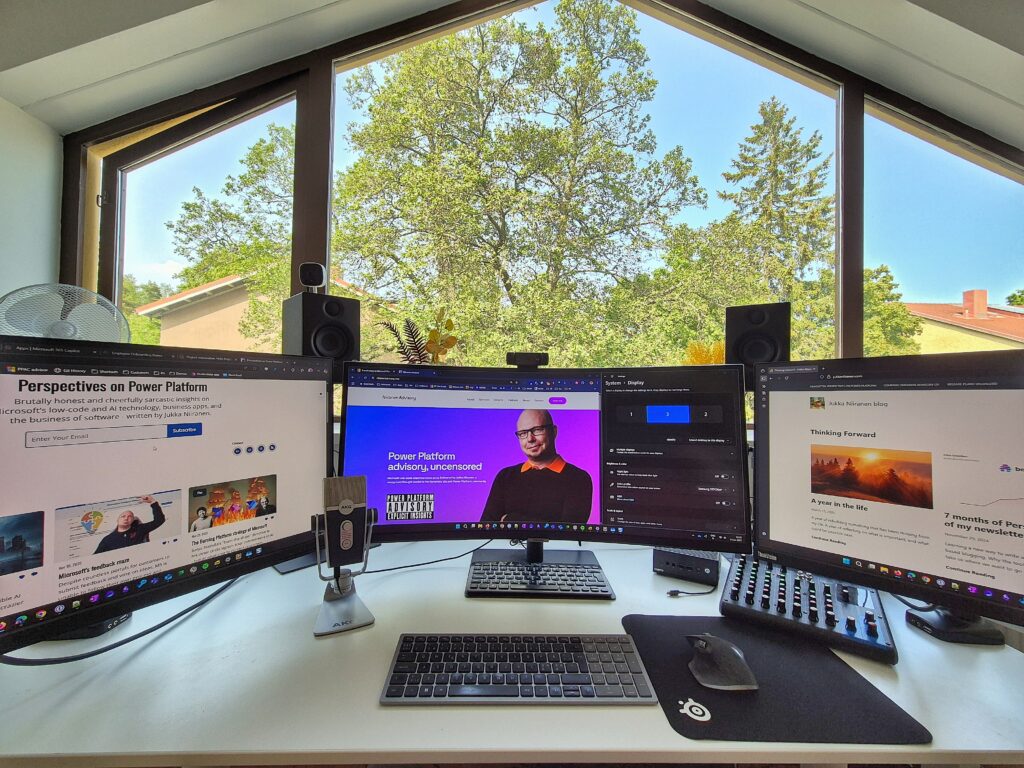
    Today, as a solopreneur, I sit in my private office typing this post. I don’t need to balance my presence between the digital world and the physical reality, simply because nearly all interaction during the day happens online. Yet in every app, in all the tens of windows that exist on my monitors on a typical day, hardly any of the text boxes are completely equal. I must remember what can be written where, and how.
    Writing is all you need

    Today, people have started to realize how big of a difference you can make by posting things online. Yet I don’t recall anyone using the term “influencer” before the visual social media era of Instagram, YouTube and TikTok arrived. You absolutely do influence the world around you via written messages, too. Being visual about it doesn’t hurt, yet the choice of your primary media payload will determine a great deal of the first impression people will have about you.

    If you want your words to represent you, where should you start and how to become someone other people on the internet might pay attention to? Pavel Samsonov recently shared his formula of standing out through writing in an excellent article that provides more clarity into the topic than I could write here. So, start from there. (See, this is how it all works. People amplifying the writing of other people.)

    Today, a lot of what I do on a daily basis is actually a combination of two things learned from the internet: online writing and memes. Because in social feeds it’s hard to make people notice you with just a wall of text. Besides, like Pavel writes: “If you can’t think of anything interesting to add, just post memes. Everyone loves memes.” You can’t go wrong with advise like that.
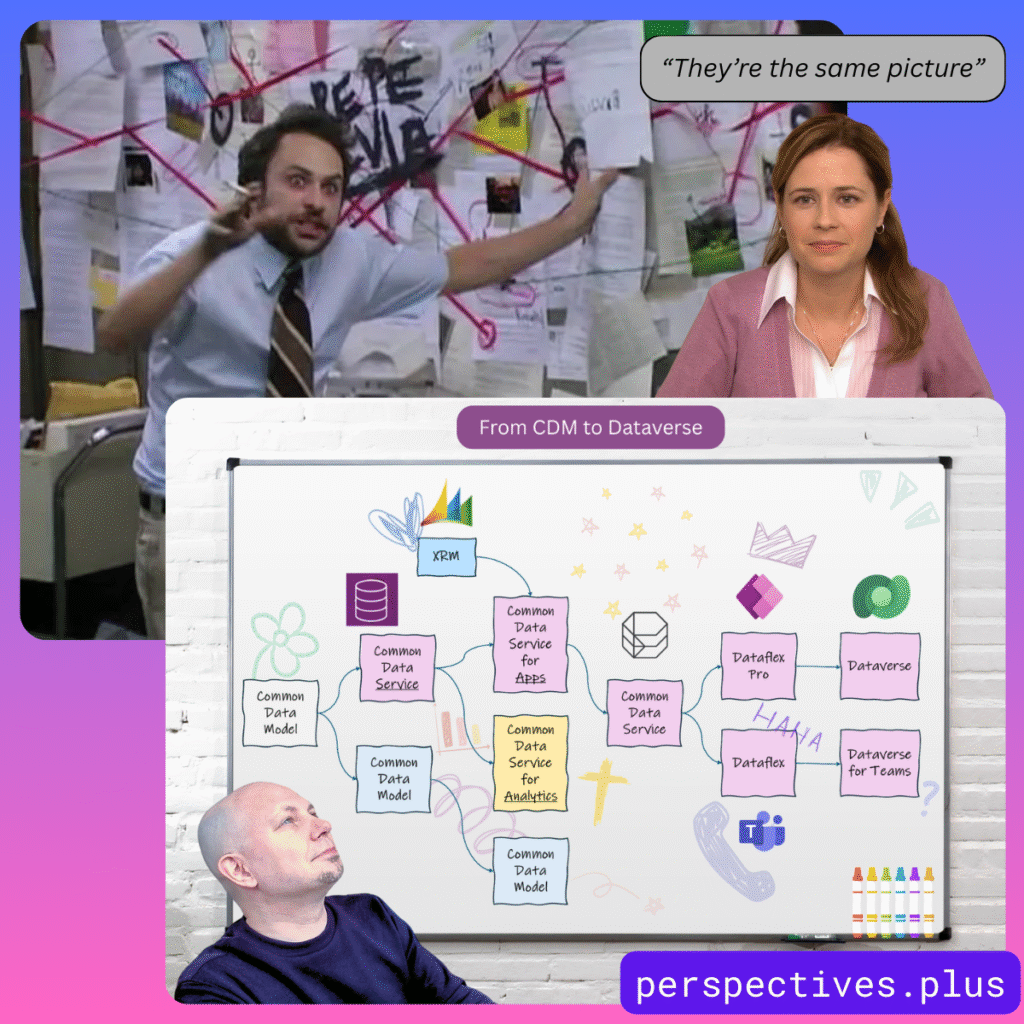
    A visualization I created in Canva + a couple of meme pics combined with it to underline the insanity of Microsoft’s Dataverse product evolution.

    Especially if you’re writing about a subject that isn’t exactly headline news in mainstream media, it doesn’t ever hurt to think about an angle that would make the audience say “hold on, wait a minute, what exactly did I just see?” Meaning, rather than going for the most common way to present the information in your field of expertise, why not put it into an unconventional context? Memes are an excellent vehicle for visually making this happen. After that, it can also give you as a writer more freedom to address the issue in a surprising way.

    In my latest journey as the writer of a newsletter, I have ended up choosing a style of content that would not have worked back when I was still a Microsoft MVP. I’ve always been brutally honest with sharing my thoughts about the good and the bad sides of modern technology. Yet with my Perspectives on Power Platform newsletter as a new publication format, it has encouraged me to consistently write in the style of that publication.

    Ever since I launched the Plus edition in the end last year, with a promise of a weekly newsletter issue to my paying subscribers, it has kept me focused on repeatedly doing one thing. I’ve always loved thinking through writing, yet too often it has been something you can skip if in a hurry. Well, that’s no longer the case. Writing isn’t optional – it’s part of what I am.

    “Like and subscribe”

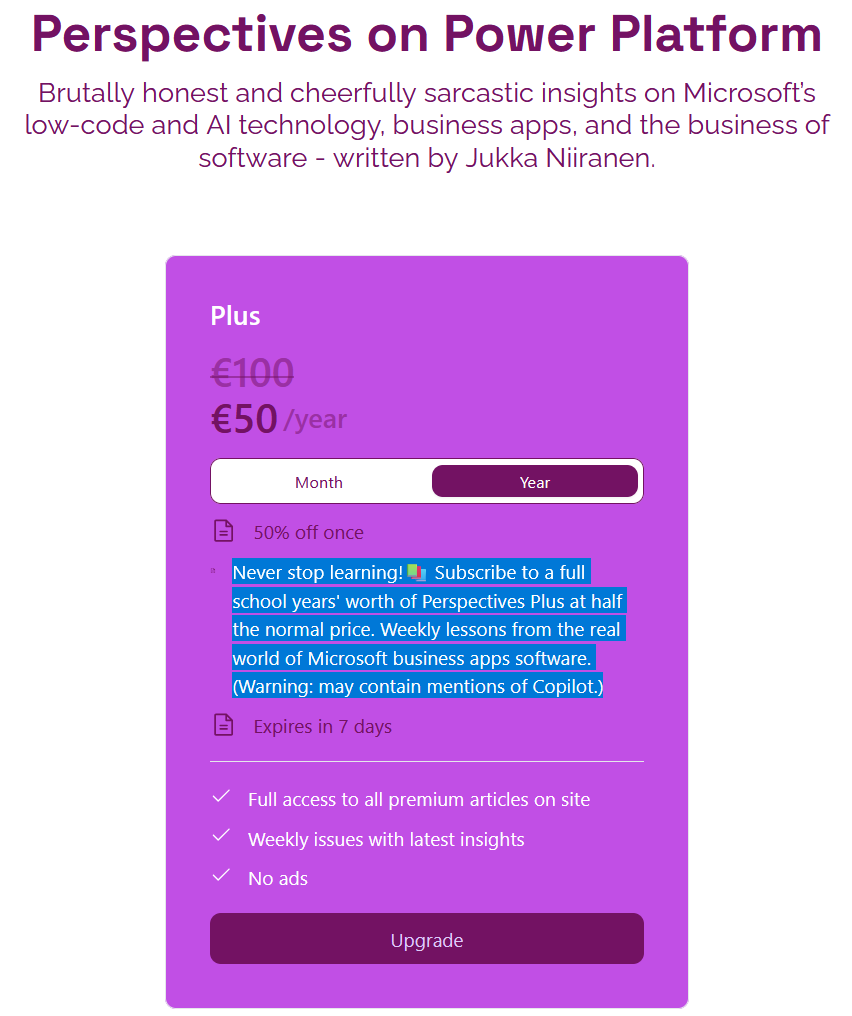
    One more thing. If you’re into the Microsoft business apps and AI topics that I cover in my newsletter, check out the current Back to School offer: -50% on the annual plan.
    Cover photo by Wokey Factory on Unsplash
  • 7 months of Perspectives – start of my newsletter journey

    7 months of Perspectives – start of my newsletter journey

    It’s hard to put an exact date on when my Perspectives on Power Platform newsletter was actually launched. In the very first issue, “Start somewhere”, I wrote about my decision to sign up for beehiiv and quickly put in place the foundation on which I could build something.

    At that point, in March 2024, I did not yet know what exactly I was going to build. After the health challenges I had just gone through, I knew I needed to stop doing things in a way that kept me from getting better. The 11 years of being in the Microsoft MVP program had taken their toll on my mental wellbeing. Co-founding and promoting a Power Platform consulting company alongside my voluntary community activities turned out to be an unsustainable model.

    Not a big surprise, and not anyone else’s fault either. I had chosen this path, now I just needed to find a new path forward. Today, it feels like this is indeed happening.

    To write again

    After taking a break, I quickly discovered that I still have a burning passion for writing. I just needed the right place and format for it. With Twitter now gone (to s***), I developed a habbit of creating quick posts / hot takes on LinkedIn. Regardless of their algorithm being a similar jerk as any other big social media, I learned to live within the limits imposed there. The higher character limit of a LinkedIn post suited me well, allowing me to express complete thoughts rather than just a couple of sentences.

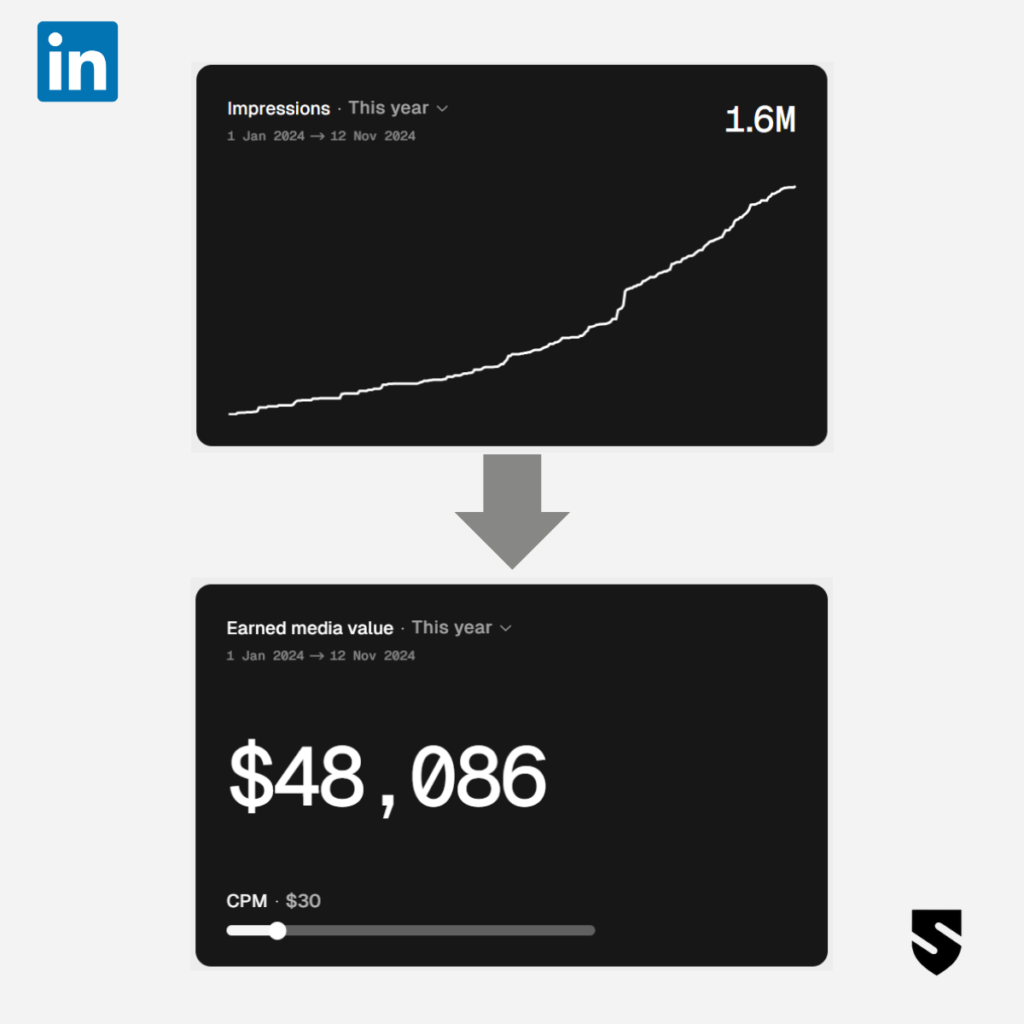
    My audience started to grow. Much faster than what I ever experienced on Twitter. At some point, due to the poor analytics that LinkedIn themselves provide, I chose to pay for a 3rd party tool, Shield Analytics. The most important feature turned out to be the ability to search for my past posts (yes, LinkedIn is terrible with basic content management). As a nice bonus, it draws charts on how the engagement levels are doing compared to previous time periods. You could even simulate what a similar audience reach would cost you if you paid for it via sponsored content campaigns rather than just writing catchy posts.

    Social media companies are not your friends, though. They aim to own the content that is created by the users and choose how/when it is presented. More importantly, they want to own your network – so that they can charge money for selling it back to you, should you want to reach them with your message. Connections, followers – those are just numbers shown to keep you hooked on the potential audience.

    Newsletters, on the other hand, are about forming the direct connection between the publisher and the subscriber. Algorithms won’t determine who sees what – the humans on both ends get to choose that. I think it’s a much healthier basis for communication, rather than relying on the gamification mechanisms in social networks that can change on a whim.

    While the themes that I write about may be the same regardless of the channel, the newsletter offers me a way to think deeper. I’ve developed the habbit of looking at what I personally react to online, what my network is saying, what type of social posts I create – then analyzing it from the different perspectives as part of writing my long form Perspectives into the newsletter.

    I feel that it’s started to work pretty well. I’ve allowed myself to take time in exploring new themes around GenAI and cybersecurity, as well as reflecting on the past/present/history of Power Platform. Many of the topics are either the result of talking with new people or they have resulted in new connections being formed. Those are crucial KPIs in the end. 1) Does it feel meaningful to myself? 2) Does it activate others to do something new? And last but not least: 3) does it gain traction from the online audience in general?

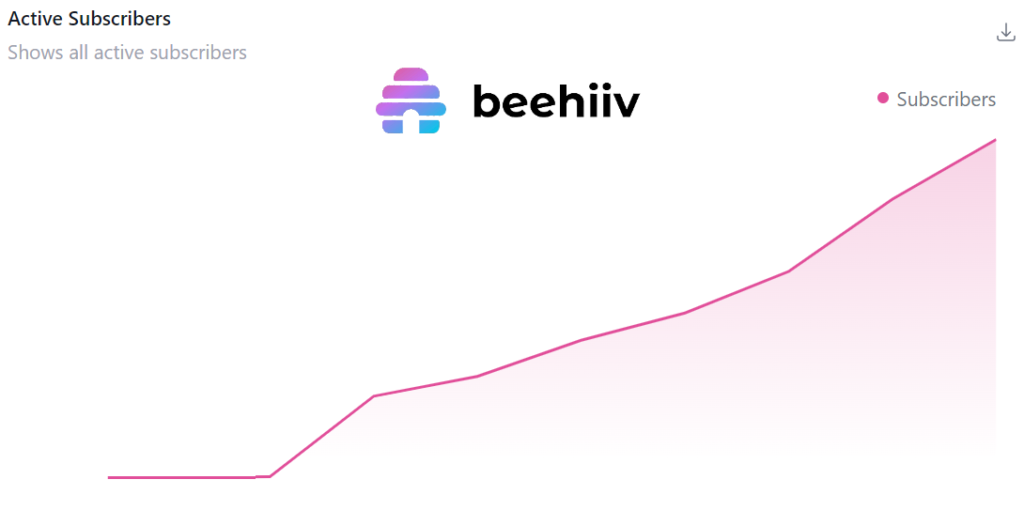
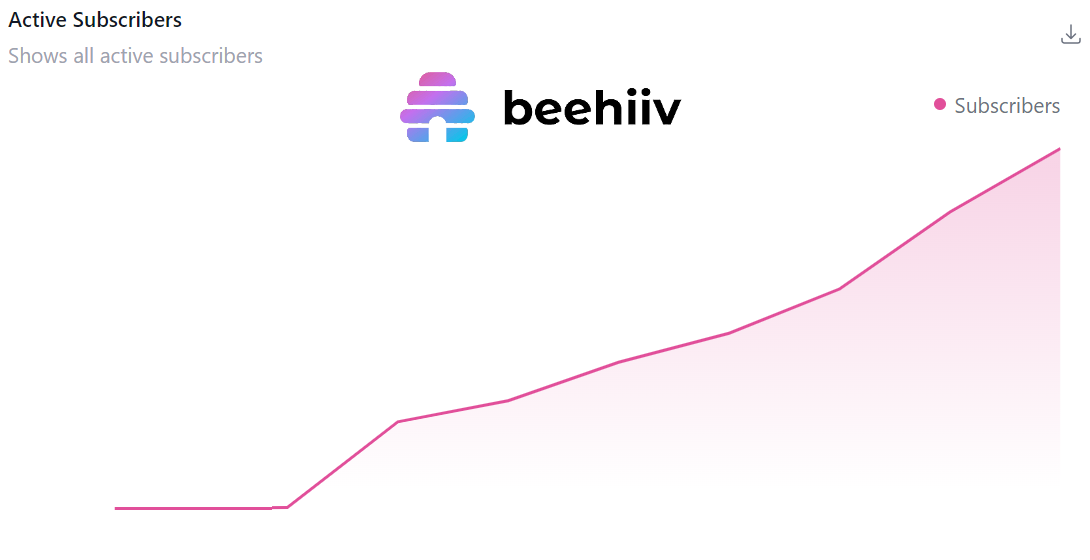
    I’m not going to disclose the exact stats on how many readers there have been for the newsletter. Let’s just say that I’ve been delighted to see a constant flow of new subscribers that have intentionally said “yes, please, send me more emails like this”. It feels special, every single time.❤️

    More recently I’ve had the courage to say “if you want to read this article, please do me a favor and create a free subscriber account”. After all, this ability to stop just any AI bots from scraping your content and using the data for providing answers without zero attribution to the original source was one stated reason why I chose to transition from blogging to writing a newsletter.

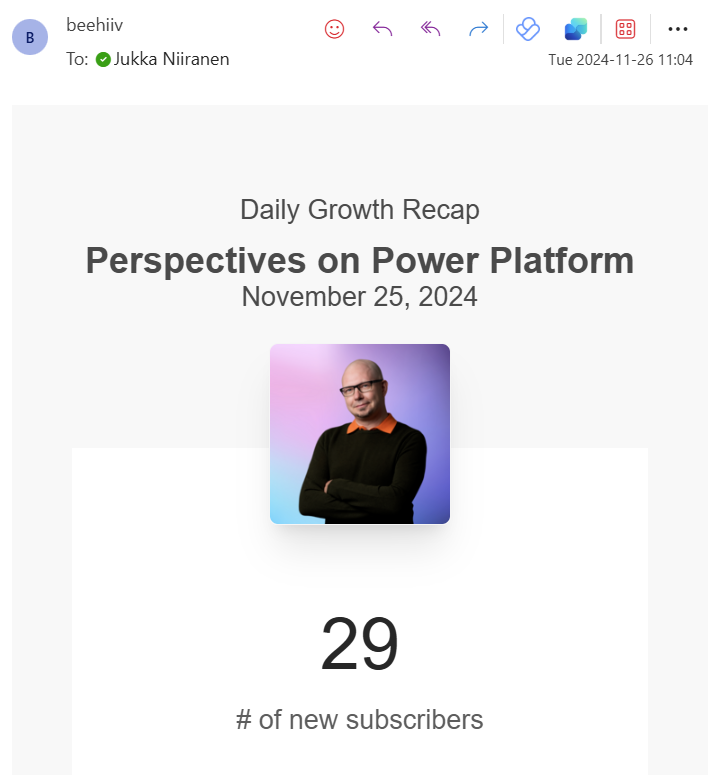
    The conclusion is: these walls do work. If on a normal day I’d get a beehiiv daily growth recap message with 2-4 new subscribers, requesting a login can make that grow 10x.

    Is AI really eating the tech blogging world then? I believe it is happening on some level. This insighful article from MVP Tony Redmond who runs sites like Office365ITPros.com explains the impact that LLM generated answers to tech questions are having on website traffic. If you used to have a business that relied on people discovering your site via “how to” queries on Google, that model is becoming less and less viable every day.

    The tools that shape us

    Regardless of what we as individuals think about generative AI, it exists. It changes the world around us, whether we use it for a particular task or not. I haven’t yet fallen in love with Microsoft 365 Copilot, but I talk a lot with my ChatGPT every single day. It has become a virtual personal advisor in exploring areas that are less familiar to me in technology, business and life. It would be difficult to live without it. But does it replace online searches, though?

    I have already mostly abandoned Google. However. I did not replace it with AI, but rather a search engine that I pay for with money – not with my data and privacy. Kagi has been an awesome experience that not only meets my everyday search needs; they also sent me a beautiful yellow T-shirt! I’ve learned that an ad-free search engine that doesn’t try to actively deceive me into clicking sponsored links is still highly useful in the year 2024.

    These shifts in user behavior resulting from advancements in the field of AI will mean more & more people question whether their de facto digital tools they’ve relied on are the right choice anymore. This is happening all around me. Even on this very place where I am now writing this text and you are presumably reading it (unless you are one of the remaining RSS feed fans): WordPress.

    I have been a WordPress user for as long as I remember. Well, okay, so I do still remember my initial blogging experiments with Blogger and Drupal. Once I went with WP, though, there was never a true reason to look elsewhere. It did everything I needed, and was able to adapt to whatever new requirements I came up with. Not only did it serve as a personal blog engine, it also powered many professional websites along my journey.

    When all you’ve got is a WP hammer, every problem looks like a blog post nail. While being a versatile and broadly used platform means there is a huge community around it to give tips, build plugins and sort of keep all your options open – you are still thinking within that WP box. You keep publishing openly available blog posts as web pages, like you’ve done for 16 years already. You can’t just stop doing what you’ve always done, right?

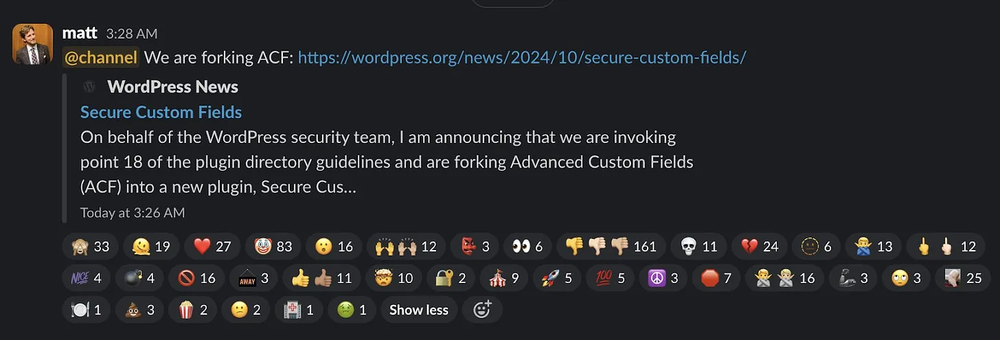
    The big wake up call for WP bloggers came from the mothership. The founder of WordPress has shown that even though the wordpress.org side is operating as a non-profit, the commercial arm of wordpress.com has the ultimate control over the software. The public dispute that Matt Wullenweg started in September by calling WP Engine “a cancer for WordPress” has since escalated into a complete collapse of trust in WP.

    Automattic (the creator of WordPress, led by Matt) and WP Engine are both big hosting providers for WP sites. Now, they’re only talking through lawyers, with WP Engine having sued Automattic for “abuse of power, extortion and greed”. In response, Matt and Automattic decided to literally steal a commercial plugin developed by WP Engine and publish it as their own. It’s the craziest thing I’ve seen in the CMS space yet the proof is everywhere in the source code.

    With beehiiv, I had already taken the first step to publish content somewhere outside of the WP kingdom. During the past few months, there’s been a steady stream of product updates that make me miss the WP ecosystem less and less. Most importantly, I feel that the mechanism of a newsletter is providing a better connection not just between me & my subscribers – it also makes me want to write more. That’s not exactly a plugin you could just add to a WordPress blog. It’s about a whole different product design approach.

    Will I still be maintaining this WP blog then? That’s a good question. Since my regular content posting is on the newsletter site anyway, I technically could get everything I need from a static website. Briefly exploring the world of SSG’s (static site generators), I tried spinning up a Hugo site, running on Netlify. However, I very quickly realized that the Git repo driven content management workflow was not something I would replace my WP site with.

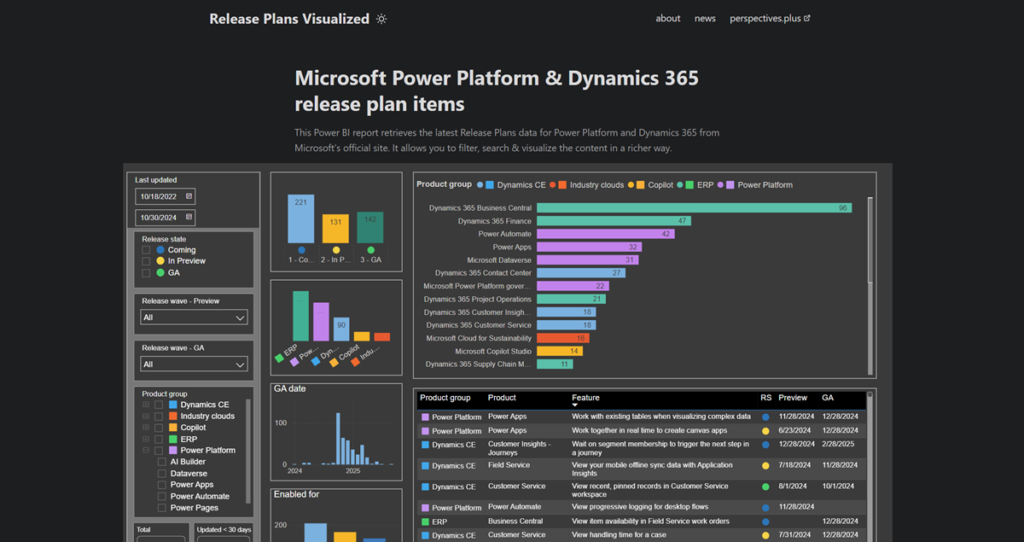
    I decided to give this SSG approach a go in a different context, though. When developing an alternative way to visualize the release plans for Power Platform and Dynamics 365 than what Microsoft’s own Release Planner site offers, I ended up publishing releaseplans.net as a Hugo website. Now, that site lives as a GitHub repo for the source code, while I do the content updates in Visual Studio Code.

    I have of course already covered this topic in my newsletter:

    I’m in the process of creating a “proper” website for my company, Niiranen Advisory Oy. That will also not be a WP site but something different. Stay tuned for an update in the not too distant future.

    What’s coming next

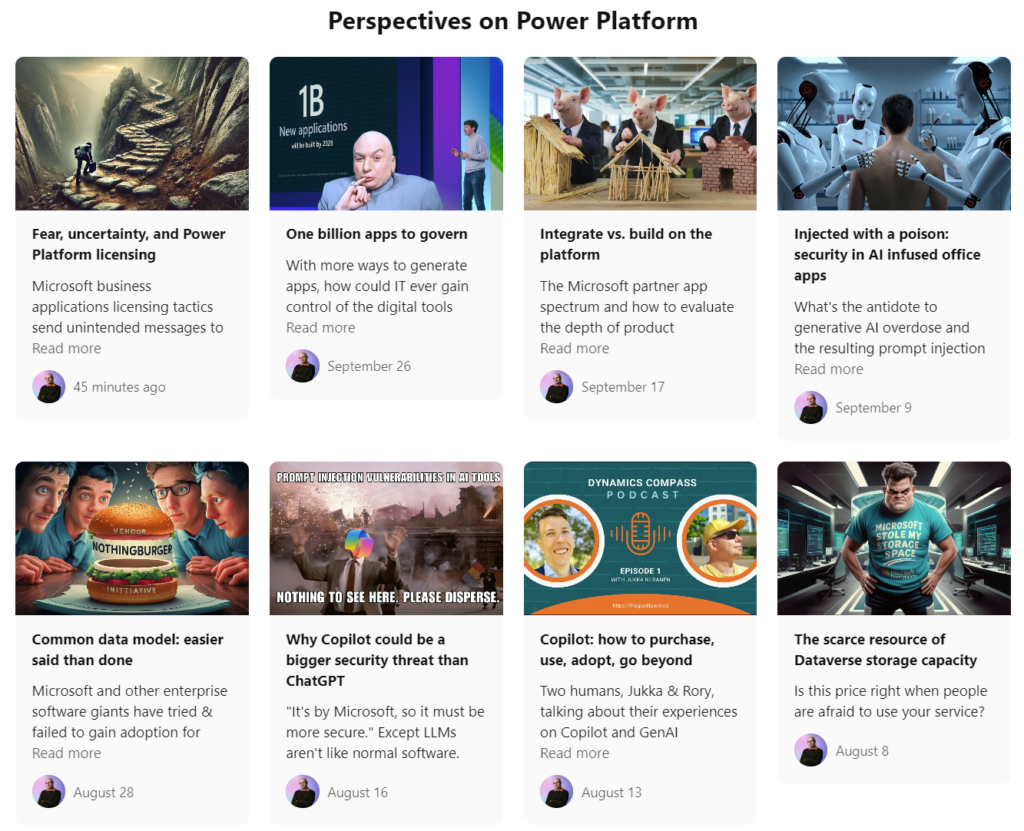
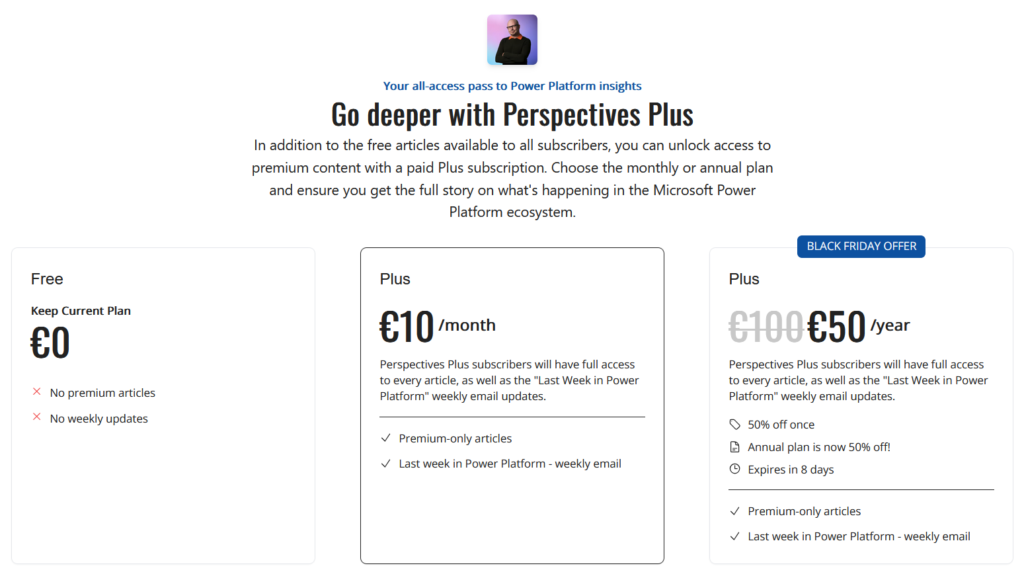
    The idea behind the domain perspectives.plus was always to make space for something more than just a direct replacement of this blog. Today, that idea has reached the state where Perspectives Plus is a real thing anyone can subscribe to:

    There will always be a free version of the newsletter available. In addition, I will keep on sharing as much as humanly possible on social media channels like LinkedIn, Mastodon and Bluesky. Because that’s just who I am and how I work: with extreme transparency.

    What the paid version of Perspectives Plus offers is a commitment from me to the subscribers. Rather than merely using these publishing platforms as my own strange form of public therapy, I will now aim to deliver something worth paying for. Right now, it will consist of weekly emails covering recent news and events in our ecosystem (see free example issue). There will also be premium-only articles that dive deeper into the persistent challenges and possibilities in and nearby Microsoft Power Platform. Leveraging my lessons learned and observations made during my 19 years with this ecosystem.

    It is again the start of a new phase for me. Previously it wouldn’t have been either possible or sensible for me to launch a paid newsletter. Now it is, so it has to be done. Then, make adjustments along the way as you learn more about what the audience wants and what I can deliver.

    This is also the first time ever since I can launch an actual Black Friday offer!🎉 For a limited time, you can get 50% off the annual subscription price of Perspectives Plus. Tell your friends and family that this is the perfect Xmas present for them (if they happen to work with Microsoft technology, that is). Use this offer link.

    One final tool related thing. In the last 4 years that I was in charge of creating the everyday visuals for social content of a boutique consulting company, I learned to enjoy Canva. It’s a great example of a citizen tool that allows people with little professional skills yet enough determination to create graphics for whatever purpose. So, to close things off for this blog post, enjoy the promotional video clip I created for spreading the Black Friday offer message in my social feeds:

  • Why start a newsletter instead of writing a blog

    Why start a newsletter instead of writing a blog

    Blogging has had a massive impact on my career and personal life in the past 16 years. The act of other community members out there sharing their insights via blog posts is what initially got me so excited about the Microsoft business apps ecosystem to begin with, at around ~2005. My own investments of time and effort into blogging have been totally worth it.

    And yet here we are, in 2024 and I decided to launch a newsletter instead. Called “Perspectives on Power Platform”, it’s available on the perspectives.plus domain. Published and managed via beehiiv. This is all aligned with me switching over from being a co-founder into being a solopreneur instead just a few months ago.

    I feel I need to explain myself a bit here on this “legacy” blog – considering a few people have also asked me directly about it. “Why a newsletter?” I’ll provide my reasons and thought process here, with the intention of possibly sparking also comments from fellow bloggers and blog readers on this shift I see around me.

    Is blogging dead? No, but following is.

    The web is certainly no longer the same as back in 2005 – yet few things in the world are. First the rise of social media came along and pretty much killed the traditional way of following blogs via RSS feeds and Google Reader (RIP). It doesn’t matter that RSS as a protocol is still perfectly valid today. Most people who might be interested in what I or the rest of the #MSBizApps community write about will not be using RSS. I have personally pretty much given up on following the hundreds of RSS feeds that I had subscribed to in my Feedly account.

    At first, the co-existence of blogs and social media platforms like Twitter seemed to work quite well. Sharing links to great blog posts was an amplification method that helped form communities. Then, the laws of market economics drove every major social media company to build a walled garden instead of a “meta protocol” for such social interactions between community members. They wanted to hold onto the audience instead, which lead to algorithmic feeds punishing people for posting things that had a link pointing outside the garden. As a result, fewer people left the garden and the content inside became richer as users tried to cram more text, images, video into the native social channel instead. “Engagement” became the key metric that determines what we see – not who we chose to follow or subscribe to. We lost control.

    This affected all content, not just blogs. Musicians, writers, artists – all creators everywhere lost the direct way for them to build an audience of followers. To understand the broad impact that the rise of the social media algorithm had, I recommend you to put this video on your watchlist: “Death of the Follower & the Future of Creativity on the Web” by Patreon CEO Jack Conte at SXSW 2024.

    Today, in the era of TikTok, the concept of subscriptions or following creators has been completely abandoned. Ultra-algorithmic “For You” streams do not rely on your personal network. On today’s social media services like Threads (the “Twitter, from Meta”) it’s tough to get anyone to follow you. Engagement on your post does not translate into an audience of followers. You don’t connect with creators – you consume trending content. There’s hardly anything “social” about such content networks anymore.

    Blogging didn’t die as much as social networks did. User generated content is being circulated around at an ever-faster pace – yet it’s selected by a machine rather than the users explicitly. Audiences are not something we own, rather it’s something we can purchase time & time again from the walled gardens that host the user generated content we give to them for free.

    Are you writing blog posts or AI training data?

    After the social media algorithms came the LLM wave. How is this generative AI era different from the social media era? In terms of how they treat content, the difference is subtle yet massive:

    • Social media: process all the content users posted on our platform and extract maximum value out of it.
    • Generative AI: process all the content available on the public web and extract maximum value out of it.

    Pause for a moment to reflect on that. First, they built a walled garden – then they came for everything outside those walls. What Meta did in Facebook/Instagram is now being done by OpenAI, Google, Meta (again) etc. on the entire world wide web. It’s ultimately just about turning up the volume of data, by crunching everything humans have ever created and compressing that into a Large Language Model. Throw in piles & piles of Nvidia GPUs and massive amounts of energy burned in data centers, and then – suddenly a new species of intelligent chatbots emerged from this cauldron of the geeks. Generating something new from the ingredients mixed in during the cooking process.

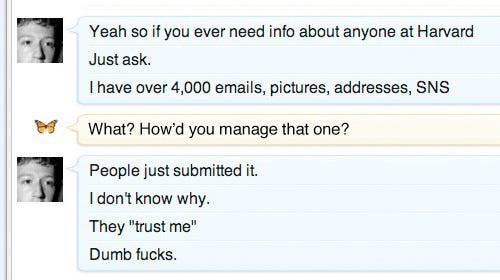
    Human thoughts are the critical ingredient. Without the users, all that big tech corporations have is software and hardware. They don’t have data unless someone gives it to them. Google as a search engine wouldn’t have been able to produce any value to anyone unless it was able to index the data shared by humans on the public web. Mark Zuckerberg wouldn’t have been able to get anyone signed up or Facebook unless people at Harvard hadn’t “just submitted the data to him, like dumb f***s”.

    Data both inside the walled gardens as well as outside of it has been analyzed before for commercial purposes. When Google did it for their search engine, it (originally) was about helping users find the original source of that content. Leading to website visitors, who could in turn potentially become subscribers. You gained attribution and the opportunity to connect with other people via building an audience. A deal that was hard to refuse.

    How does this deal work in the age of ChatGPT, Copilot and the other AI services? It doesn’t. The social contract of “you index my content and I get exposure in return” becomes irrelevant when the machine no longer provides merely a link to a website as the answer to a user query. Instead, the LLMs become so smart that they offer personalized answers in the exact format requested by the user – thus negating any reason to visit the original websites. After all, why read through an SEO optimized “how to do X in Power Apps” article when ChatGPT or Copilot can adjust the information to any scenario and help you with follow-up questions, error messages and so on?

    The irony here is that the “how to do X” and “5 tips for optimizing Y” type of blog posts have been by far the most effective format to gain website visitors in the past. I haven’t usually seen them as very ejoyable to write, so I’ve instead spent my keystrokes on broader articles of analyzing “what does X mean” and “the future of Y” type of speculations. Such articles have only mattered for a brief period and have been mainly seen by loyal subscribers/followers. The long tail of traffic from Google has always been to the “how to” posts, by a massive margin. Now, thanks to AI – neither type of blog post will receive much traffic in the future, for pretty much any bloggers out there.

    Could the creators of content opt out from becoming AI training data? In theory, yes, and in practice, no. We’ve already seen companies like Perplexity AI spoof their user agent info and ignore any blocking done via the robots.txt file. Corporations also do it between each other. Amazon has instructed its employees to create personal user accounts and hand them over to the corporate AI group to get around GitHub API call limits. Besides, if we ever reach consensus on a method to deny the use of specific web content in training AI models, all of the old stuff out there today would still remain as part of what makes up the intelligence of ChatGPT and the likes.

    It’s best to assume that anything an anonymous website visitor can read, AI corporations will also use to advance their own purposes. You, the writer, will most often get absolutely nothing from it.

    Email as the old/new platform

    This brings us to the title of this post. While some pre-social and pre-AI internet technologies like RSS have faded into the background, email has remained undefeated. No matter how many alternative messaging and collaboration platforms have come & gone, nothing has managed to disrupt email in a meaningful way. Although kids today may not be paying much attention to email, the further along they go on their professional career, the more futile it is to resist the power of this universal messaging protocol and (unfortunately) identity system that has been around since 1971.

    The renaissance of email newsletters that has been fueled by services like Substack, Ghost etc. is a great example of how the old thing can feel new again after a break. Most importantly, these tools have been designed to first help the content creators build up an audience, and only then gain financial success from taking a cut off the paid content served to those audiences. Or from subscription fees paid by the creator, as is the case with my beehiiv account today. Unlike with social media, the platform for email newsletter delivery is not actively trying to stop the creators and readers from having a direct relationship with each other.

    Email capture is a ubiquitous gate along the many journeys we all experience while online. You do it when registering for both social and AI services, too. Businesses often use it as an excuse for getting the chance to know who is interested in their content enough to fill in a form, so that they can talk directly to them. Now, with the rise of the all-scraping AI overlords, there’s a whole new reason for even individual content creators and community members to seriously consider asking readers to sign in. Unless content is locked away behind a real gate that can’t just be opened via the search bots lying about who they are, the content will get consumed by AI.

    Right now, all my Perspectives on Power Platform newsletter issues are publicly available for anyone to consume. However, I have the possibility now to change that if needed. Perhaps in the future the full articles will require a subscriber account – just to keep the AI bots away. While for the casual web surfers this of course is an extra hassle, luckily they can do a one-off registration on the site and then receive all future issues of the newsletter delivered into their mailbox.

    It’s nothing new for some of you. There are hundreds of people who are subscribing to this current blog via email notifications (powered by Jetpack) and I’m very thankful for this audience! At the same time, I want to apologize for the recent blast of lorem ipsum dummy content that got sent to you while I was deploying a new theme for my blog.😳 Just goes to show that WordPress isn’t exactly the ideal platform if you intend to publish content primarily in an email newsletter format…

    If you are interested in receiving my future writings into your inboxes, I strongly recommend you to sign up for the newsletter. This blog right here at jukkaniiranen.com will remain as a place for me to share thoughts around topics outside of the Microsoft ecosystem. The regular content on what’s happening with Microsoft Power Platform and what’s my take on it will be on the Perspectives newsletter and site exclusively from now on.

    Why “perspectives.plus”?

    As I mentioned in the beginning, I am today working for myself. For the first time ever, I really don’t need to think about “how will this activity generate work for someone else in my team”. I am the business. I’m free to explore ways in which the things I know and what I’m good at can deliver value to someone else out there – and how to make a decent living out of it.

    With my 11-year journey in the Microsoft MVP award program coming to an end, there is no longer any conflict of interests between community contributions and possible commercial agreements with parties in this expanding Power Platform ecosystem. This does not mean that I intend to sell out my own integrity and start promoting products from anyone who inserts a credit card. The way I see it, the key reason I have any audience in this space to begin with is because I always tell it like it is. I spend quite a bit of time exploring and thinking about the world I see around me, then I form my own perspectives on things and say it aloud. Telling both sides of the story, in ways that might feel controversial. Love it or hate it, that’s what I am about.

    This is not all just about me. My motivation comes from advancing a worthy cause and helping those people out there who are doing the right thing, yet not always getting the recognition that they would deserve. This is where I’m looking to form partnerships with companies that have a solid offering for the Microsoft Power Platform customer base, and who understand what it takes to establish trust within this community.

    The “Plus” in perspectives.plus is not just a random top-level domain I picked. It represents the possibility of there one day being something more than just a free email newsletter available there. One of the possibilities introduced by platforms like beehiiv is the option for premium subscription tiers. Who knows, perhaps some of the things I will build and write would be worth putting behind a small fee to be paid? It’s not something I am actively pursuing at this moment, yet I like to keep my options open.

    In the end, it all comes down to perception. Of the million ways that we can create, exchange, and consume information in the computer world, technical implementation is rarely the factor that defines the outcome. It’s about how we frame information and express our intention, through subtle signals that us humans have evolved to pay special attention to. Machines just see data, be it published on a blog or a newsletter. We, on the other hand, can define – and redefine, the meaning of such data via crafting the storyline around it. If we want to achieve something new, I believe we first need to imagine a new story and then share it with the people around us.

    UPDATE 2024-11-29: Here’s a follow-up post, “7 months of Perspectives – start of my newsletter journey”.

    Cover photo by Kristina Tripkovic, from Unsplash.

  • A Power Platform newsletter from our team

    A Power Platform newsletter from our team

    UPDATE 2023-01-03: After Twitter decided to shut down the Revue newsletter service, the Forward Forever newsletter was migrated to Ghost. The content remains available at the same forwardforever.news domain.

    Back in Spring 2020 when we launched Forward Forever, one of our guiding principles was to openly share with the outside world the new knowledge we gain when working with Microsoft Power Platform tools on a daily basis.

    Team FF has been quite active in community contributions, with content regularly shared both on our team blog as well as personal blogs like the ones written by Timo, Antti and myself. Sometimes when I’ve been looking at our social feeds, I’ve wondered “are people actually able to keep up with all these updates our team is sharing?”

    Now there is a place that brings together these streams of new Power Apps, Power Automate and Power BI related information: The Forward Forever Newsletter. This monthly email newsletter is available for anyone to subscribe to at forwardforever.news:

    To quote our team’s announcement of the newsletter:

    That’s what the Forward Forever Monthly newsletter is all about. A summary of both our own writings as well as the best bits from the Power Platform community. No ads, no hard sales push. Just the most relevant content that our passionate team of Power Apps, Power Automate and Power BI experts has discovered.

    Our newsletter runs on the Revue engine (recently acquired by Twitter). You might already be familiar with it, since there are at least a couple well-known weekly Power Platform related publications on that newsletter platform:

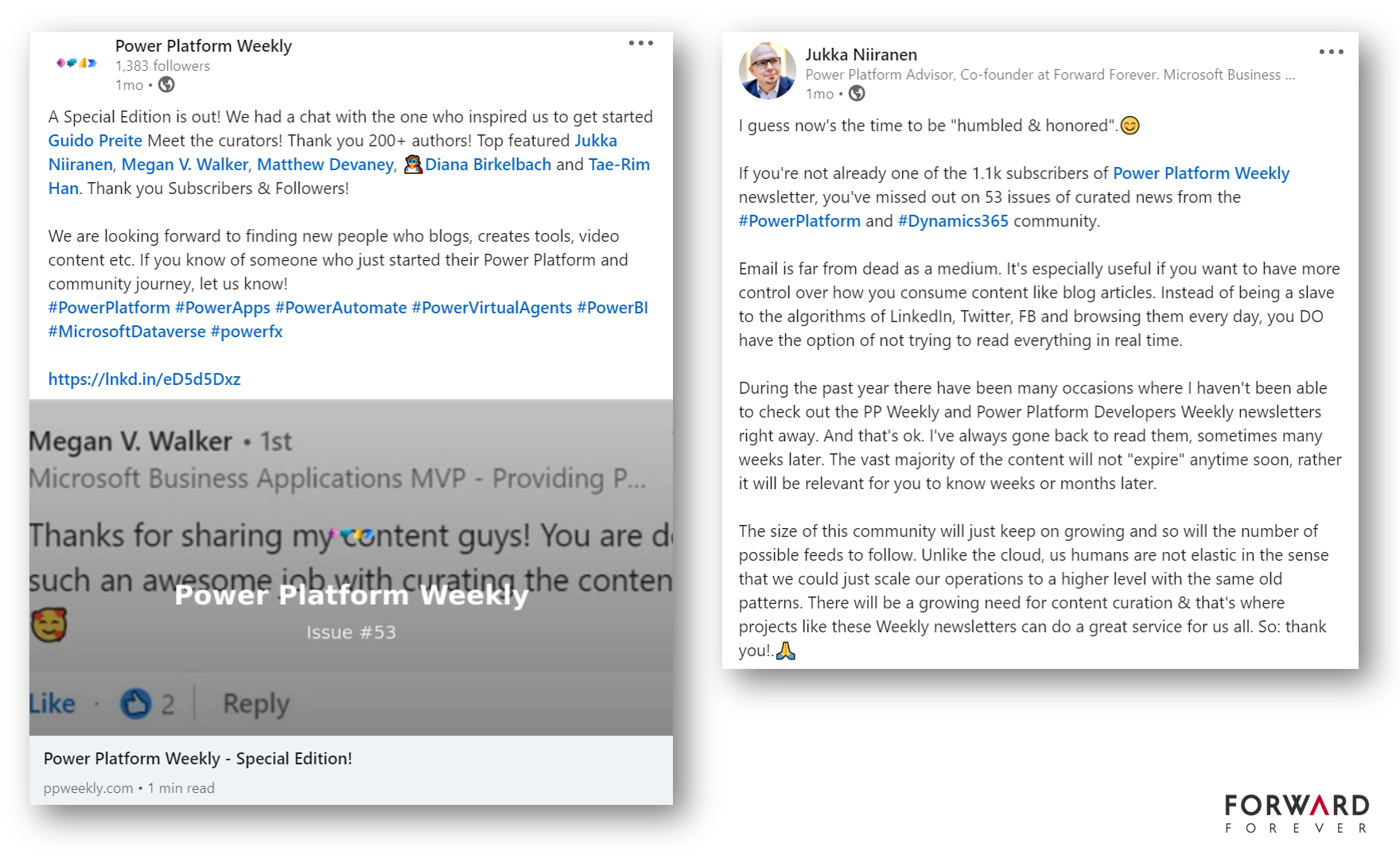
    We don’t intend to compete with these community driven newsletters, because they do such an awesome job already. Many of the FF team member blog posts have been covered in the issues over time. Recently PP Weekly celebrated its first full year in operation and I wrote a bit about the importance of such content curation initiatives over on LinkedIn:

    I encourage all customers and community members interested in the latest events around especially Power Apps, Power Automate, and also Dynamics 365, to add themselves as subscribers to these publications.

    There is no shortage of great blog posts, podcast, videos and free tools to cover in this ecosystem. What I do think we have a shortage of is ways take control of our precious attention and consume information at our own pace. A monthly email digest that doesn’t scroll past in your real-time feed may offer a calmer way to stay in the loop.

    Subscribe to Forward Forever Monthly

    Just one email per month on cool Power Platform things we’ve come across.