In the past, I have written a lot of posts on this blog under the Licensing category. Ever since I moved on to writing my weekly newsletter on beehiiv, there’s been a bit of a conflict in my mind about “where should the licensing stuff go?” Because I acknowledge it’s not necessarily something to casually drop into the weekly articles of Perspectives on Power Platform.
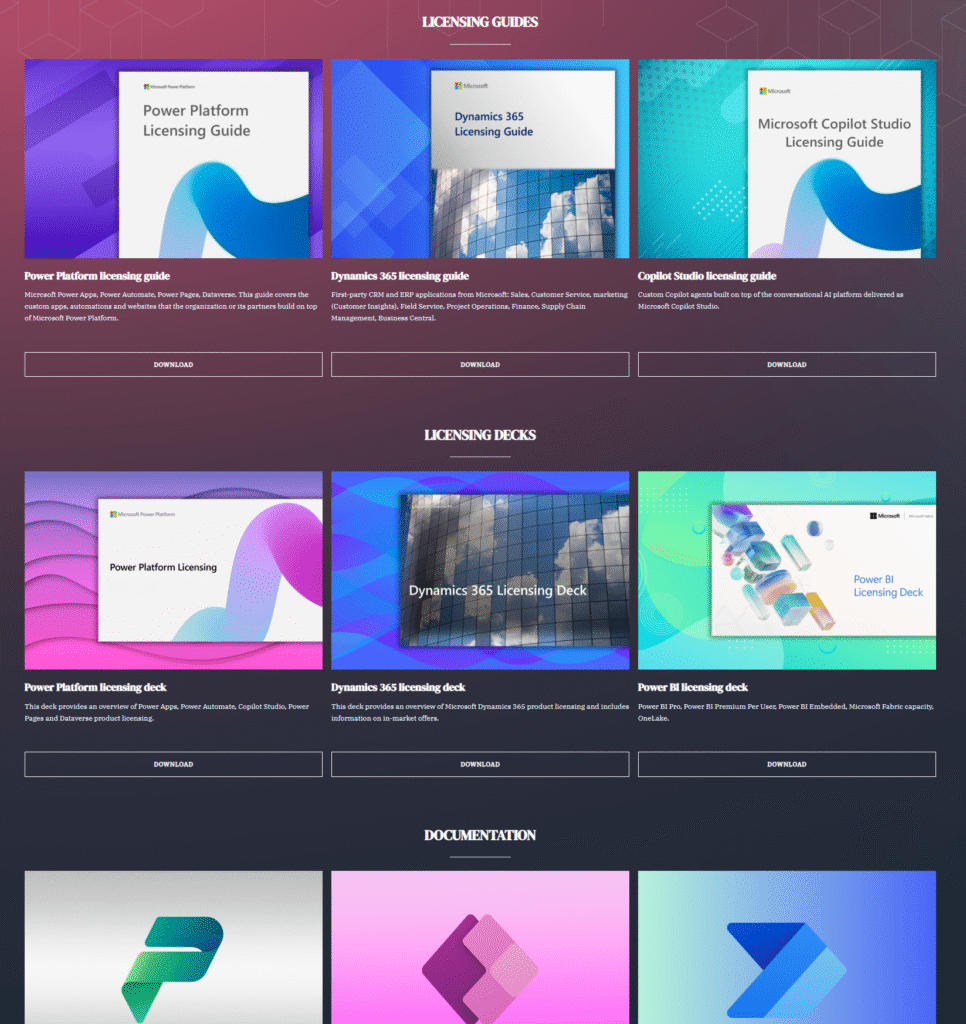
What started out as a fun domain I discovered to be free has now turned into a proper website with both persistent pages as well as blog posts on recent events. True to its name, this site does also provide you the quickest possible way to view the latest licensing guides from Microsoft, via the Resources page:
I figured there’s no point in always going via search engines to the latest guide versions. Or to keep some of the commonly referenced MS Learn pages as bookmarks in my own browser only. Better to just put it out there on the internet.
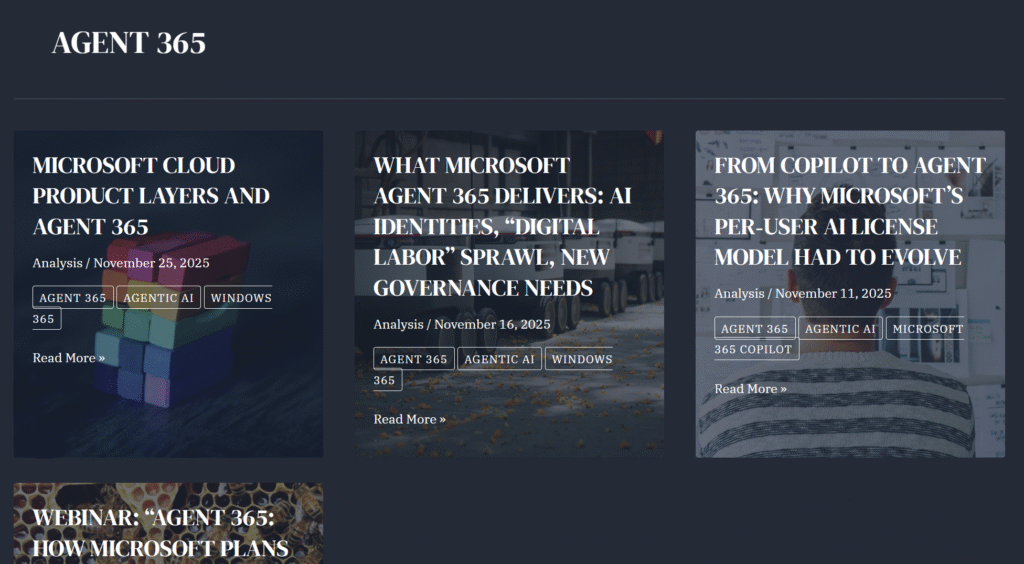
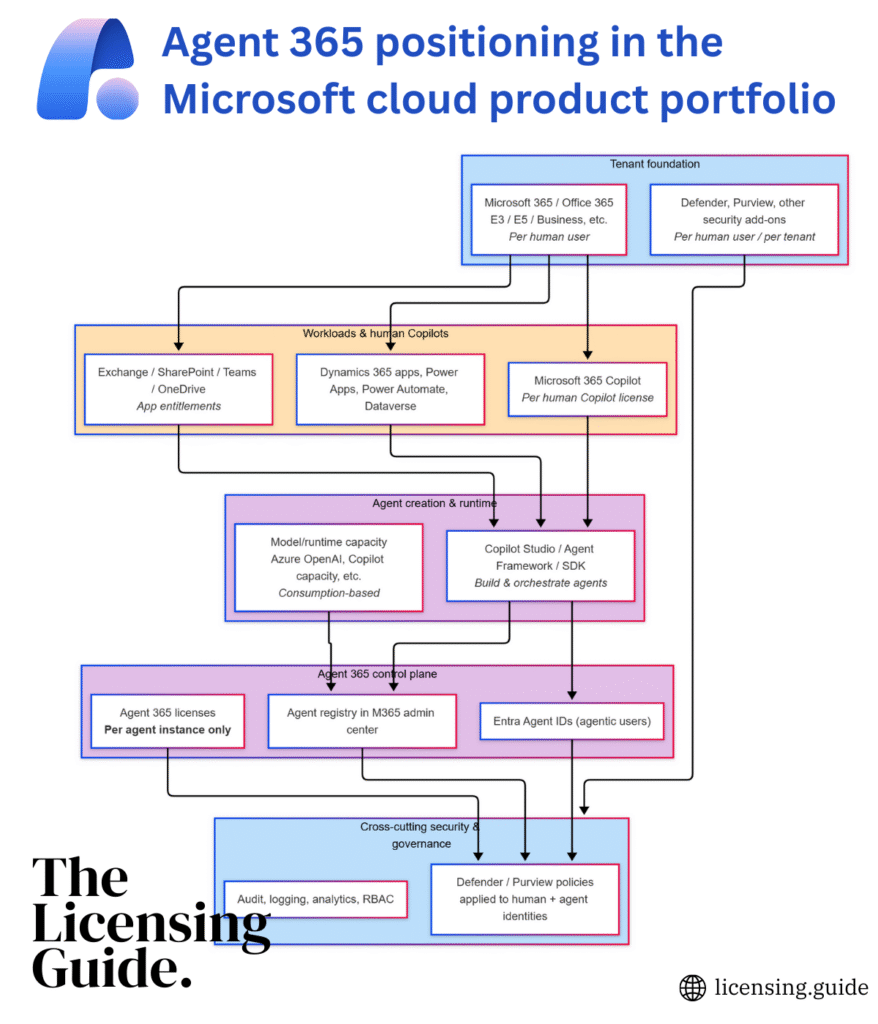
Whenever Microsoft announces something that will shake up their licensing model, like the new per-agent licensing of Agent 365, I will be keeping an eye on the scoops and info leaks as part of this strange hobby that I have. There’s now an obvious place to post these kind of updates, with The Licensing Guide blog section.
The added benefit of collecting your research into one place is that this makes the data easy to chat about with AI tools. That allows turning the complex new concepts buried in MS marketing lingo into illustrations that explain things without the smoke and mirrors. Such as creating mermaid charts from product documentation. Or constructing alternative FAQ pages from product announcement details and docs, like I did with the A365 FAQ page.
As far as topics in the Microsoft ecosystem go, there’s hardly anything less demonstrable than licensing. Yet occasionally I still get the feeling “I’d want to show this in action”, which is when I might record a quick video and put it on YouTube. Like this latest one about the Dataverse Capacity Calculator I built:
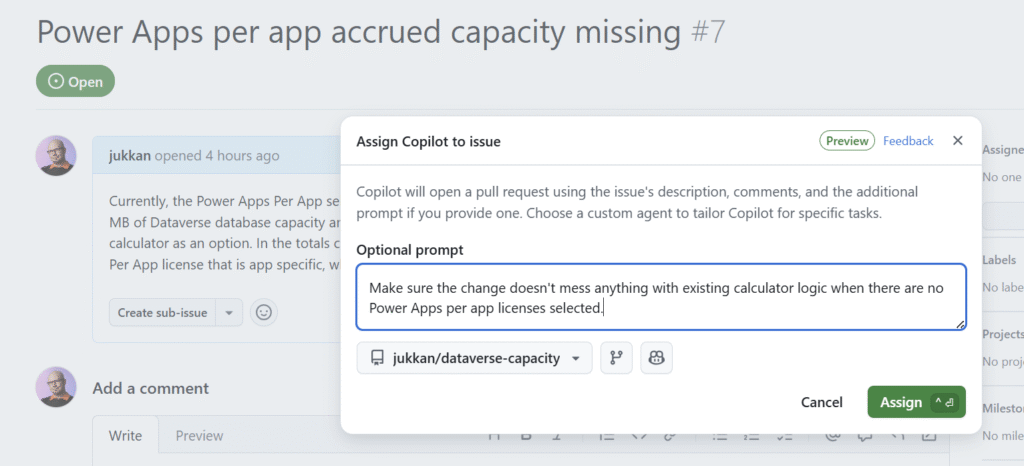
Which gets us to another unlikely combination: licensing + vibe coding. Yet that’s exactly what I’ve done with the above-mentioned Dataverse Capacity Calculator. After having a thorough discussion with my AI assistants about the contents of the latest licensing guide PDFs from Microsoft, I instructed them to “go and build me a calculator with these rules”. Now it’s an actual thing that exists on GitHub. Do I fully trust the output? No, whenever problems are found, I’ll just log an issue and assign it to Copilot.
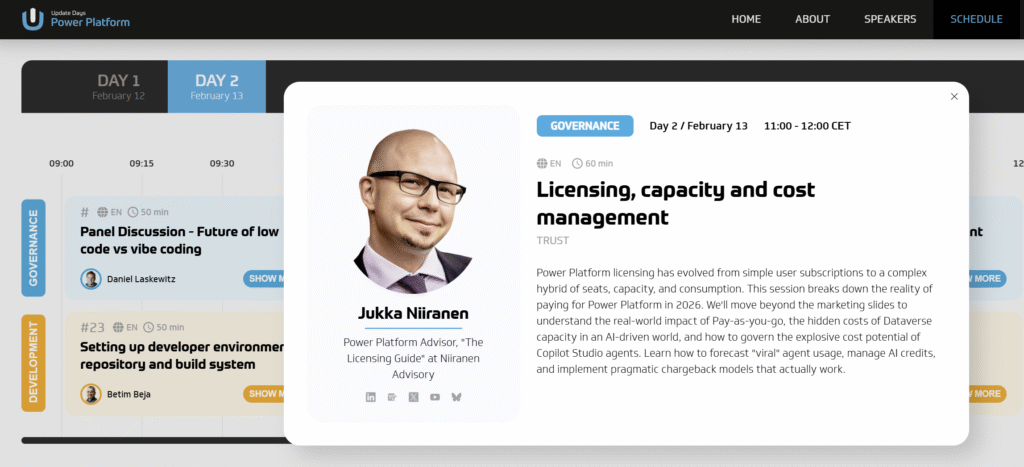
Some might think this isn’t how you should treat serious business topics like software licensing. Yet when I started actively blogging about Dynamics 365 and Power Platform licensing back in 2019, that wasn’t a thing any community member was doing either. These days, you’ll often find licensing-related sessions in community conferences like DynamicsMinds. And even at an upcoming pro-dev conference like Update Days: Power Platform.
I believe the best way to make an impact in this world is to A) find something that people don’t normally do, and then B) just do it. It has been proven to work with citizen development, citizen publishing (i.e. blogging) and all kinds of areas in life.
Remember this, kids: you can be whatever you choose to be. I chose to become the licensing.guide. Because why not? 🦸
One of the reasons why I changed my blog from “Surviving CRM” to “Thinking Forward” was to give me more space to cover topics that don’t necessarily fit under the umbrella of Dynamics 365. Yes, Power Platform is naturally one of the big drivers for this broadening of the scope, but I see a whole range of technologies in the Microsoft Cloud that are becoming more & more relevant for anyone who’s designing and delivering business solutions to customers. Broad awareness of the stack combined with deep expertise in specific fields is what I believe is needed to survive and thrive in my line of work. You could call this the path of the specialized generalist, or “T-shaped people who run the world”.
How does one go about building up this awareness of Microsoft Cloud technologies? All the required information is of course out there in the great wide Internet, but the big questions are A) what would be the most relevant topics right now for me to search guidance on, and B) how could I make this new knowledge stick? In order to create a memory footprint that will still remain after I’ve moved on from one browser tab to the next, sometimes it helps when you can associate things with something tangible from the physical world. People, places, events, moments.
The big event of the year for the Microsoft minded crowd of IT professionals in Finland is TechDays, which is on March 5-6 this year. I’ve got fond memories of the first time I attended this conference in 2011, when Dynamics CRM 2011 & CRM Online had just been launched and there was a dedicated track for this exciting new version & cloud service (which I naturally covered in my Finnish CRM blog at the time). Now, I have to admit that level of exposure to MS BizApps didn’t exactly become the norm for the event, because for a long time the MBS unit and its Dynamics products remained on the fringe of the mainstream Microsoft product portfolio.
Today things are different. No, you still wouldn’t find a CRM session from the TechDays 2020 agenda, but you wouldn’t find one in Microsoft’s list of products sold, either. What you will find instead is Power Platform being promoted as the common customization layer for both Office and Dynamics products. You’ll encounter a growing number of Azure services being turned into Insights products in the Dynamics 365 portfolio. You’ll see Microsoft promoting a platform for every developer, from professionals to citizens. You’ll hear Satya being bullish in MSFT earnings calls about their Customer Data Platform, powered by Dynamics 365 + Data Platform.
That’s how the story has evolved and this is the new reality in which the customer solutions must be designed: making use of all we have, not just what we’re familiar with. So, let’s look at the TechDays 2020 Finland session list with this in mind. Here are my top 3 sessions picked from the domains that I consider highly relevant for business applications professionals that want to understand the bigger picture of MS Cloud: Power Platform, Data Platform, Azure, Microsoft 365. I will also try to do a post event summary of the sessions I managed to attend and share the key takeways.
Power Platform
“Power Apps – Miten pääsen alkuun ja vielä pidemmälle?” by MVP Timo Pertilä. “Encrypted in Finnish” yet consisting 100% of demos, this session is going to help you kickstart your Power Apps (Canvas) app building journey for sure.
“How to build RPA solutions with UI Flows” by Timo once again. Robotic Process Automation is one of the hottest areas in business software and MS has only very recently entered the game with Power Automate’s new UI Flows that are aiming for GA in June. How far are they already? We’re about to find out!
“Developing enterprise-ready solutions with Power Platform and SharePoint” by Mikko Koskinen. Even if there is native support for CDS in Power Platform, the Connectors to SharePoint are bound to be the most common data source/target for apps today. Understanding how to leverage these in scenarios that go beyond citizen developed apps is therefore quite important.
“Building an Empire – Implementing Power BI Step by Step” by MVP Alexander Arvidsson. I’ll be the first to admit that of all the key pillars in Power Platform, Power BI is where I have the least hands-on experience so far. Therefore the promise of crafting the PBI solution from the absolute beginning and working our way towards Power BI dataflows sounds like just the thing for me!
“Introduction to Azure Databricks” by MVP Oskari Heikkinen. Going big in the data field requires courage to explore technologies like the Apache Spark based Databricks and understand how they relate to MS developed services in Azure.
Azure
“Selecting the right Azure products for your Azure PaaS project” by MVP Sakari Nahi. Just because I know how to sprinkle some #azure hashtags on my social media posts, that doesn’t mean I would have the capacity to keep an eye on all the products that are being launched there. I’m convinced that Sakke from Zure can give a Power Platform “aPaaS” guy like me a nice crash course on what the “PaaS with no training wheels” consists of.
“Need to know Azure services as a Microsoft 365 developer” by MVP Laura Kokkarinen. I bet there are similar mental barriers in reaching into raw Azure, no matter if you’re extending Dynamics 365 or Office 365 based solutions. It’ always interesting to hear how the professionals from the cloud next door are tapping into “The World’s Computer” when delivering customer specific solutions.
“Lisenssit löytyy, #mitäsitten – ota Teams hallitusti haltuun!” by MVPs Karoliina Kettukari & Vesa Nopanen. User adoption has always been a hot topic / grave concern in CRM projects. Even though Microsoft Teams is now the fastest growing product in the software giant’s 45 year history, that hardly means users will just discover all the benefits on their own and live happily ever after. Tips for how to gracefully pull off the launch new technology affecting such a large crowd of information workers are always useful, even when developing and rolling out more targeted business apps.
“Getting Started with Developing Apps for Microsoft Teams” by MVP Christina Wheeler. Speaking of business apps, it’s pretty clear that Microsoft is envisioning Teams to become the hub for teamwork, not just via common productivity tools but also unique applications made available through its UI. Understanding the options available and contrasting them with what Power Platform can offer is going to be key in building a solid app strategy for customer organizations.
“Customizing Microsoft Teams Provisioning and Governance” by MVP Olli Jääskeläinen. Collaboration practices should be backed up by a smart system that can bring some structure into the otherwise so unstructured world of conversations and documents. Learning how to more tightly connect Microsoft Teams provisioning with the processes and data structures managed in systems of record like CRM is what I’m eager to see.