
Blogging has had a massive impact on my career and personal life in the past 16 years. The act of other community members out there sharing their insights via blog posts is what initially got me so excited about the Microsoft business apps ecosystem to begin with, at around ~2005. My own investments of time and effort into blogging have been totally worth it.
And yet here we are, in 2024 and I decided to launch a newsletter instead. Called “Perspectives on Power Platform”, it’s available on the perspectives.plus domain. Published and managed via beehiiv. This is all aligned with me switching over from being a co-founder into being a solopreneur instead just a few months ago.
I feel I need to explain myself a bit here on this “legacy” blog – considering a few people have also asked me directly about it. “Why a newsletter?” I’ll provide my reasons and thought process here, with the intention of possibly sparking also comments from fellow bloggers and blog readers on this shift I see around me.
Is blogging dead? No, but following is.
The web is certainly no longer the same as back in 2005 – yet few things in the world are. First the rise of social media came along and pretty much killed the traditional way of following blogs via RSS feeds and Google Reader (RIP). It doesn’t matter that RSS as a protocol is still perfectly valid today. Most people who might be interested in what I or the rest of the #MSBizApps community write about will not be using RSS. I have personally pretty much given up on following the hundreds of RSS feeds that I had subscribed to in my Feedly account.
At first, the co-existence of blogs and social media platforms like Twitter seemed to work quite well. Sharing links to great blog posts was an amplification method that helped form communities. Then, the laws of market economics drove every major social media company to build a walled garden instead of a “meta protocol” for such social interactions between community members. They wanted to hold onto the audience instead, which lead to algorithmic feeds punishing people for posting things that had a link pointing outside the garden. As a result, fewer people left the garden and the content inside became richer as users tried to cram more text, images, video into the native social channel instead. “Engagement” became the key metric that determines what we see – not who we chose to follow or subscribe to. We lost control.
This affected all content, not just blogs. Musicians, writers, artists – all creators everywhere lost the direct way for them to build an audience of followers. To understand the broad impact that the rise of the social media algorithm had, I recommend you to put this video on your watchlist: “Death of the Follower & the Future of Creativity on the Web” by Patreon CEO Jack Conte at SXSW 2024.
Today, in the era of TikTok, the concept of subscriptions or following creators has been completely abandoned. Ultra-algorithmic “For You” streams do not rely on your personal network. On today’s social media services like Threads (the “Twitter, from Meta”) it’s tough to get anyone to follow you. Engagement on your post does not translate into an audience of followers. You don’t connect with creators – you consume trending content. There’s hardly anything “social” about such content networks anymore.
Blogging didn’t die as much as social networks did. User generated content is being circulated around at an ever-faster pace – yet it’s selected by a machine rather than the users explicitly. Audiences are not something we own, rather it’s something we can purchase time & time again from the walled gardens that host the user generated content we give to them for free.
Are you writing blog posts or AI training data?
After the social media algorithms came the LLM wave. How is this generative AI era different from the social media era? In terms of how they treat content, the difference is subtle yet massive:
- Social media: process all the content users posted on our platform and extract maximum value out of it.
- Generative AI: process all the content available on the public web and extract maximum value out of it.
Pause for a moment to reflect on that. First, they built a walled garden – then they came for everything outside those walls. What Meta did in Facebook/Instagram is now being done by OpenAI, Google, Meta (again) etc. on the entire world wide web. It’s ultimately just about turning up the volume of data, by crunching everything humans have ever created and compressing that into a Large Language Model. Throw in piles & piles of Nvidia GPUs and massive amounts of energy burned in data centers, and then – suddenly a new species of intelligent chatbots emerged from this cauldron of the geeks. Generating something new from the ingredients mixed in during the cooking process.
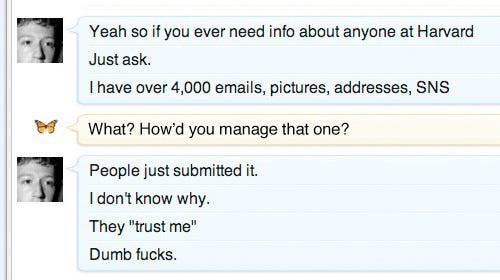
Human thoughts are the critical ingredient. Without the users, all that big tech corporations have is software and hardware. They don’t have data unless someone gives it to them. Google as a search engine wouldn’t have been able to produce any value to anyone unless it was able to index the data shared by humans on the public web. Mark Zuckerberg wouldn’t have been able to get anyone signed up or Facebook unless people at Harvard hadn’t “just submitted the data to him, like dumb f***s”.
Data both inside the walled gardens as well as outside of it has been analyzed before for commercial purposes. When Google did it for their search engine, it (originally) was about helping users find the original source of that content. Leading to website visitors, who could in turn potentially become subscribers. You gained attribution and the opportunity to connect with other people via building an audience. A deal that was hard to refuse.
How does this deal work in the age of ChatGPT, Copilot and the other AI services? It doesn’t. The social contract of “you index my content and I get exposure in return” becomes irrelevant when the machine no longer provides merely a link to a website as the answer to a user query. Instead, the LLMs become so smart that they offer personalized answers in the exact format requested by the user – thus negating any reason to visit the original websites. After all, why read through an SEO optimized “how to do X in Power Apps” article when ChatGPT or Copilot can adjust the information to any scenario and help you with follow-up questions, error messages and so on?
The irony here is that the “how to do X” and “5 tips for optimizing Y” type of blog posts have been by far the most effective format to gain website visitors in the past. I haven’t usually seen them as very ejoyable to write, so I’ve instead spent my keystrokes on broader articles of analyzing “what does X mean” and “the future of Y” type of speculations. Such articles have only mattered for a brief period and have been mainly seen by loyal subscribers/followers. The long tail of traffic from Google has always been to the “how to” posts, by a massive margin. Now, thanks to AI – neither type of blog post will receive much traffic in the future, for pretty much any bloggers out there.
Could the creators of content opt out from becoming AI training data? In theory, yes, and in practice, no. We’ve already seen companies like Perplexity AI spoof their user agent info and ignore any blocking done via the robots.txt file. Corporations also do it between each other. Amazon has instructed its employees to create personal user accounts and hand them over to the corporate AI group to get around GitHub API call limits. Besides, if we ever reach consensus on a method to deny the use of specific web content in training AI models, all of the old stuff out there today would still remain as part of what makes up the intelligence of ChatGPT and the likes.
It’s best to assume that anything an anonymous website visitor can read, AI corporations will also use to advance their own purposes. You, the writer, will most often get absolutely nothing from it.
Email as the old/new platform
This brings us to the title of this post. While some pre-social and pre-AI internet technologies like RSS have faded into the background, email has remained undefeated. No matter how many alternative messaging and collaboration platforms have come & gone, nothing has managed to disrupt email in a meaningful way. Although kids today may not be paying much attention to email, the further along they go on their professional career, the more futile it is to resist the power of this universal messaging protocol and (unfortunately) identity system that has been around since 1971.
The renaissance of email newsletters that has been fueled by services like Substack, Ghost etc. is a great example of how the old thing can feel new again after a break. Most importantly, these tools have been designed to first help the content creators build up an audience, and only then gain financial success from taking a cut off the paid content served to those audiences. Or from subscription fees paid by the creator, as is the case with my beehiiv account today. Unlike with social media, the platform for email newsletter delivery is not actively trying to stop the creators and readers from having a direct relationship with each other.
Email capture is a ubiquitous gate along the many journeys we all experience while online. You do it when registering for both social and AI services, too. Businesses often use it as an excuse for getting the chance to know who is interested in their content enough to fill in a form, so that they can talk directly to them. Now, with the rise of the all-scraping AI overlords, there’s a whole new reason for even individual content creators and community members to seriously consider asking readers to sign in. Unless content is locked away behind a real gate that can’t just be opened via the search bots lying about who they are, the content will get consumed by AI.
Right now, all my Perspectives on Power Platform newsletter issues are publicly available for anyone to consume. However, I have the possibility now to change that if needed. Perhaps in the future the full articles will require a subscriber account – just to keep the AI bots away. While for the casual web surfers this of course is an extra hassle, luckily they can do a one-off registration on the site and then receive all future issues of the newsletter delivered into their mailbox.
It’s nothing new for some of you. There are hundreds of people who are subscribing to this current blog via email notifications (powered by Jetpack) and I’m very thankful for this audience! At the same time, I want to apologize for the recent blast of lorem ipsum dummy content that got sent to you while I was deploying a new theme for my blog.😳 Just goes to show that WordPress isn’t exactly the ideal platform if you intend to publish content primarily in an email newsletter format…

If you are interested in receiving my future writings into your inboxes, I strongly recommend you to sign up for the newsletter. This blog right here at jukkaniiranen.com will remain as a place for me to share thoughts around topics outside of the Microsoft ecosystem. The regular content on what’s happening with Microsoft Power Platform and what’s my take on it will be on the Perspectives newsletter and site exclusively from now on.
Why “perspectives.plus”?
As I mentioned in the beginning, I am today working for myself. For the first time ever, I really don’t need to think about “how will this activity generate work for someone else in my team”. I am the business. I’m free to explore ways in which the things I know and what I’m good at can deliver value to someone else out there – and how to make a decent living out of it.
With my 11-year journey in the Microsoft MVP award program coming to an end, there is no longer any conflict of interests between community contributions and possible commercial agreements with parties in this expanding Power Platform ecosystem. This does not mean that I intend to sell out my own integrity and start promoting products from anyone who inserts a credit card. The way I see it, the key reason I have any audience in this space to begin with is because I always tell it like it is. I spend quite a bit of time exploring and thinking about the world I see around me, then I form my own perspectives on things and say it aloud. Telling both sides of the story, in ways that might feel controversial. Love it or hate it, that’s what I am about.
This is not all just about me. My motivation comes from advancing a worthy cause and helping those people out there who are doing the right thing, yet not always getting the recognition that they would deserve. This is where I’m looking to form partnerships with companies that have a solid offering for the Microsoft Power Platform customer base, and who understand what it takes to establish trust within this community.
The “Plus” in perspectives.plus is not just a random top-level domain I picked. It represents the possibility of there one day being something more than just a free email newsletter available there. One of the possibilities introduced by platforms like beehiiv is the option for premium subscription tiers. Who knows, perhaps some of the things I will build and write would be worth putting behind a small fee to be paid? It’s not something I am actively pursuing at this moment, yet I like to keep my options open.
In the end, it all comes down to perception. Of the million ways that we can create, exchange, and consume information in the computer world, technical implementation is rarely the factor that defines the outcome. It’s about how we frame information and express our intention, through subtle signals that us humans have evolved to pay special attention to. Machines just see data, be it published on a blog or a newsletter. We, on the other hand, can define – and redefine, the meaning of such data via crafting the storyline around it. If we want to achieve something new, I believe we first need to imagine a new story and then share it with the people around us.
UPDATE 2024-11-29: Here’s a follow-up post, “7 months of Perspectives – start of my newsletter journey”.
Cover photo by Kristina Tripkovic, from Unsplash.