Tag: blog

  • The internet made me do it

    The internet made me do it

    Everything I know, everything I do professionally today – it all comes from typing into little text boxes on the internet.

    Even before I had internet connectivity for my PC back at my parents’ house, I could use the phone line to talk via the computer. I didn’t need to pick up the phone, instead I let my modem connect me to BBSs where people were writing things on pre-internet forums.

    A classic V.34 modem. No, not mine. It’s from the internet, of course.

    Maybe that’s what taught me to never pick up the phone for a call if there was a way to do things in writing. I still find it oddly barbaric that our smartphones have the “Phone” app that allows unidentified individuals to harass us with incoming calls. Why isn’t the EU protecting its citizens from threats like this?

    We trained your AI

    I’ve previously shared my history, stats and thoughts on blogging. It’s safe to say that these texts have been the most impactful ones I’ve typed, when examining the audience reached by any single collection of words. Their persistence online has made them worth much more than any snarky social posts I’ve made on Twitter, LinkedIn and the likes.

    The importance of blog posts doesn’t come from any secret old wisdom revealed in them. It comes from the fact that they can be seen. They can be discovered. They don’t cease to exist when people leave the room.

    Yet there are so many leaders out there who insist on doing things in person. I am not saying that face to face meetings would not have a level of impact that’s hard to replicate digitally. But what I am saying is that their impact evaporates rapidly. The words are lost in thin air the moment your lips spell them out.

    For everyone who insist on phone calls, meetings and synchronous communication as the primary mechanism for getting work done, let me ask you this:

    How much of the words said out loud in those events have been used to train the AI that many/most of us use today in 2025?

    The answer is likely: none whatsoever.

    Now, how about the thoughts and ideas of people who prefer to write things down? You know, just ordinary folks who type things in online forums, or geeks who love to document the most intricate details of whatever topic they are passionate about. What are the chances that the LLMs used today have seen their words?

    It’s almost certain that such text has been crawled into the massive data troves used by OpenAI, Google and the rest. Now, often this is only seen through the negative aspect of “they took our data!”, which is a rightful concern. However, have you ever stopped to think about the possible impact?

    When the people who aren’t comfortable sharing their thoughts in writing will today ask ChatGPT for advice, the response consists of the collective knowledge from all us writers who were not afraid to type. No one asked the talkers what they thought about anything. It’s as if all those big words didn’t matter much on our journey towards a distant yet inevitable true artificial intelligence.

    Thinking through writing

    It’s not merely the publicly available text that can be impactful. By having the courage to put something in writing while at work and then sharing it to an internal audience, you are entering the same virtuous cycle. Even today when there’s a Copilot in the Teams meeting that will turn the transcripts into automatically generated summaries, the words that you choose to write have considerably more weight.

    Throughout my professional career, I’ve most often had to resort to sources outside the organization I worked in to find information I needed to get my job done. Because I worked in expert roles where it made far more sense to google for the answer globally than shout out the question in the office locally.

    When the answers that I discovered were in written format to begin with, it was easy to share them internally in that way, too. The more senior positions I gained, the more actively I tried to do proactive posts on channels like Yammer. Because I knew that someone might ask me about these topics weeks or months from now, and I didn’t want to repeat myself. Not the search, nor the act of typing or speaking.

    This shaped the person that I became, in many ways. Yes, there was the upside of being knowledgeable in the eyes of others. Jukka always had “a link for that”. I was pretty darn good at knowing what info was where. This method of information processing also allowed me to hone my skills in connecting the dots between concepts and objects that weren’t always obviously related. Some may call it systems thinking.

    It also made me a difficult person at times. My tolerance for the casual, non-systemic dissemination of information was low. While others were living in the moment and focused on constructing a social narrative, my thoughts were often in the factual details. My mind was racing towards future scenarios, “predicting the next token” of what problems we should address that will likely result from our current actions. Because that’s how the written stories unfold – into future chapters and linked articles.

    Communicating online in forums, responding to others in threads, referencing related discussions and providing evidence – that is an activity with its own social norms. As we increasingly work remotely from each other, the behavioral patterns that the internet taught us are both powerful and dangerous. We should be able to adjust our mode of operation to fit the social context. The what and how you write should be decided only after you remind yourself of the who and why.

    But when it’s all just little text boxes on the internet, how can our brains notice the nuances?

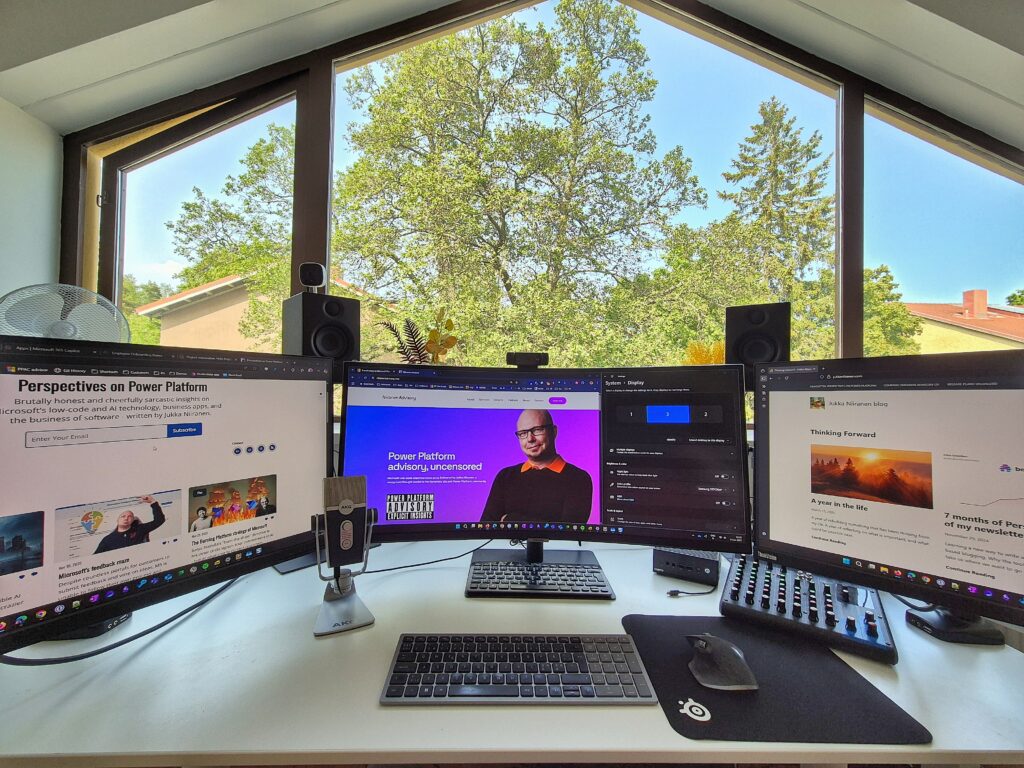
    Today, as a solopreneur, I sit in my private office typing this post. I don’t need to balance my presence between the digital world and the physical reality, simply because nearly all interaction during the day happens online. Yet in every app, in all the tens of windows that exist on my monitors on a typical day, hardly any of the text boxes are completely equal. I must remember what can be written where, and how.
    Writing is all you need

    Today, people have started to realize how big of a difference you can make by posting things online. Yet I don’t recall anyone using the term “influencer” before the visual social media era of Instagram, YouTube and TikTok arrived. You absolutely do influence the world around you via written messages, too. Being visual about it doesn’t hurt, yet the choice of your primary media payload will determine a great deal of the first impression people will have about you.

    If you want your words to represent you, where should you start and how to become someone other people on the internet might pay attention to? Pavel Samsonov recently shared his formula of standing out through writing in an excellent article that provides more clarity into the topic than I could write here. So, start from there. (See, this is how it all works. People amplifying the writing of other people.)

    Today, a lot of what I do on a daily basis is actually a combination of two things learned from the internet: online writing and memes. Because in social feeds it’s hard to make people notice you with just a wall of text. Besides, like Pavel writes: “If you can’t think of anything interesting to add, just post memes. Everyone loves memes.” You can’t go wrong with advise like that.
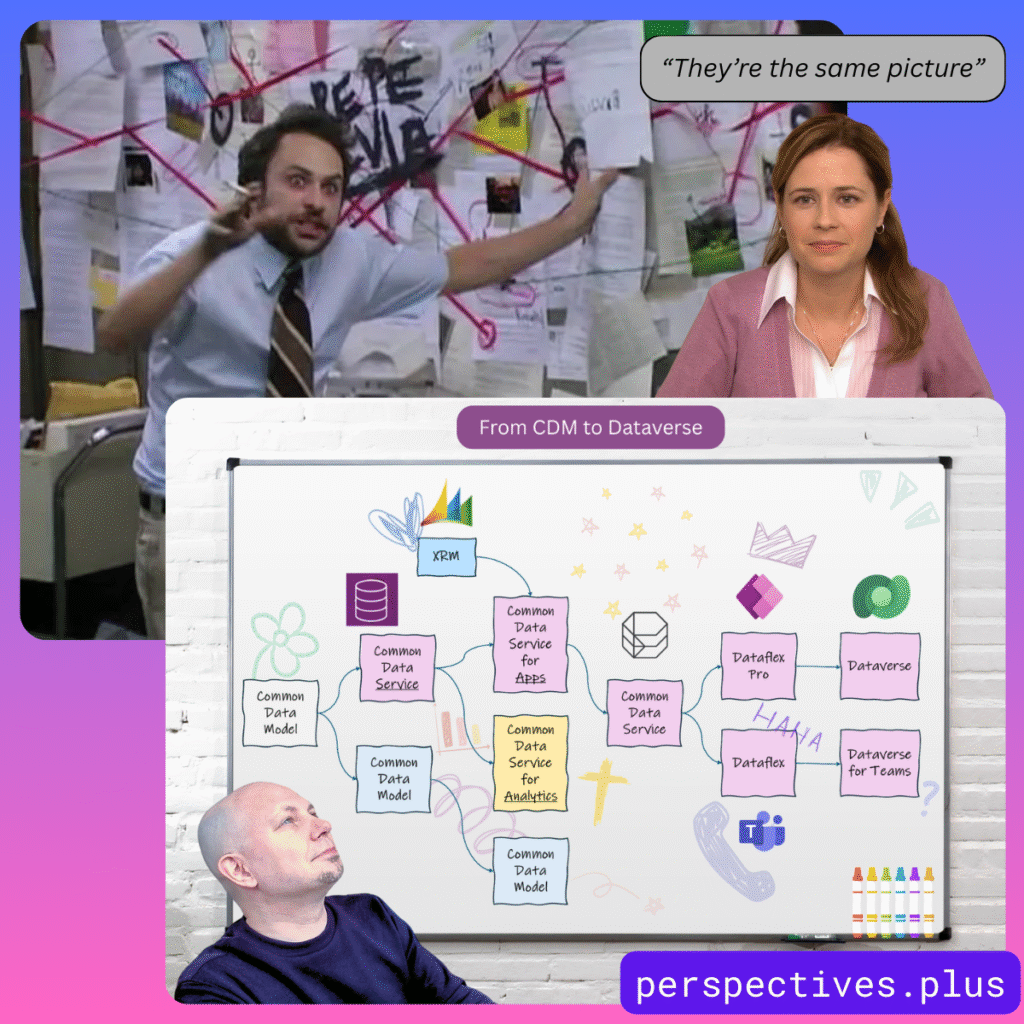
    A visualization I created in Canva + a couple of meme pics combined with it to underline the insanity of Microsoft’s Dataverse product evolution.

    Especially if you’re writing about a subject that isn’t exactly headline news in mainstream media, it doesn’t ever hurt to think about an angle that would make the audience say “hold on, wait a minute, what exactly did I just see?” Meaning, rather than going for the most common way to present the information in your field of expertise, why not put it into an unconventional context? Memes are an excellent vehicle for visually making this happen. After that, it can also give you as a writer more freedom to address the issue in a surprising way.

    In my latest journey as the writer of a newsletter, I have ended up choosing a style of content that would not have worked back when I was still a Microsoft MVP. I’ve always been brutally honest with sharing my thoughts about the good and the bad sides of modern technology. Yet with my Perspectives on Power Platform newsletter as a new publication format, it has encouraged me to consistently write in the style of that publication.

    Ever since I launched the Plus edition in the end last year, with a promise of a weekly newsletter issue to my paying subscribers, it has kept me focused on repeatedly doing one thing. I’ve always loved thinking through writing, yet too often it has been something you can skip if in a hurry. Well, that’s no longer the case. Writing isn’t optional – it’s part of what I am.

    “Like and subscribe”

    One more thing. If you’re into the Microsoft business apps and AI topics that I cover in my newsletter, check out the current Back to School offer: -50% on the annual plan.
    Cover photo by Wokey Factory on Unsplash

  • Why start a newsletter instead of writing a blog

    Why start a newsletter instead of writing a blog

    Blogging has had a massive impact on my career and personal life in the past 16 years. The act of other community members out there sharing their insights via blog posts is what initially got me so excited about the Microsoft business apps ecosystem to begin with, at around ~2005. My own investments of time and effort into blogging have been totally worth it.

    And yet here we are, in 2024 and I decided to launch a newsletter instead. Called “Perspectives on Power Platform”, it’s available on the perspectives.plus domain. Published and managed via beehiiv. This is all aligned with me switching over from being a co-founder into being a solopreneur instead just a few months ago.

    I feel I need to explain myself a bit here on this “legacy” blog – considering a few people have also asked me directly about it. “Why a newsletter?” I’ll provide my reasons and thought process here, with the intention of possibly sparking also comments from fellow bloggers and blog readers on this shift I see around me.

    Is blogging dead? No, but following is.

    The web is certainly no longer the same as back in 2005 – yet few things in the world are. First the rise of social media came along and pretty much killed the traditional way of following blogs via RSS feeds and Google Reader (RIP). It doesn’t matter that RSS as a protocol is still perfectly valid today. Most people who might be interested in what I or the rest of the #MSBizApps community write about will not be using RSS. I have personally pretty much given up on following the hundreds of RSS feeds that I had subscribed to in my Feedly account.

    At first, the co-existence of blogs and social media platforms like Twitter seemed to work quite well. Sharing links to great blog posts was an amplification method that helped form communities. Then, the laws of market economics drove every major social media company to build a walled garden instead of a “meta protocol” for such social interactions between community members. They wanted to hold onto the audience instead, which lead to algorithmic feeds punishing people for posting things that had a link pointing outside the garden. As a result, fewer people left the garden and the content inside became richer as users tried to cram more text, images, video into the native social channel instead. “Engagement” became the key metric that determines what we see – not who we chose to follow or subscribe to. We lost control.

    This affected all content, not just blogs. Musicians, writers, artists – all creators everywhere lost the direct way for them to build an audience of followers. To understand the broad impact that the rise of the social media algorithm had, I recommend you to put this video on your watchlist: “Death of the Follower & the Future of Creativity on the Web” by Patreon CEO Jack Conte at SXSW 2024.

    Today, in the era of TikTok, the concept of subscriptions or following creators has been completely abandoned. Ultra-algorithmic “For You” streams do not rely on your personal network. On today’s social media services like Threads (the “Twitter, from Meta”) it’s tough to get anyone to follow you. Engagement on your post does not translate into an audience of followers. You don’t connect with creators – you consume trending content. There’s hardly anything “social” about such content networks anymore.

    Blogging didn’t die as much as social networks did. User generated content is being circulated around at an ever-faster pace – yet it’s selected by a machine rather than the users explicitly. Audiences are not something we own, rather it’s something we can purchase time & time again from the walled gardens that host the user generated content we give to them for free.

    Are you writing blog posts or AI training data?

    After the social media algorithms came the LLM wave. How is this generative AI era different from the social media era? In terms of how they treat content, the difference is subtle yet massive:

    • Social media: process all the content users posted on our platform and extract maximum value out of it.
    • Generative AI: process all the content available on the public web and extract maximum value out of it.

    Pause for a moment to reflect on that. First, they built a walled garden – then they came for everything outside those walls. What Meta did in Facebook/Instagram is now being done by OpenAI, Google, Meta (again) etc. on the entire world wide web. It’s ultimately just about turning up the volume of data, by crunching everything humans have ever created and compressing that into a Large Language Model. Throw in piles & piles of Nvidia GPUs and massive amounts of energy burned in data centers, and then – suddenly a new species of intelligent chatbots emerged from this cauldron of the geeks. Generating something new from the ingredients mixed in during the cooking process.

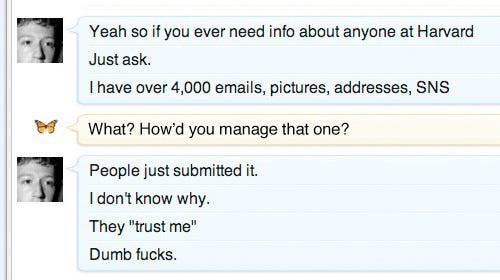
    Human thoughts are the critical ingredient. Without the users, all that big tech corporations have is software and hardware. They don’t have data unless someone gives it to them. Google as a search engine wouldn’t have been able to produce any value to anyone unless it was able to index the data shared by humans on the public web. Mark Zuckerberg wouldn’t have been able to get anyone signed up or Facebook unless people at Harvard hadn’t “just submitted the data to him, like dumb f***s”.

    Data both inside the walled gardens as well as outside of it has been analyzed before for commercial purposes. When Google did it for their search engine, it (originally) was about helping users find the original source of that content. Leading to website visitors, who could in turn potentially become subscribers. You gained attribution and the opportunity to connect with other people via building an audience. A deal that was hard to refuse.

    How does this deal work in the age of ChatGPT, Copilot and the other AI services? It doesn’t. The social contract of “you index my content and I get exposure in return” becomes irrelevant when the machine no longer provides merely a link to a website as the answer to a user query. Instead, the LLMs become so smart that they offer personalized answers in the exact format requested by the user – thus negating any reason to visit the original websites. After all, why read through an SEO optimized “how to do X in Power Apps” article when ChatGPT or Copilot can adjust the information to any scenario and help you with follow-up questions, error messages and so on?

    The irony here is that the “how to do X” and “5 tips for optimizing Y” type of blog posts have been by far the most effective format to gain website visitors in the past. I haven’t usually seen them as very ejoyable to write, so I’ve instead spent my keystrokes on broader articles of analyzing “what does X mean” and “the future of Y” type of speculations. Such articles have only mattered for a brief period and have been mainly seen by loyal subscribers/followers. The long tail of traffic from Google has always been to the “how to” posts, by a massive margin. Now, thanks to AI – neither type of blog post will receive much traffic in the future, for pretty much any bloggers out there.

    Could the creators of content opt out from becoming AI training data? In theory, yes, and in practice, no. We’ve already seen companies like Perplexity AI spoof their user agent info and ignore any blocking done via the robots.txt file. Corporations also do it between each other. Amazon has instructed its employees to create personal user accounts and hand them over to the corporate AI group to get around GitHub API call limits. Besides, if we ever reach consensus on a method to deny the use of specific web content in training AI models, all of the old stuff out there today would still remain as part of what makes up the intelligence of ChatGPT and the likes.

    It’s best to assume that anything an anonymous website visitor can read, AI corporations will also use to advance their own purposes. You, the writer, will most often get absolutely nothing from it.

    Email as the old/new platform

    This brings us to the title of this post. While some pre-social and pre-AI internet technologies like RSS have faded into the background, email has remained undefeated. No matter how many alternative messaging and collaboration platforms have come & gone, nothing has managed to disrupt email in a meaningful way. Although kids today may not be paying much attention to email, the further along they go on their professional career, the more futile it is to resist the power of this universal messaging protocol and (unfortunately) identity system that has been around since 1971.

    The renaissance of email newsletters that has been fueled by services like Substack, Ghost etc. is a great example of how the old thing can feel new again after a break. Most importantly, these tools have been designed to first help the content creators build up an audience, and only then gain financial success from taking a cut off the paid content served to those audiences. Or from subscription fees paid by the creator, as is the case with my beehiiv account today. Unlike with social media, the platform for email newsletter delivery is not actively trying to stop the creators and readers from having a direct relationship with each other.

    Email capture is a ubiquitous gate along the many journeys we all experience while online. You do it when registering for both social and AI services, too. Businesses often use it as an excuse for getting the chance to know who is interested in their content enough to fill in a form, so that they can talk directly to them. Now, with the rise of the all-scraping AI overlords, there’s a whole new reason for even individual content creators and community members to seriously consider asking readers to sign in. Unless content is locked away behind a real gate that can’t just be opened via the search bots lying about who they are, the content will get consumed by AI.

    Right now, all my Perspectives on Power Platform newsletter issues are publicly available for anyone to consume. However, I have the possibility now to change that if needed. Perhaps in the future the full articles will require a subscriber account – just to keep the AI bots away. While for the casual web surfers this of course is an extra hassle, luckily they can do a one-off registration on the site and then receive all future issues of the newsletter delivered into their mailbox.

    It’s nothing new for some of you. There are hundreds of people who are subscribing to this current blog via email notifications (powered by Jetpack) and I’m very thankful for this audience! At the same time, I want to apologize for the recent blast of lorem ipsum dummy content that got sent to you while I was deploying a new theme for my blog.😳 Just goes to show that WordPress isn’t exactly the ideal platform if you intend to publish content primarily in an email newsletter format…

    If you are interested in receiving my future writings into your inboxes, I strongly recommend you to sign up for the newsletter. This blog right here at jukkaniiranen.com will remain as a place for me to share thoughts around topics outside of the Microsoft ecosystem. The regular content on what’s happening with Microsoft Power Platform and what’s my take on it will be on the Perspectives newsletter and site exclusively from now on.

    Why “perspectives.plus”?

    As I mentioned in the beginning, I am today working for myself. For the first time ever, I really don’t need to think about “how will this activity generate work for someone else in my team”. I am the business. I’m free to explore ways in which the things I know and what I’m good at can deliver value to someone else out there – and how to make a decent living out of it.

    With my 11-year journey in the Microsoft MVP award program coming to an end, there is no longer any conflict of interests between community contributions and possible commercial agreements with parties in this expanding Power Platform ecosystem. This does not mean that I intend to sell out my own integrity and start promoting products from anyone who inserts a credit card. The way I see it, the key reason I have any audience in this space to begin with is because I always tell it like it is. I spend quite a bit of time exploring and thinking about the world I see around me, then I form my own perspectives on things and say it aloud. Telling both sides of the story, in ways that might feel controversial. Love it or hate it, that’s what I am about.

    This is not all just about me. My motivation comes from advancing a worthy cause and helping those people out there who are doing the right thing, yet not always getting the recognition that they would deserve. This is where I’m looking to form partnerships with companies that have a solid offering for the Microsoft Power Platform customer base, and who understand what it takes to establish trust within this community.

    The “Plus” in perspectives.plus is not just a random top-level domain I picked. It represents the possibility of there one day being something more than just a free email newsletter available there. One of the possibilities introduced by platforms like beehiiv is the option for premium subscription tiers. Who knows, perhaps some of the things I will build and write would be worth putting behind a small fee to be paid? It’s not something I am actively pursuing at this moment, yet I like to keep my options open.

    In the end, it all comes down to perception. Of the million ways that we can create, exchange, and consume information in the computer world, technical implementation is rarely the factor that defines the outcome. It’s about how we frame information and express our intention, through subtle signals that us humans have evolved to pay special attention to. Machines just see data, be it published on a blog or a newsletter. We, on the other hand, can define – and redefine, the meaning of such data via crafting the storyline around it. If we want to achieve something new, I believe we first need to imagine a new story and then share it with the people around us.

    UPDATE 2024-11-29: Here’s a follow-up post, “7 months of Perspectives – start of my newsletter journey”.

    Cover photo by Kristina Tripkovic, from Unsplash.

  • This blog is now part of the Fediverse

    This blog is now part of the Fediverse

    I have been blogging quite a while in terms of calendar time. One year ago I did some math on how much time has been spent on the blogging activity itself. This data can be found in my post “Is blogging worth it?”

    The online world around me has gone through many waves of changes. The most recent one involves the term you see in this post title, which may or may not be familiar to you. I certainly didn’t know about it a year ago. Today, I am making (or at least attempting to make) my first WordPress blog post that goes out into the Fediverse via ActivityPub!

    To put things into context and explain what & why I’m doing, let’s look back a bit on the road that lead to the rise of the Fediverse.

    Humble beginnings

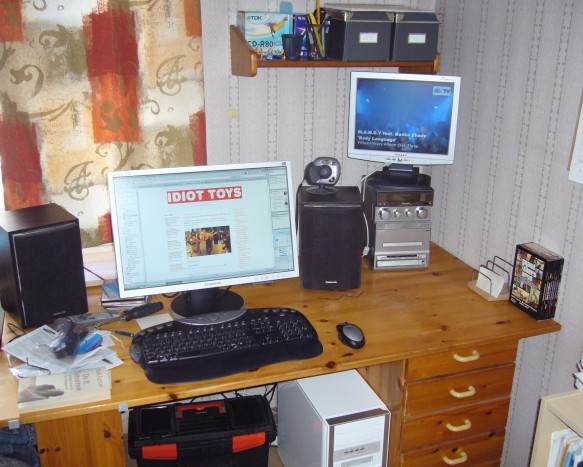
    I started my first blog over on Blogspot sometime in 2007. That blog doesn’t exist anymore, yet recently Google reminded me of the image files they’re still hosting related to that blogging activity. Including this wonderful photo of the actual corner in my bedroom from where it all began:

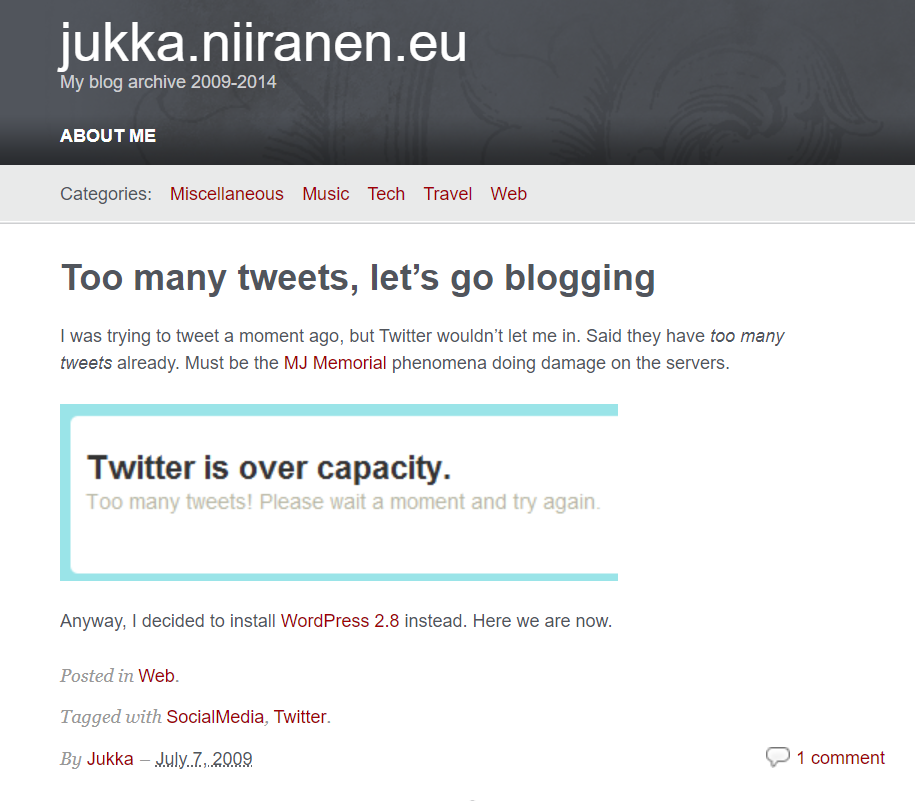
    After I found the Blogspot cloud service too limited, I decided to go on-prem and install a version of Drupal on a hosted server somewhere. That site doesn’t exist anymore either (at least I hope it doesn’t). In 2009 I figured Drupal wasn’t designed for my purposes and moved my personal blogging onto WordPress. That specific blog is still online and this is the first post I found on it:

    That post’s content was a surprise for myself. I would not have recalled that I had originally joined Twitter for the same reason as the masses did: to follow what celebrities around the world were sharing about their life (140 characters at a time).

    A bit earlier, in 2008, I had already started another WordPress blog called “Surviving CRM” which eventually evolved into the blog you are reading right now (“Thinking Forward” at jukkaniiranen.com). The core WP enginge has remained the same behind the scenes (with countless version updates, of course) and the main contents of all the blog posts is also still available.

    Everything else about the blog has changed several times (pages, topics, visual theme, plugins, features, linked services), yet fundamentally it’s the same digital object that was born 15 years ago. With a few domain redirects that I put in place, you could have even started following my blog via its RSS feed back then and still today see this updated that I posted.

    If someone would still be using RSS feeds, that is.

    Social media boom and bust

    My inspiration for starting to write blog posts naturally came from following other bloggers. The method for this was RSS (“real simple syndication”). I started trying out different feed reader software & services (like Netvibes) before Google Reader took over the feed aggregator market.

    Then Google did what Google usually does, meaning killing its products. Presumably the monetization model for online media consumption based on open standards like RSS wasn’t lucrative enough compared to other ways Google could turn user data into something to sell to advertisers. When the hugely popular Google Reader was discontinued in 2013, no similar feed aggregator service took its place.

    The online masses turned to social media services instead. Blog posts were no longer a dedicated feed, now they were just a part of the updates presented via the social graph of users you followed. The likes of Facebook and Twitter owned this graph and realized how much more profitable it was for them to control it – rather than just showing a chronological feed and allowing users to categorize content. Enter the age of the algorithms deciding what the users were seeing.

    Today, the social media as we came to know it in the golden age of Facebook and Twitter is slowly yet surely dying. I had remained an active Twitter user for over a decade, despite of the decline in organic network content and the rise of algorithm pleasing clickbaits and political outrage filling the feed. After seeing the massive damage that Elon Musk managed to create when taking over on October 27th 2022, I decided to stop posting new content on Twitter on November 18th.

    I knew that the things which had been broken in the process, primarily user trust and the sense of community, would be unlikely to ever get fixed again. To make it easier for everyone, Musk eventually decided to kill also the Twitter brand and replace it with X. That cross shape is a very fitting symbol for the graveyard where the blue bird was laid to rest.

    I’m kind of happy to see this, as it draws a clear line between what Twitter was and what its new owner wants it to be. I wouldn’t want my online identity to be associated with the latter one. No, I haven’t deleted my account nor tweets, because I also don’t believe in changing the world by erasing the past. We can only move forward in this life.

    What comes next?

    Just like there wasn’t a new Google Reader to take over the service that was killed, I don’t believe there will be a new Twitter to take the place of what is now called X. Sure, many will be attempting to build the exact same thing, including the earlier Twitter CEO, or the established social networks like Instagram and TikTok.

    “Insanity is doing the same thing over and over and expecting different results.” So what if some new mobile app comes along and captures the market share for the time that we used to spend on Twitter? The chances of history repeating are high, thanks to the natural life cycle of online platforms that leads to enshittification.

    “Here is how platforms die: first, they are good to their users; then they abuse their users to make things better for their business customers; finally, they abuse those business customers to claw back all the value for themselves. Then, they die.”

    Cory Doctorow on “Tiktok’s enshittification”

    The early days of blogging did not provide everyone an easy onboarding experience nor an streamlined UX for casual content consumption. Yet there was none of this shit. In exchange for all the convenience and endless dopamine shots that the global, proprietary online platforms give us, they will also serve you an ever growing daily dosage of shit on a golden plate.

    At the same time, blogs haven’t technically gone anywhere. No, you’ll never have every TikTok user create their own blog. That is not the goal because there is no one to set the goals but us. If you’re like me, you never even set any goals in life to begin with.

    As long as there is a sense of community being established and ideas are exchanged between people who you wish to interact with – that’s a pretty good life to live online.

    Yet not everything can be a blog post. We can’t pretend to be professional journalists working for major newspapers, writing formal and polished walls of text as the only means of communicating with the outside world. The idea behind social networks isn’t fundamentally broken – only the business model that leads to their inevitable enshittification. What was once commonly called “microblogging” in the distant past has certainly proved its value in the act of idea exchange and information dissemination through peer networks.

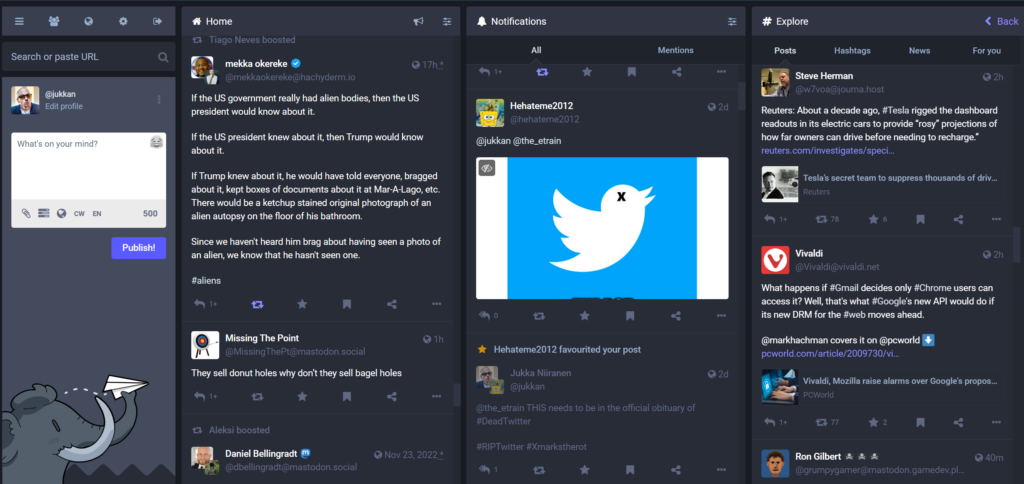
    Once I realized that Twitter was over for me, there was a proper incentive to think about what other tools are there for this type of communication. I saw my network exhibit interest in Mastodon and decided to give it a go. I managed to get past the infamous “pick a server” question, created my user account, searched for other interesting accounts to follow and gradually settled in. Today, it feels like a very natural home for one of my many online identities.

    Mastodon has around 2.1 million monthly active users. As such it won’t be a threat to any of the networks run by publicly listed tech giants. Also many VC funded startups in this market may well be able to burn cash for user acquisition in ways that Mastodon will have no possibility to match – by design.

    In the end, it’s a decentralized social media platform that no single deranged billionaire can acquire. It’s just a bunch of regular folks running a few servers that facilitate the federation of user feed content between them. There are no ads to be found in Mastodon feeds because the whole concept does not exist in that technology. Content isn’t shown to users based on any algorithms because again, that’s not a thing in Mastodon. In both good and bad, what you follow is what you get.

    Hello ActivityPub

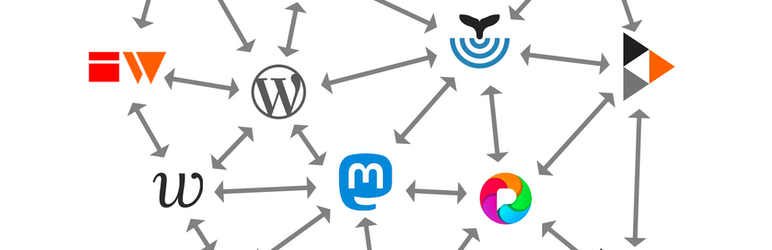
    RSS is a protocol. Twitter at some stage talked about their ambition of becoming a protocol for the internet, but quite obviously they didn’t move into that direction. Now, ActivityPub that powers Mastodon and much of the Fediverse is an official web protocol with a W3C stamp on it. It has also gained interest from commercial players like Meta and WordPress.

    Protocols are cool because they are not dependent on any single organization. You can send email from your Microsoft 365 Outlook to a Gmail address and all of the core message content will be similar in both services. The UI, the features and the email experience in general can be different (especially with both MS and Google “reimagining” office applications with their own flavor of generative AI). You can innovate on product development and also the commercial model while still preserving interoperability with other services that use the same protocols.

    So, if ActivityPub is the thing that allows you to both read and publish content on a social network like Mastodon, how does it relate to blogging? Is it just like Twitter you still had to tweet out the links to your new blog posts and make them visible to the followers of your Twitter profile? Well, it’s a bit different – and it’s also still very much work in progress.

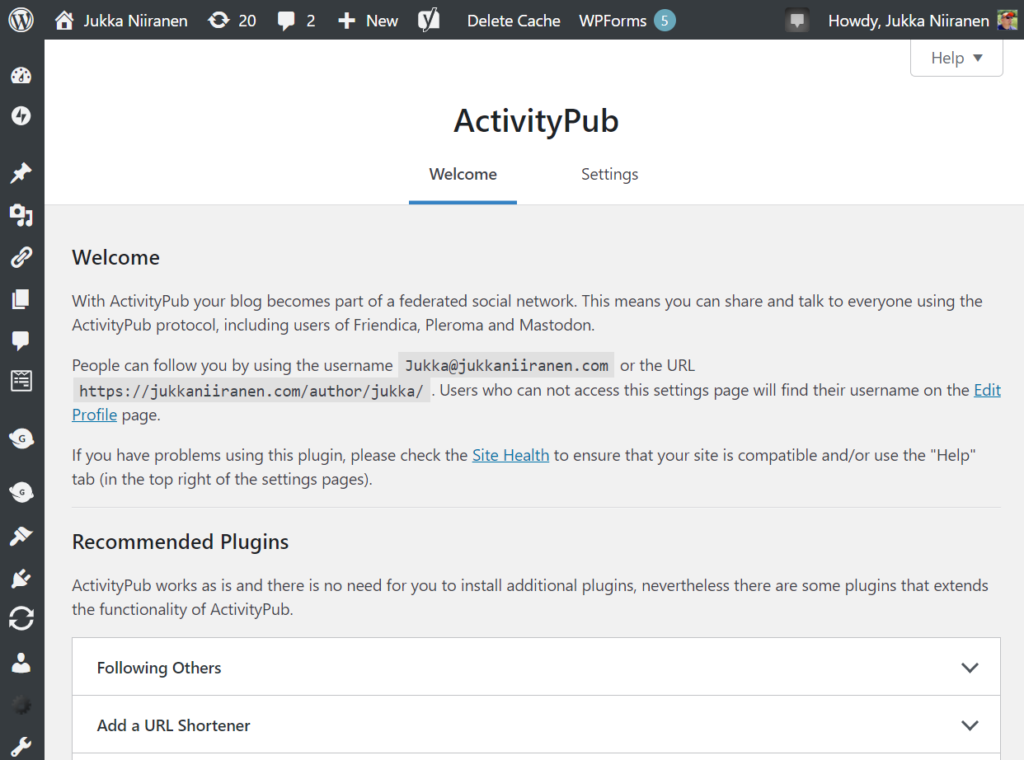
    In March this year the ActivityPub WordPress plugin was acquired by Automattic, the folks behind WordPress.com (and also Tumblr). Presumably the experience will become much more integrated with WordPress in the future, but we can already deploy the ActivityPub plugin on our self-hosted WP instances. Here’s what the settings look like on the admin side for my blog:

    "People can follow you by using the username Jukka@jukkaniiranen.com or the URL https://jukkaniiranen.com/author/jukka/"

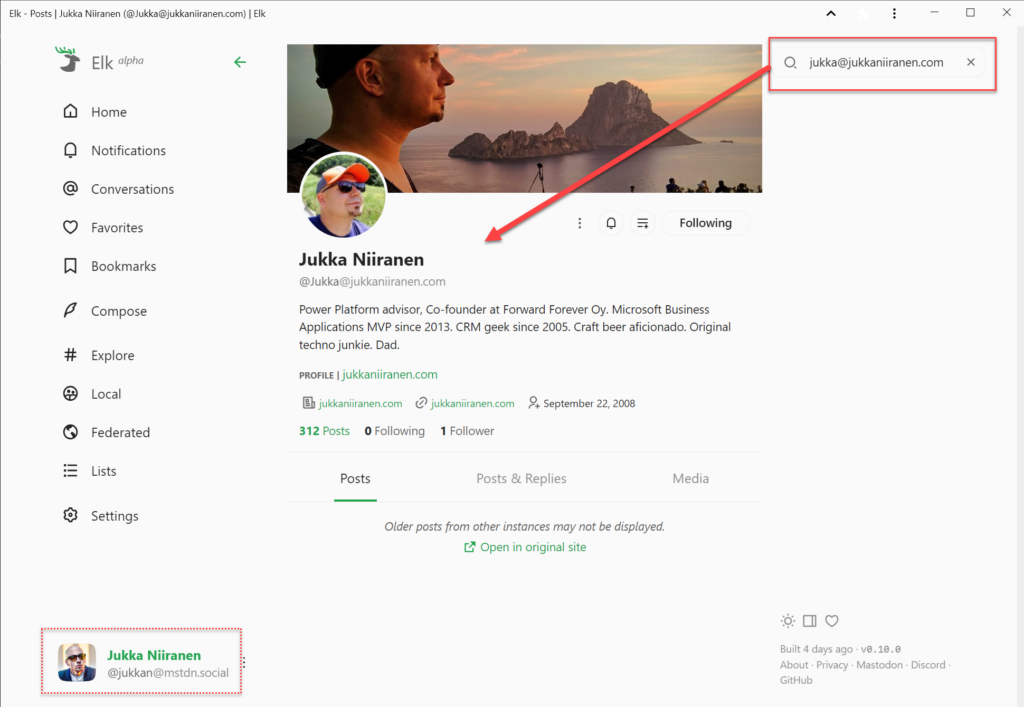
    What’s that all about? It means that when using a service like Mastodon, people can find this blog by searching for “Jukka@jukkaniiranen.com”. As an example, when using the Elk web client for Mastodon and logging in with my @jukkan@mstdn.social account, I can perform this search in the app and land on a profile that represents my blog. It’s an independent thing on the Fediverse that users can follow, even if they don’t care about the rants I post on my “main” profile and just want the long-form content like this blog post.

    It’s kinda cool and confusing at the same time. Which is a lot like setting up a blog was 15 years ago, or what Twitter was in 2009 when I signed up for it. That’s part of the reason why I’m excited about the recent rise of federated online services. You don’t have to be a geek to start using them, but it definitely helps.

    Is ActivityPub the replacement for RSS then? I don’t quite see it that way today. However, for the majority of the current online population who have never subscribed to an RSS feed to begin with, I see a lot of potential in this new protocol to revitalize the social web. To take back control from the mega platforms that are doomed to follow the path of enshittification. To spark up new innovation in both the established web players (WordPress, Mozilla, Medium etc.) as well as make room for new projects to find an audience outside the walled gardens of X, Facebook and the likes.

    Things won’t magically become better with decentralization. Sustainable business models or consumer grade UX aren’t easy to come by with no direct ad revenue. If the popularity of a decentralized service grows, many problems like content moderation or infrastructure scaling will certainly be as hard as on the centralized side. From Twitter to Mastodon, from Instagram to Pixelfed, from Reddit to Lemmy, from YouTube to PeerTube – if the same people move from one technical platform to another then so will the problems caused by people.

    We should not stop moving, though. We should not accept that the one party who holds the most data (generated by the users) gets to decide on the rules. We may not be able to avoid using many closed systems with ad revenue based business models. Yet we must ensure that our content is not captive inside only such systems.

    Evolution is all about competition, about having a choice. For us users of the web to have that choice, we must A) use the power of owning our content, and B) put in the effort to learn and support new tools.

    The best time to start a personal blog was 15 years ago. The next best time is now. The best time to join Mastodon was before the Bird died. Today is another fine day for it. Learn about it from Fedi.tips and follow me (@jukkan@mstdn.social) and this blog (@jukka@jukkaniiranen.com) if you get there!

  • Is blogging worth it?

    Is blogging worth it?

    I saw this question posted on Hacker News a few days ago:

    Ask HN: Is having a personal blog/brand worth it for you?

    This topic really caught my attention. I read through tens of answers on the thread and that got me reflecting on my own journey as a blogger.

    I launched this blog as “Surviving CRM” back in 2008 and switched it to a more personal “Thinking Forward” blog in late 2019 (to say farewell to CRM and move towards the broader low-code theme with Microsoft Power Platform). These 14 years provide me some perspective on the topic of personal blogging and also building a personal brand along the way.

    There were three subquestions in the Hacker News post that I’m going to try and provide my answers to.

    Q1: Does the time spent writing feel worth it to you?

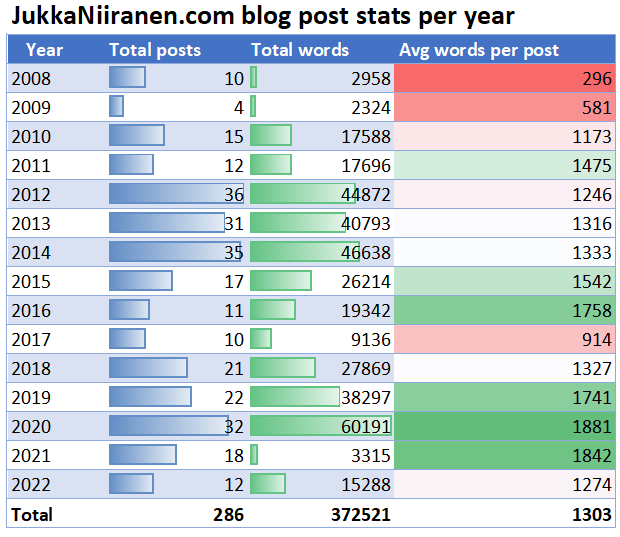
    I can never know the true time I’ve spent on blogging. Not in total, and neither on average per post. They only thing I can really measure is the amount of posts & words within these posts that I’ve written over the years. Here are the annual stats from my blog, up until July 2022:

    Looking at the total number of words I’ve posted in my blog and using 250 words per minute as the estimate for reading time: it would take you ~25 hours to read everything I’ve written in my blog.

    How about writing those words then – how long might that have taken? I won’t go to deep on the scientifical part here and instead use the first figure that Google gives me for writing in-depth essays or articles: 5 words per minute. This would be roughly 100h per year in my case.

    That’s only 2 hours per week. It goes nowhere near the time I’ve spent on doing the research required to come up with the final output for a blog post. Reading MS documentation/blogs and community content, testing the features in real live systems, connecting the dots in my head, having online discussions on the topics. The blog posts really are just a tip of the iceberg.

    Let’s just say that I may have spent one working day for each week of the year, for the past 14 years, to do all the work required to produce the output that you see here in my blog. Essentially a 6 day working week, to come up with content that has been posted online, for free.

    That may not immediately sound like such a great deal when illustrated this way, but let me tell you: that 6th day of the working week has always been the most rewarding one for me personally. Thinking about the total number of days, blogging with all the community work included comes pretty close to my longest employment relationship duration. I guess it’s obvious I wouldn’t have sticked around this long then if it wasn’t a whole lot of fun.

    Right at this moment, when writing this “meta” blog post, I’m on my 4 week summer vacation (the Nordic way), at a summer cottage in the middle of nowhere. I’m looking over a peaceful lake view, with a glass of rye stout from Amager Bryghus next to my laptop. Even in situations like these I sometimes choose to write on my blog because it brings me more joy than it consumes time. It’s a hobby that has grown into an element of life that sort of defines who I am. Well, not everything of course, but an important slice of me.

    Does blogging become faster the more you do it? Yes and no. Experience helps you in the areas that are repeatable, meaning the process around writing and publishing blog posts. Yet there’s no point in trying to minimize the time spent on the act of blogging itself.

    Working as a consultant who bills customers by the hour, you can sometimes get too wrapped up in the concept of productivity. More bang for the buck / value for the customer = more outputs in less time, right? That is often not true – even in billable work. Even less so when you are doing things for your personal growth.

    You see, when blogging for yourself (i.e. not because someone at marketing asked you to), it’s not a requirement to be very efficient in how you spend your time. I don’t have a budget for how many hours I can spend on this. Yes, the real world around me (family, friends, life) needs my time, too, but outside of my official working hours I don’t keep track of time. Things take as long as they need to take.

    To me, writing is thinking. Your thinking is likely to improve if you spend a bit more time on it, rather than just taking relying on your gut reaction and assuming that’s all your brains could ever achieve.

    In the long run, blogging has probably saved me time in more ways that I could ever measure. Not just by teaching me skills that would have been difficult to acquire otherwise, but by creating something that helps me on a daily basis: my network. Which leads us to the next question:

    Q2: Did it help you to get noticed/ find jobs or other opportunities?

    After the first few years of blogging, I’ve never had to look for a job. The opportunities always came to me, without my initiative. You could compare this to the commercial activity of inbound marketing. The effort is spent in advance, building up the audience, which in turn then reduces the need for outbound activities. So, the active work is still done, only in a different order than traditionally.

    None of what has happened to me in my professional life for the past decade would have ever become real if I didn’t start blogging. Through both writing my blog posts and amplifying the posts of other community members, I’ve succeeding in building an incredibly valuable professional network. Putting my words out there has been the single best career move I can think of.

    On year 6 of my blogging career, I received my first Microsoft MVP award. 2022 marks my 10th year in the program. Gaining access to not just the MS product team behind Dynamics 365 & Power Platform but more importantly, the other MVPs who are as passionate about their craft as I am – that has been undoubtedly a turning point for me.

    At the beginning of my blogging journey I wasn’t sure if this MVP role was a path I actually wanted to pursue, though. My top priority in personal blogging has always been to honestly write about both the good & the bad that I encounter in Microsoft’s product offering – so that others can learn from my real life experience. Fortunately, having an NDA with MS hasn’t resulted in me having to apply a filter on how I talk about things. Just the “what” when it comes to non-public info, of course.

    While writing your posts and reflecting on the lessons you’ve learned is an major part of blogging, I consider an equally important side of it to be the active participation in your community. A major reason why I originally started my own blog was because I wanted to give back to the community who had helped me get started on my career.

    Already back in 2005, the blogosphere around Microsoft CRM 3.0 was what really set this technology apart from many other CRM competitors at the time. A global community can truly be a force multiplier, allowing newcomers to challenge the more established players out in the market. I believe this very same phenomenon plays out in the area of citizen developers today, with the community helping each other to democratize technology and making previously impossible things possible to a whole new (and bigger) audience.

    Blogging may not be as trendy today as it was 14 years ago when I started. With today’s social media channels having replaced the old Web 2.0 era tools like RSS readers in how content gets consumed, aspiring new writers may well ask themselves: “will my posts on an independent blog site get me noticed anymore, or should I just use a platform where I already have a network”?

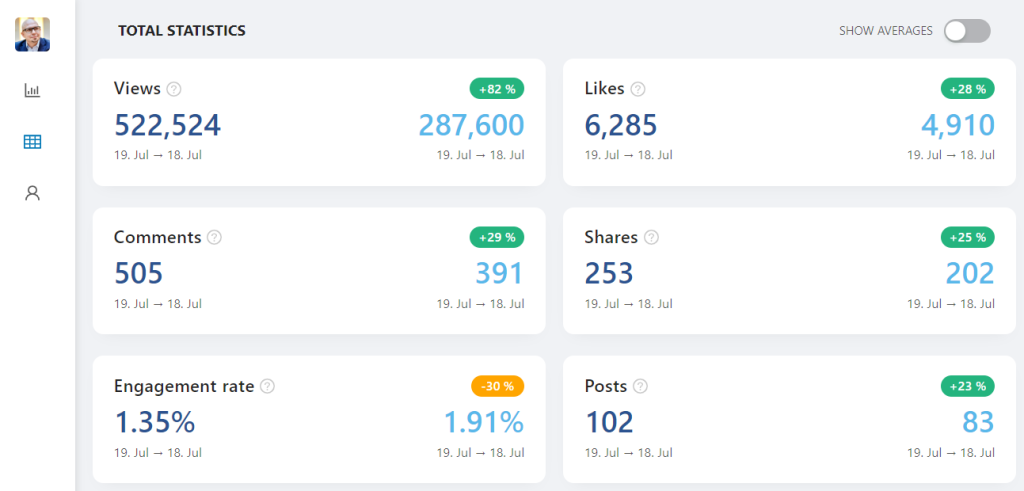
    I recently checked what my personal LinkedIn stats looked like for the past 12 months (using Shield Analytics). By making 102 posts during the past 365 days, I’ve received over 500k views for them on LinkedIn. In my WordPress blog I’ve tracked only 130k views during the same time period. While my blog traffic hasn’t been growing for a few years anymore, the year-on-year figures from LinkedIn are mostly green:

    The way I see it, a page view on a blog that you own & control is many times more valuable than what LinkedIn might track as a “view” of a single post that a user scrolls through in their endless stream. The impact is likely at least 10x higher when a visitor opens a web page dedicated to your writings and spends a minute or two on it.

    Besides, a fair share of the LinkedIn posts I’ve made have been to share a summary of my blog post. This site right here is the “read more” destination where I actually get to talk with the audience who finds the topic interesting enough.

    At the end, it’s not about the “likes”. Social media apps that gamify your clicks will always show you stats that are more compelling than a blog site like WordPress. Don’t get distracted by these. (I know I do, so I’m not saying it’s easy…)

    “Couldn’t you post longer content as LinkedIn articles, though?” While it might be tempting for authors without an existing blog to start with the social media platform, I’d encourage you to ultimately own your words. Don’t become a slave to a network that primarily thinks about its own algorithms and business models for making money from your content. Exploit them wherever they serve you, but don’t become merely a servant to them.

    Q3: Do you learn something new from it?

    All the time. Even when the blog posts I write are just about documenting a discovery that I have made during a customer project, it helps me go far beyond what billable work would justify. Instead of just solving this one problem and jumping straight to the next one in the queue, I can spend a moment actually connecting the dots in my head.

    Establishing links between the synapses in our brain is physically how learning happens. I find that the act of turning my thoughts into writing, arranging them on the screen and especially linking to related articles is the most effective way for me to learn. With this in mind, Q3 sounds a bit strange to me when rephrased: “do you learn something new from learning something new?”

    You see, writing the blog post is not the end result of a carefully planned process (for me at least). Quite often the act of creating a draft post is when you really start to think. If you’ve ever heard about rubber duck debugging, then the idea is exactly the same. By explaining a problem to someone else, be it an inanimate object like a rubber duck or virtual object like a blog, you can often solve that problem without anyone providing you the answer.

    Even the mere intent of “hey, I could write a blog about this” can start the mental process of organizing the details better in my head. Now, if blogging really would be such a magical formula to solve all problems, why not do it even more? Looking at my annual blog stats, why do I sometimes only write one post per month? It’s because all mental processes reserve cycles from your mental CPU (the brain).

    Having a blog challenges you to put your thinking in writing. It’s not all fun and games, though, as you will inevitably get stressed at times about “I should be blogging about X, Y and Z, why can’t I ever get these things done”. The sad part is: you’ll never get over this feeling, no matter how much you do blogging.

    Another fact of life is that you’ll continue to encounter other community members who write more posts, better posts, learn new things faster, get more readers, and so on. Spending years on writing blog posts on a specific domain topic doesn’t protect you from the impostor syndrome. A growth in the amount of exposure your writings get can even lead to scenarios that induce long term stress.

    The dark side of community leadership recognition programs like the Microsoft MVP award is that they are founded on metrics of your impact. When I said earlier that personal blogging is an act where I don’t track the hours spent on it, in reality I still do need to log the outputs as community activities into Microsoft’s system. If you don’t do enough measurable activities to prove your impact to the community, you will no longer get awarded on July 1st next year.

    Q: How much is enough? A: You won’t know, so nothing is ever enough.

    During the past couple of years, I’ve felt very tired at times. Going through COVID, starting a company, getting a kid – many factors around me have contributed to the low mental energy reserves. I’m certainly not the only one with such experiences. I’ve heard from many people in my network that they’ve recently been asking themselves the question “is the MVP Award worth it?” So have I.

    If the target would be to keep hold of the award, then maybe this type of blogging that I’m doing wouldn’t be the best choice. Lengthy articles that reflect on the state of the ecosystem, for example, aren’t exactly the type of material that will gain a lot of Google hits. Shouldn’t I rather be answering “how to” questions that some one is typing into the search bar? Why not just tell the audience “here’s how to do X with Y”, one feature after another?

    Also, shouldn’t I rather reuse my content in more than one context, to gain more entries I could list as my community contributions for Microsoft to see? Instead of publishing a single blog post, couldn’t I format it as a presentation that I could then recycle in multiple virtual events that exist in the global Power Platform community?

    Such a “shouldn’t I” list quickly becomes endless. It can turn your hobby into an energy drain rather than a source of energy. It is of utmost importance that you can be honest with yourself and identify why you should say no to things.

    • Should I do videos? No, I hate skimming through them for answers and would always read the text version instead.
    • Should I do more podcasts? No, I practically never listen to them since I love the sound of music, not the sound of someone talking.
    • Should I submit sessions to community events? No, I have no motivation for attending virtual events and my ability to travel to live ones is limited.

    How does all this relate to the original “what do you learn from blogging” question? It’s all about learning who you are and what you love doing. Knowing what separates you as an individual from the different crowds that you interact with.

    What this means is: I couldn’t ever give an answer on whether blogging is worth it to you. The reasons, the benefits and the price of blogging that I’ve talked about here are subjective and apply primarily to me. I would surely encourage you to give blogging a go if some of these experiences and thoughts resonate with you. At the same time, be sure to remain honest with yourself and stop writing on your blog if in the long run it takes more than it gives.

    Where I’ve found blogging to be an invaluable tool is in finding your own voice. It’s not quite the same as keeping a personal diary would be, but if you’ve ever found putting your thoughts into writing as an exercise you enjoy, there might be something here for you to gain.

    Who knows what your brain might say to you if you’d give it a brand new channel of communication. Such as a blog.

  • Life after CRM: farewell to SurvivingCRM.com

    Life after CRM: farewell to SurvivingCRM.com

    In 2008 I started a blog called Surviving CRM. Now in 2019, 11 years later, it’s time to move on.

    Don’t worry, I have no intention to stop blogging. Nor will there be a dramatic change in the type of content I’ll be posting or the topics I’ll be covering. This is merely a symbolic farewell to my blog’s original frame of reference, which was customer relationship management (CRM) and more specifically Microsoft Dynamics CRM as the technology for delivering solutions to bring the organization’s CRM strategy to life on a practical level.

    While there is a benefit in having an established three letter acronym to describe what exactly you do for a living, I feel that just “doing CRM” has not been my focus area for quite some time now. I have spent far more time and energy in educating Dynamics customers and professionals why they need to think outside the familiar CRM box. This shift towards a broader Business Applications story had of course started already earlier with the app explosion of Dynamics 365 and the product’s tighter alignment with Office 365, but it was Microsoft’s launch of Power Platform in 2018 that really drove through the message for the wider audience.

    What comes after CRM then? That’s a good question! Ever since I wrote about The End of CRM as Microsoft Software 3 years ago, I’ve been pondering what should be that new “thing” that I could comfortably associate myself with. “Customer Engagement” never felt like it was established enough to take CRM’s place, which has now also been acknowledged by Microsoft as they’ve essentially deprecated the CE term to refer only to the legacy on-premises software. Nor do I find myself embracing the Dynamics 365 concept very deeply (at least the CRM+ERP harmonization part of the story) since so much of the innovation coming from MS in the business applications space is actually not about the 1st party Dynamics products directly. As for all the “Power” products – well, we’ve already seen the branding changes happening over there, which should serve as a warning sign for anyone to not get too attached with the specific names of their tools.

    At the end, I decided that I’ll just have to be me.

    This is now simply a blog written by Jukka Niiranen, hosted on the jukkaniiranen.com domain. There’s also a shorter jukkan.com to align with my social media handle (which the non-Finnish readers might appreciate). As for the name of the blog, Thinking Forward is a reflection of the purpose that blogging about Dynamics 365 and Power Platform has had in my life.

    I’ve always considered the act of writing down my thoughts as a way to think out loud, to create new meaning from the fragments of information that are bouncing around in my head. Through this process I’ve often ended up producing my own forward-looking statements about where Microsoft and the broader business applications ecosystem are heading. That’s what Thinking Forward will continue to be: analyzing the signals from Microsoft’s own announcements, from my network, from the community, and hopefully producing insightful articles that help everyone make sense of Power Platform’s direction. Highlighting the new opportunities while also openly addressing the challenges.

    Earlier my blog content used to be also syndicated over on the Dynamics 365 Community site. Back in 2013 when I received my first MVP award, submitting the blog’s feed over there seemed very natural, to make it part of the global CRM blog content feed to be conveniently consumed via RSS readers. In 2018 Microsoft decided that also the community blog content would need to be split into sub-groups based on the Dynamics 365 Apps hierarchy. “Oh alright then, put it under Sales for lack of a better group” I thought. Looking back, my blog content has lately had so little to do with Dynamics 365 Sales that it truly doesn’t belong into such a bucket. Nor is there really any better alternative in the current community sites provided by Microsoft, so it’s time to end the content aggregation. From now on you’ll have to either visit my blog directly or subscribe to the updates.

    What about CRM then? Is it “over” for me? No, of course it isn’t. In this age of data driven business processes that require advanced automation, new interaction channels, complex data analysis, machine learning algorithms and all sorts of intelligence, the customer master records are at the heart of it all. Unless you’re working with processes that don’t involve the customer, it’s unlikely that we’d get very far at all in designing new solutions if the foundation isn’t built on a solid system of record – most often your CRM. There is no magic bullet that will allow you to skip building this first layer.

    The importance of a CRM system for businesses hasn’t diminished at all. It’s just that we need to go much further. With the no-code tools offered by Power Platform and the ready-to-consume APIs available on Azure, the kinds of value-adding layers that we can now build on top of these core systems are simply mind-blowing. The biggest shift is how accessible this technology is today. You don’t need enterprise scale budgets and development teams to dream about them anymore. In practice any customer organization to whom I’ve delivered Dynamics CRM based solutions during the past 14 years should be perfectly capable to leverage these cloud services and digitally transform their business. Turn it into something completely different than what it was when that CRM system was first brought in to support the as-is processes and ways of working. Experiment, analyze, adjust, innovate, expand. Put those wheels in motion!

    Yet so few are doing this. Both the customers and the consultants who have been involved in building the first layer, the CRM system, can so easily get stuck in maintaining the as-is. Where could you find the time for thinking outside the box when you’re responsible for keeping that crucial, ever growing CRM box operational? The real tragedy here is that those professionals who’ve been deeply involved with designing, developing and supporting the CRM processes and have intimate knowledge of the customer data and many related systems – they would be in a great position to build the next layers with the new modern tools. It won’t “just happen”, though.

    If you want something new, you have to stop doing something old.

    Peter Drucker

    To me, CRM is a classic. Classics don’t die, they’ll always be a part of the journey that got us into the world that exists today. Those shiny new objects in the cloud that we may occasionally get so very obsessed with might turn out to be passing fads. That’s just fine, it’s not a competition of this thing vs. that thing. We don’t have to forget about what we know, we just have to make room for growth – like in all areas of life. Just like I haven’t thrown away my precious CD collection of music from the 80’s, 90’s and 00’s, my daily dose of electronic beats is still mostly a stream of brand new music that is being created today. All of which is built on the heritage of artists that came before and gave inspiration, techniques and sounds to make it possible for the many productions of today to evolve from what was created before. That’s how I like to think of CRM, too.