Tag: AI Builder

  • Power Platform licensing, November 2021 updates

    Power Platform licensing, November 2021 updates

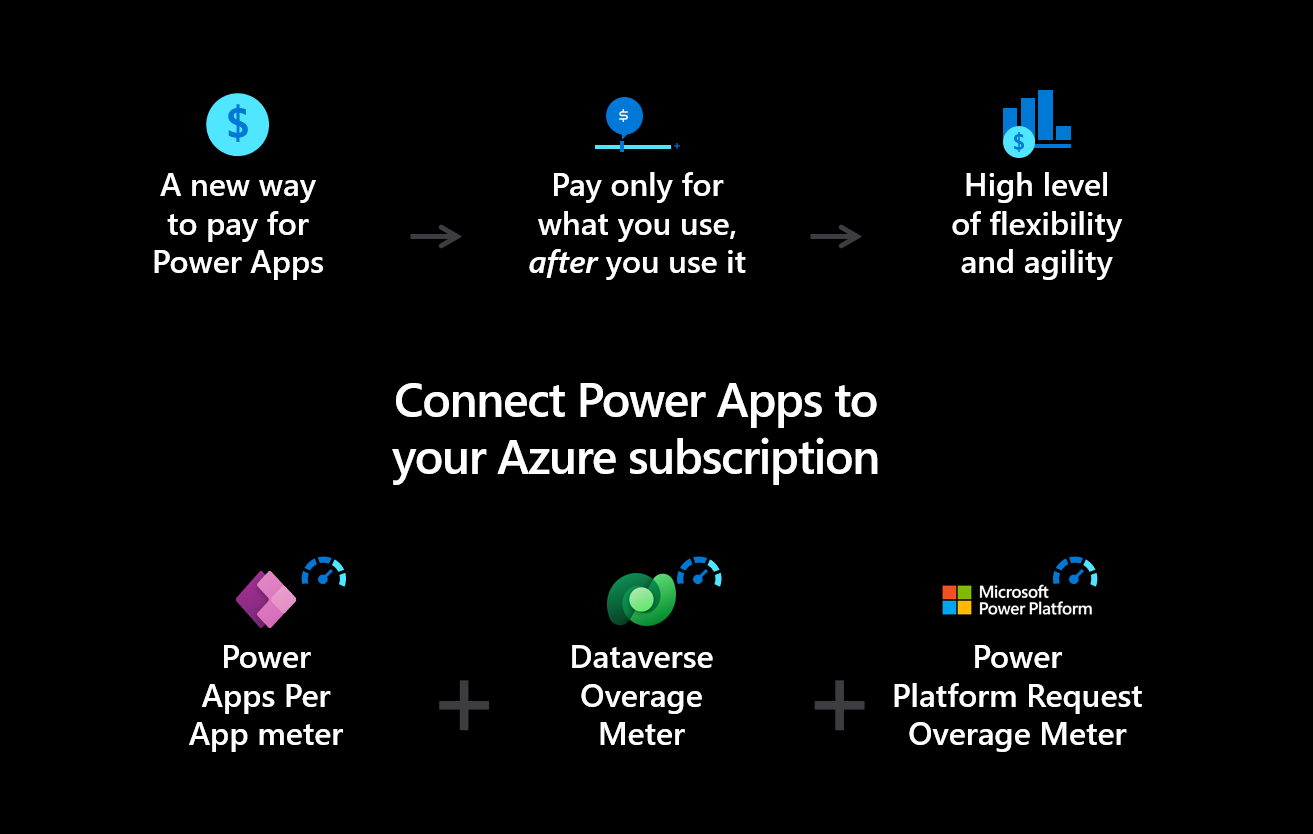
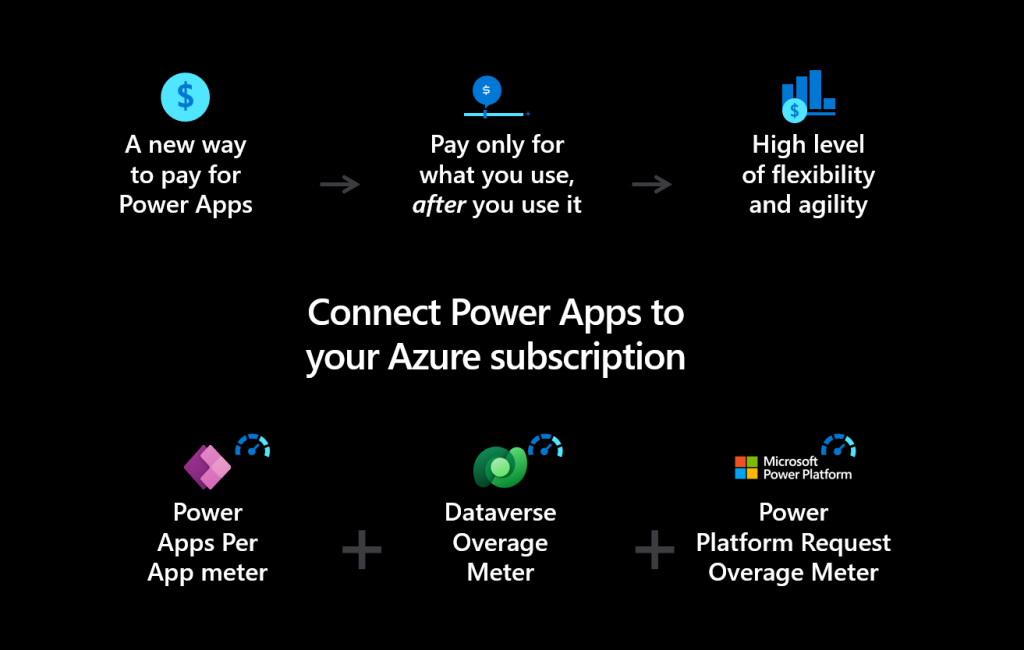
    The second Microsoft Ignite event of 2021 included several important updates on a topic that I cover regularly on this blog: Microsoft Business Applications licensing. The biggest announcement of course was the pay-as-you-go licensing model (PAYG) for Power Apps:
    Here’s a few thoughts and observations on what was announced & updated on the licensing front.

    PAYG and Azure

    Despite of its name, the biggest impact from the Power Apps pay-as-you-go plans isn’t necessarily the pricing model. Rather it’s the currency in which you pay for it: Azure money. This is something that most larger organizations will already have in their virtual cash reserves, which makes it considerably easier to spend on services.

    Licensing agreements are both an enabler and a blocker for Microsoft cloud services, especially on enterprise level. Getting something new like Power Apps premium licenses included into the IT portfolio available to the business users can take a lot of time and effort. Once it’s included, though, there’s plenty of practical benefits for using these as opposed to some fancy new cloud service that might come along.
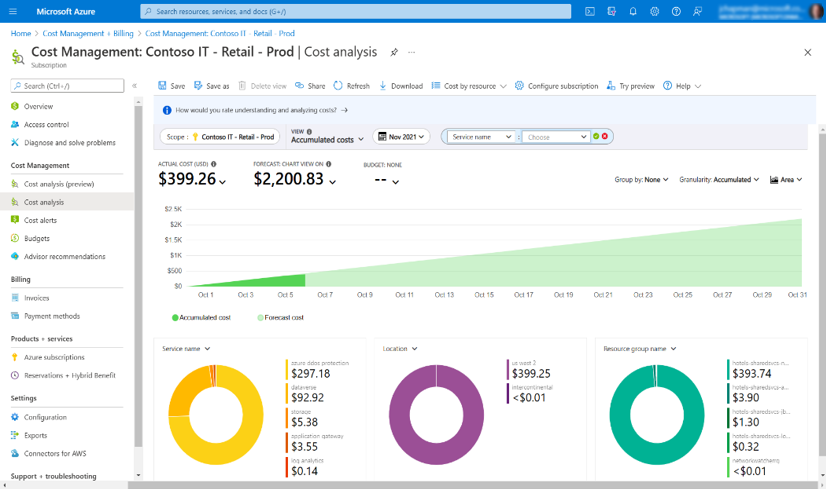
    Having an official “exchange rate” that converts these new low-code tools managed on the Microsoft 365 side into tools and terminology compatible with the pro-dev work already done in Azure is key step in selling the Fusion Teams story to organizations. Even if the PAYG model wouldn’t be cheaper in practice, having Power Apps license costs show up in existing reports on Azure Cost Management side will make it less of an unfamiliar beast to IT and developers. Also the discounts customers may have negotiated based on their Azure spend will presumably apply to Power Apps, too.

    PAYG and apps

    PAYG is specified on environment level, by defining a billing policy and selecting which environments are included in it. However, you can exclude specific apps from the model and require their users to have a Power Apps Per User license instead. Mixing PAYG with Per App subscription plan isn’t allowed, though.

    I believe that underneath the covers the PAYG Per App plan and the regular Per App plan are mostly identical. The major difference is that at the end of the month, the PAYG pass is removed from the user until he/she opens the app again. With the regular Per App subscription plan, the pass allocated upon the initial app sharing to the user and isn’t revoked until the app is explicitly unshared.

    So, which one should you go for then with your Power Apps that use premium features? Subscription model or PAYG? First we must keep in mind that the recent 50% price drop in Power Apps subscription plans took the price of a Per App license down from $10 to $5. At the same time the Per App entitlements were updated to cover a single app, rather than up to 3 different apps (existing customers have been compensated with 3x passes). Now with the new options, you can either pay $5 per user per app per month in the subscription model, or pay $10 for the exact same features but only for those months when a user opens the app.
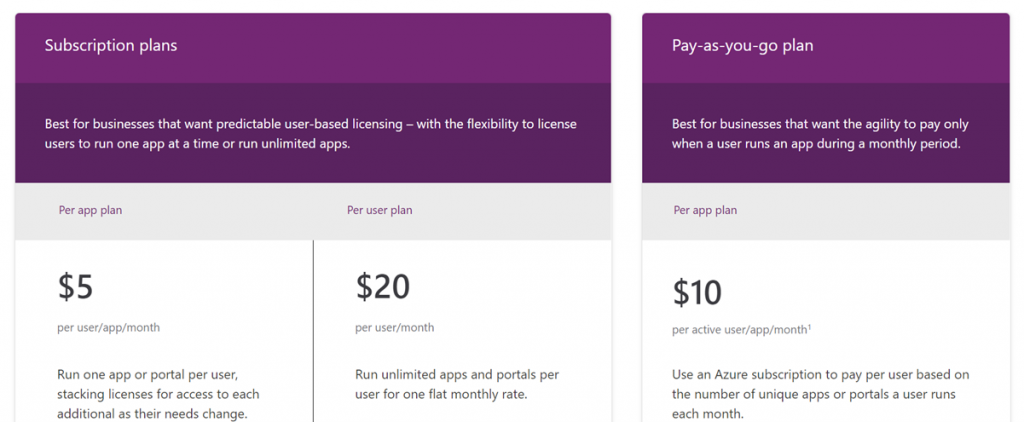
    If there was a quick & easy way to assign, unassign and report on the Per App subscription licenses, it would clearly be tempting to save 50% and pay with the old model rather than PAYG. In practice, Per App licensing management remains a nightmare that has surely cost customers (and partners) lots of money in time spent figuring out who’s got access to apps, why someone doesn’t, and how much licenses are actually being used. It’s been over 2 years since the Per App plan was launched and we still don’t have a report in Power Platform Admin Center that would give customers the information needed for managing this process.

    If the PAYG mechanism can both automate the assignment and removal of licenses, as well as provide detailed reporting in Azure Cost Management, then it could well be worth the price premium for process efficiency and cost visibility. For any smaller app experiments that you’re not yet entirely sure on how widely they will be used, starting with the Azure subscription based billing makes a lot of sense. You’ll be able to cut down on the initial admin hassle and get real data on the app usage to base your future licensing decisions on, whether to use PAYG or committed subscription passes/seats in the long term.

    PAYG and capacity

    It’s important to understand that the PAYG model doesn’t completely transform Power Platform into a pure consumption based model like Azure. After all, a single app launch during a calendar month will cost you the same as 1000 launches by the same user, and using 2 different apps will double the cost regardless of how much load you generate to the cloud services. Think of it more like buying a monthly pass for public transportation in your local area vs. taking an Uber and paying in proportion to the actual duration and length of your rides. If you travel to another city not covered by your current pass, you’ll need to purchase another pass. In the case of Power Apps, there aren’t any per hour or per day tickets sold, so the monthly pass is the minimum charge for the Power Apps per app meter billing rules.

    Having said that, there is also the concept of pay-as-you-go capacity when it comes to Power Platform licensing. API capacity is something that Microsoft says a normal user shouldn’t have to worry about, since there is bundled capacity included with the app/user licenses. At Ignite an announcement was made that increased the request limits for both licensed users and non-licensed users (check out Gustaf’s blog for details). If you do run out of requests, though, there will soon be a PAYG Power Platform request meter that can be used to pay for the overage.

    Something that does already exist today and is a much easier concept to approach than API consumption is the storage capacity. Unlike the traditional subscription licenses that are paid upfront, the PAYG model doesn’t have any storage capacity accrued per each user or app pass. This makes sense, since those numbers are only known as-you-go by the end of the month, whereas data storage is something a lot more persistent.

    Whenever you activate PAYG for an environment, it means it no longer draws from the tenant’s common capacity pool. The environment does get 1 GB of “free” Dataverse database capacity + 1 GB file storage capacity, but after that you’ll pay for everything based on what the Dataverse capacity meter shows. These rats are slightly higher than subscription based capacity prices, at $48 and $2.4 per GB respectively (note that log capacity is always paid for at $12/GB). If you’re used to leveraging the tenant level capacity accrued from user subscription licenses for your storage needs (coming from Dynamics 365 users, for example), then this can be a surprising additional cost when activating the Azure based billing policy for your environment.
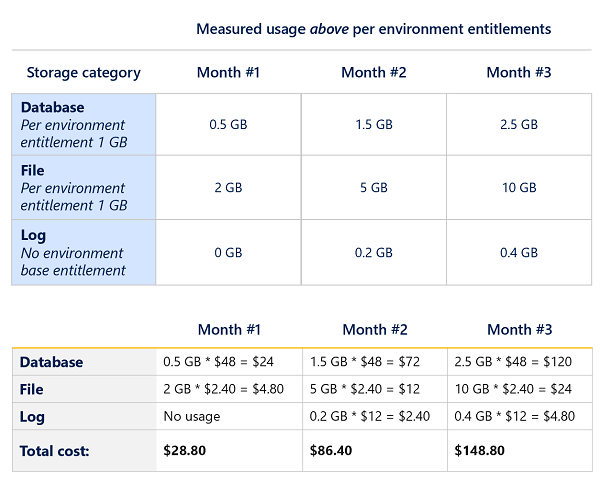
    There’s one gotcha in the current way how PAYG storage capacity can be used. You see, in order for you to assign a PAYG billing policy to an environment, the environment must first be provisioned. What this means is that the tenant will need to have a minimum of 1 GB database capacity available for the environment creation to succeed. So, you’ll need non-PAYG capacity from elsewhere (such as a paid Power Apps or Dynamics 365 plan) before you can use an Azure subscription to start paying for the capacity instead. Presumably Microsoft will fix this issue in the near future, since it’s in no one’s interest to block PAYG as the sole billing method.

    While storage capacity has been reported and technically enforced for a while already, Power Platform requests are still something that exist on paper but cannot be reported on nor paid via actually assignable licenses. In the FAQ section of their documentation page, there is now a new answer to the following question: What are the timelines for Power Platform Request limits?

    The concept of limits was first introduced in late 2019 and documented limits were substantially increased in late 2021. Generally available reporting for Power Platform Requests is expected in the first quarter of calendar 2022. Any potential high usage enforcement wouldn’t start until six months after reports have been made available. Assignment of add-on capacity packs should be aligned to high usage enforcement.

    Let’s assume that the reports would be launched in March 2022, after which there will be a 6 month grace period before the technical enforcement kicks in. This would mean that the October 2019 licensing changes that started all this confusion around what the platform can & cannot be used for will have taken full 3 years to truly come into effect. That’s a long, long time. Yet I do think it’s encouraging that Microsoft haven’t rushed into enforcing a rule that might have caused way too much collateral damage if not thought out well enough.

    Power Automate licensing updates

    There isn’t a PAYG model available for Power Automate. Sure, you can use premium connector cloud flows within the context of a Per App licensed app (although I’ve found this to be difficult/impossible in practice). The nature of a background process automation is fairly different from the interactive usage of an app UI, so it kinda makes sense why new options haven’t been introduced. Besides, if the Power Automate licensing model doesn’t work for your scenarios, then moving to the consumption based Azure Logic Apps is already a good option to consider.

    While there weren’t any major Power Automate specific licensing changes announced at Ignite, there was a wealth of new documentation released on the topic during the event. The flow licensing FAQ contains some interesting answers when it comes to what we would have traditionally considered to be multiplexing. I’m one of the few people who have ever dared to blog about multiplexing, yet it seems that there are things I haven’t fully grasped about the topic either. This infromation in the FAQ caught me by surprise:

    A common question is, “If a flow is triggered when a SharePoint list item is updated, and many users interact with that list, will there be a cost for each user?” The answer is if the flow does not use a premium connector such as calling Dataverse in the full production environment (not the Microsoft Teams environment), having an Office 365 license is enough. If the flow uses premium connectors, since the trigger is an automated trigger, only the owner needs a premium license.

    Having a web form that any user could submit to create a lead record in Dynamics 365 used to be the scenario where I’d say “sorry, you’re violating the licensing terms”. Now, Microsoft explicitly calls out that if a user enters data into a SharePoint list and that in turn triggers an automated flow that uses a premium connector to push the data into Dataverse, it’s enough for the flow owner to have the premium license.

    This little change opens up many scenarios where recording entries into Dataverse / Dynamics 365 may have previously been considered too expensive. Using a SharePoint / Microsoft List as the intermediate data storage is now officially a supported method to reduce the need for Power Automate premium licenses when using automated flows. I personally find it hard to understand how this statement wouldn’t contradict Microsoft’s core definition of multiplexing, but what can I say? Other than: welcome to Business Apps licensing!😂

    AI Buider

    One more small but significant change: there will now be AI Builder capacity included with Power Apps Per App plan (250 credits) and Power Apps Per User plan (500 credits).
    How much AI that will actually give you depends on the usage scenarios, which you can try and estimate with the AI Builder calculator.

    Why is this a big deal? Well, for some mysterious reason, Microsoft had earlier decided that the starting price for buying AI Builder capacity was $500/month for 1 million credits. Need just a few runs for your little cloud flow every month? “Sorry, we can’t be bothered to support anything below 1M.

    This was a prime example of how not to price cloud services for citizen developers, as they should be given the chance to focus on building apps instead of building business cases for software licenses. The starter capacity will now make it possible for app makers to leverage AI models in small solutions and experiments beyond just a 30 day trial.


  • Price points of Power Platform (2022 pricing and licenses)

    Price points of Power Platform (2022 pricing and licenses)

    NOTE: This post was originally published in March 2020, the last revision of pricing information is from November 2022.

    As of today, there isn’t a single place from where to check the actual prices of the different license types covered by the Microsoft Power Platform suite of products – like there is for Dynamics 365, for example. The information of prices vs. what paying that price actually entitles you to is distributed across several information sources and formats – starting from the individual product pages, to the learn.microsoft.com documentation pages, to the PDF licensing guides.

    To stop myself from having to always use a search engine to discover these pricing details, I decided to compile a list of links to the places where each individual Power Platform product team has made their pricing information public, as well as write out the current subscription prices in US Dollars and Euros. I’ve also included a few relevant licensing model elements that describe what the particular subscription entitles you to do (capacity, features and so on).

    Most of Power Platform product licensing is done via the prepaid subscription model familiar from Microsoft 365 (Office 365). More recently the pay-as-you-go (“PAYG”) option has been introduced for some of the services, allowing payment via an Azure subscription (read more about the November 2021 announcement here). It’s important to note that in general prepaid subscription prices are cheaper than pay-as-you-go. The PAYG option is primarily aimed as an option for customers to use, before they know the true consumption level and are ready to commit to a prepaid subscription. Where applicable, I’ve included the PAYG prices here for comparison.

    Your actual licensing costs will of course depend on the types of agreements your organization has with Microsoft. So, consider the prices on this page as mainly a starting point for understanding the relative costs of different Power Platform services.

    Power Apps / Pages

    Power Apps pricing

    Power Apps per app plan: $5 (€4.20)

    • Allows you to access one Power Apps app (canvas, model-driven, portal/website).
    • The same app in different Power Platform environments (dev/test/prod) requires a per app license for each environment.
    • Pay-as-you-go option: $10/monthly active user/app/month

    Power Apps per user plan: $20 (€16.90)

    • Allows you to access an unlimited number of Power Apps (canvas, model-driven, portal/website) in your tenant.
    • Can also be used for accessing canvas apps shared to guests in another tenant (not applicable to other app types).

    Power Apps pricing change on October 2021

    Before Oct 1st 2021, the Power Apps per app list price was $10 and Power Apps per user $40. See this blog post for more details on the price reduction as well as changes in the per app license entitlements. Note that your license agreement may still apply to the old terms, based on the contract duration.

    Power Pages (formerly Power Apps Portals)

    Power Pages pricing

    • Power Pages authenticated user capacity, 100 monthly active users: $200 (€168.70)(see also discount tiers).
      • Pay-as-you-go option: $4/user/site/month
    • Power Pages anonymous user capacity, 500 monthly active users: $75 (€63.20) (see also discount tiers).
      • Pay-as-you-go option: $0.30/user/site/month
    • Internal users (employees) can be licensed separately, via Power Apps or Dynamics 365 licenses, or as authenticated users.

    Licensing FAQ: Power Pages

    Power Apps portals (old licensing model, before Power Pages)

    Differences between Power Pages and Power Apps portals licensing model

    • Power Apps portals login capacity add-on, 100 logins per month: $200 (€168.79)(see also discount tiers).
    • Power Apps portals page view capacity add-on, 100,000 page views per month: $100 (€84.30).
    • Internal users must be licensed separately, either via Power Apps or Dynamics 365 licenses.

    Dataverse capacity (formerly “Common Data Service” / CDS)

    Power Apps and Power Automate licensing FAQ: Add-ons

    Storage
    • Dataverse Database Capacity (1GB) $40 (€33.70) per month
      • May still show up as “Common Data Service Database Capacity”
      • Pay-as-you-go option: $48 per GB used per month
    • Dataverse File Capacity (1GB) $2 (€1.69) per month
      • May still show up as “Common Data Service File Capacity”
      • Pay-as-you-go option: $2.40 per GB used per month
    • Dataverse Log Capacity (1GB) $10 (€8.40) per month
      • May still show up as “Common Data Service Log Capacity”
      • Pay-as-you-go option: $12 per GB used per month

    See also: What Dataverse capacity is included with the Power Apps and Power Automate plans?

    Power Platform / Dataverse API calls / API requests:
    • Power Platform Requests add-on: 10,000 daily API requests for $50 (€42.20) per month
      • Formerly known as “Power Apps and Power Automate capacity add-on”

    See also: Requests limits and allocations

    Power Automate (formerly “Microsoft Flow”)

    Power Automate Pricing

    Power Automate per user plan: $15 (€12.60)

    • Allows individual users to create unlimited flows, execution is limited based on available API requests per day (40,000 included)
    • Note: while Power Apps per app and per user plans includes similar rights, they are tied to the context of a canvas or model-driven app

    Power Automate per flow plan: $500 (€421.50) for five flows per month

    • Allows the organization to implement 5 flows, regardless of the number of users who trigger them
    • Child flows triggered by a parent flow do not need to be licensed
    • Execution is limited based on available API requests per day (250,000 included)
    • Additional flows can be purchased at $100 (€84.30)per flow per month
    • Pay-as-you-go option: $0.60 per each cloud flow run

    Power Automate per user plan with attended RPA: $40 (€33.70)

    • Allows individual users to run an attended RPA bot on their workstation
    • Presumably also contains similar rights as the standard Power Automate per user plan
    • Pay-as-you-go option: $0.60 per each attended desktop flow run

    Power Automate unattended RPA add-on: $150 (€126.50)

    • Allows the organization to run a single unattended RPA bot, no dependencies to users or workstations
    • Add-on requires either per user plan with attended RPA or per flow plan
    • Pay-as-you-go option: $3 per each unattended desktop flow run

    See also: Power Automate licensing FAQ.

    AI Builder

    Power Apps and Power Automate licensing FAQ: AI Builder

    AI Builder capacity add-on: $500 (€421,70) per unit per month

    • Each unit contains 1 million service credits on the tenant level
    • Allows the organization to use any of the AI model types included in AI Builder
    • AI models consume service credits when they are trained, used in an app or flow, or scheduled to periodically run. The amount of capacity consumed varies based the AI model, as well as the size and complexity of the data set. See AI Builder calculator to estimate the capacity requirement and cost of your model.
    • Add-on requires at least one paid Power Apps, Power Automate or Dynamics 365 license
    • For the built-in Business Card scanning feature in Dynamics 365 Sales, there is free capacity included in Sales Enterprise App licenses: 10 scans per user per month, pooled at tenant level. Sales Insights has a capacity limit for business card scanning of 200/user/month. If additional Business card scanning capacity is required, Sales Enterprise customers may purchase additional Sales Insights licenses. (Taken from Dynamics 365 Licensing Guide PDF document.)

    Power Virtual Agent

    Power Virtual Agents pricing

    Assign licenses and manage access to Power Virtual Agents

    Power Virtual Agent: $1,000 (€843.20) per 2,000 sessions per month

    • Allows the organization to have an unlimited number of bots
    • In addition to the tenant license, internal users will need to be assigned a user license. The tenant license costs money, but the user licenses that are purchased via the same mechanism are apparently free.
    • “A session is an interaction between the customer and the bot, and represents one unit of consumption. The session begins when an authored topic is triggered. These sessions are referred to as ‘billed sessions’ in the product. Sessions are deducted for both testing and production usage.”

    Power BI

    Power BI licensing in your organization

    Power BI Pro: $9.99 (€8.40) per user

    • Included in Office 365 E5 subscriptions for no additional charge
    • Each Pro license gets 10 GB of data storage capacity

    Power BI Premium per capacity: starting from $4,995 (€4,212,30) per organization

    • Offers dedicated compute and storage resources for your organization
    • No per-user license assignment needed for report consumption, report creation and sharing still requires Pro licenses for users
    • Required for advanced features, see comparison table
    • See What is Power BI Premium and Power BI Premium FAQ for more details

    Power BI Premium per user: $20 (€16.90)

    • New option to access premium features without organizational capacity purcahase requirement.

    Dive deeper into the licensing details

    Microsoft usually posts monthly updates to their licensing guide PDF documents. Here’s where you can grab the latest copies: Power Apps and Power Automate Licensing Guide & Dynamics 365 Licensing Guide.

  • First impressions on Power Platform 2020 Release Wave 1

    First impressions on Power Platform 2020 Release Wave 1

    It’s that time of the year again when all us Microsoft Business Applications geeks are blessed with two huge documents to consume: the Release Plans for both Power Platform and Dynamics 365. While I gotta say that it’s awesome to have this level of transparency on what specifically is in the next 6 month release cycle, the amount information does feel overwhelming – at least if you’re trying to cover more than a few specific products within the stack.

    Ultimately we should at least aim to have a general idea of how each piece of the BizApps puzzle is evolving. Especially the Power Platform side is very relevant for anyone who’s not strictly focused on training/delivering/administering just a single app from the Dynamics 365 portfolio, because this is your low-code toolkit for making those applications meet the real life needs of customers. Unlike with past CRM projects, the customization tools are not part of single server installation, rather they can be discovered from all around the Microsoft cloud.

    To make the Release Plan easier to digest, I’ve picked out the new/improved features that jumped out when I went through it for the first time. Instead of the PDF versions (which are coming a bit later anyway), I prefer the online documentation, so below are links to each of those items for you to drill deeper into – and also keep track of possible changes to the original plan.

    I’ve added my comments on why I consider these to be the most important items in the Release Plan. Time will tell how they actually land and what the impact will be. It’s going to be fun to review this list October 2020 when Wave 1 is over!

    Power Apps

    Single mobile app player for Canvas & Model: very much needed in order to break free from the assumption that Model-driven apps are only for Dynamics 365 customers.

    Offline improvements: the need for accessing data without a live connection is still very real in mobile scenarios. What is somewhat of a bummer is that the efforts here are targeting Model-driven apps only for now.

    Modern solution explorer makeover: Yes! There are a lot of areas where app maker productivity could be improved, so it’s great to see investments are being made here.

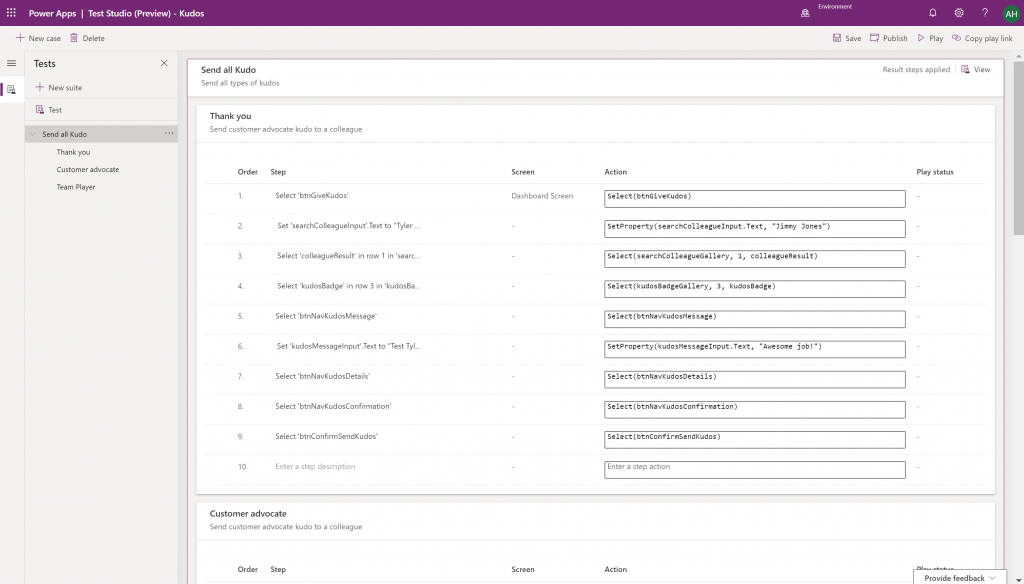
    Canvas app Monitor tool & Test studio GA: the wave of the future. Low-code app development isn’t going to be restricted to personal productivity scenarios, we’ll have much of the same needs as in the pro dev side.

    Azure Application Insights telemetry in Canvas: a great example of how the existing tools from Azure should be harnessed to offer shortcuts for Power Apps makers.

    Generate app from data with responsive layout for phone and tablet: it’s been an awkward limitation before to only support phone layouts. The bigger story is in bringing out these templates for how to actually make Canvas apps responsive, as it has been quite a mountain to climb for citizen developers. In 2020 Wave 1 we’ll also see a preview of the awaited responsive Canvas app pages.

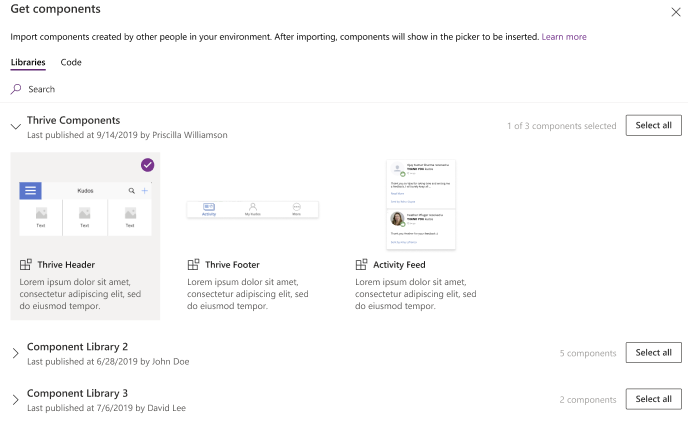
    Canvas Components GA: very impactful stuff here. Component libraries, solution awareness, support for galleries and forms, using collections and media files. These are big steps in bringing the two app types of Canvas and Model-driven closer together.

    Power BI embed component in Portals: oh yeah, there’s that third app type, too… Definitely looks a lot more approachable than the current embed experience. As for Portals extensibility for pro devs, the CRUD Web API sure made Nick Doelman excited, so keep an eye on that one.

    Unified Interface enhancements: important for many Dynamics 365 experiences. Forms as modal dialogs in particular looks useful, better filters are about closing the gaps to legacy web client, search in this view is an age old requirement.

    Improved themes reflecting modern Microsoft Fluent themes: UI matters, the power of the Apps is not just in the logic, data and automation. MS should be more aggressive here when competing against other low-code development platforms.

    Power Automate

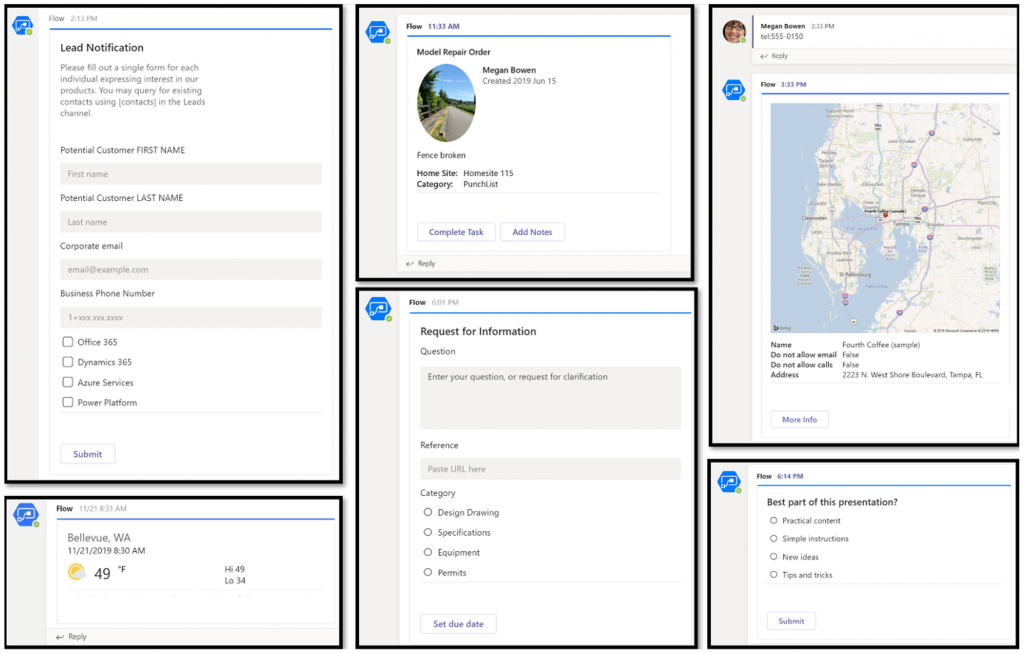
    Interactive adaptive cards: we’ve surely been waiting for this. Very important for bridging the user experiences across different tools in different MS clouds (Office, Dynamics, Power Apps). Could 2020 be the year of the Adaptive Cards? Potentially yes, if you look at how Teams & Power Automate can make use of this feature.

    UI Flows solution awareness: aligning RPA with the common shipping vehicle of Power Platform. Being a new preview feature, there’s of course a lot of other parts moving around still, but the important bit from a platform play perspective is getting everything to play nice with solutions (including non-UI Flows…)

    Use business process flows in Office 365 apps: interesting yet logical step. From a process automation perspective there’s no reason to keep BPF functionality tied too closely with the familiar CRM sales process stages mentality. Again, it’s the platform that counts.

    Power Platform governance and administration

    Environment life cycle support: much needed in the real world implementations. To be able to test new standard and custom features in complex business systems, copying and deleting environments needs to be compatible with all the platform components used. Power Automate, Canvas apps etc. have to support healthy ALM patterns for enterprise development scenarios.

    User access diagnostic experience: again, very much needed for keeping larger environments operating the way IT would want them to. The process of managing access to applications should be isolated from the actual app maker tools or features specific for Dynamics 365 admins, to ensure there’s help available on a broad enough level when users encounter problems.

    Admin connectors & PowerShell cmdlets Generally Available: because they need to be. Low-code Application Platforms for enterprise customers will have to provide automation tools for not just app creation but app governance and administration. If the number of business apps within an organization will explode thanks to these tools, trying to scale the old admin practices isn’t going to be the answer.

    Bring your own data lake: allowing customers to control their own adoption metrics for Power Apps. Just like the GUI for admin tools might not meet the requirements of all organizations, it makes sense for Microsoft to allow customers to also take the telemetry data from apps and use Azure services to put it into their own reporting context.

    Power BI

    Paginated reports enhancements: the next generation SSRS has been a long time coming. The new features like API to render a paginated report to any format (e.g., PDF, Excel) and subreport support will bring the cloud reporting powers of Power BI close to what you could do in on-prem 15 years ago. They might not be the coolest of features, but for many CRM scenarios these “pixel perfect” A4 outputs are still a very practical solution.

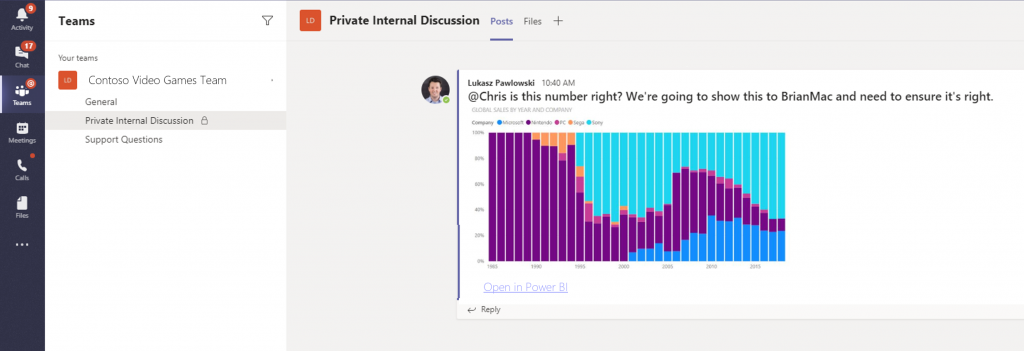
    Copy and paste visuals into other applications: supporting the modern flow of information. If the paginated reports represent the PC era way of working, then being able to grab a part of your analysis and quickly paste it to a conversation in Teams with a link back to the full report is the way today’s information workers expect these cloud apps to work with one another.

    Data lineage GA & enhancements: when cross-referencing data from anywhere is a breeze, how can you tell if the analysis is actually accurate? The lineage visualization is an effective way to illustrate how this modern world of self-service BI operates and bring tools to do meta-analysis on what’s the actual source of the truth being presented to you.

    Power Virtual Agent

    Add a Power Virtual Agents bot into Power Apps canvas app: because bots are not just for customer service. Internal scenarios for app users would be very interesting, although the starting price for using bots is probably going to scare most customers away.

    Adaptive Cards: see my comment in Power Automate section.

    Single Sign-On: if attempting to go beyond generic website chat popups, strong identity management features are a must.

    Pass context to a bot from the calling site: “Hi, how may I help you?” That’s not how a smart agent would initiate the chat, so after identity comes context management. Bridging the gaps between apps is where I see bots being particularly powerful, so URL query string support is a good start for making this happen.

    AI Builder

    Power Automate integration: building the Cognitive Service for citizen developers. The patterns from Azure need to become more accessible in the BizApps frame of reference.

    New models like anomaly detection and receipt scanning: making AI Builder ready for business. Training AI for unique data sets is one thing, but where I believe wider adoption will start is through these more “ready to go” scenarios.

    Common Data Model

    Empower out-of-the-box analytics: delivering on the promise of CDM. It’s all just theory until we see Microsoft deliver on those promises about making it easier to integrate data sources and analytics/AI via a common semantic model.

    CDM visualization and management experience: making CDM more than a GitHub repo. “Increased focus on growing the Common Data Model ecosystem requires enabling users to work with Common Data Model in their native data environments, such as Power Query, Insights Apps, Synapse, and Power BI.” Yes, it certainly does.