Tag: adoption

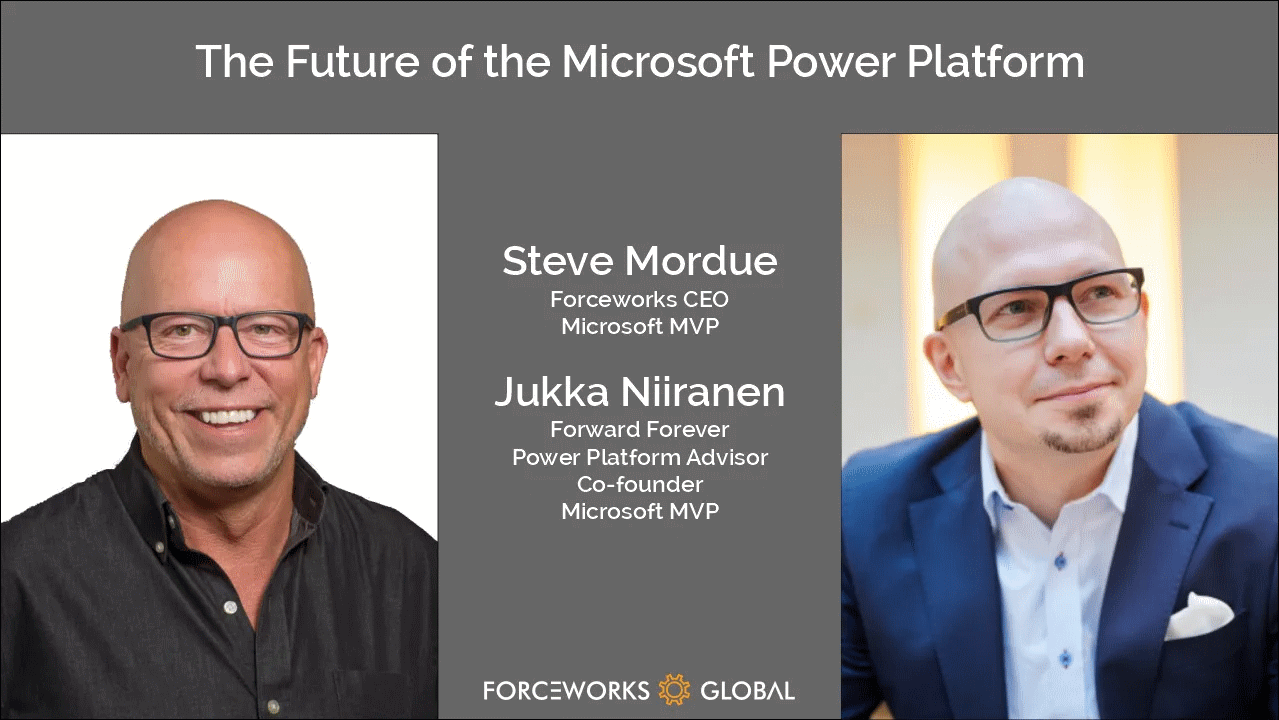
  • The future of Power Platform – Steve has a chat with Jukka

    The future of Power Platform – Steve has a chat with Jukka

    If I had to choose only one blog I could follow in the Microsoft Business Applications ecosystem, it would be Steve Mordue’s blog.

    Why this blog? Because you’ll learn more about the true business of BizApps in Steve’s blog than you would from reading all the partner channel materials MS puts out there.

    It’s not just the unfiltered opinions and provocative comments from Steve that make the content unique. He manages to get Microsoft leaders like Charles Lamanna or Ryan Cunnigham speak openly about product roadmap and business strategy whenever he has a chat with them. It’s the kind of material you couldn’t hear from anywhere else – at least not without an NDA.

    When MVPs used to get together

    One unfortunate impact that COVID has had on the Microsoft MVP program is that our annual MVP Summit events have gone virtual. Even though the world is slowly opening up to physical events again, at the same time the world economy is sinking. This has pushed even the biggest tech corporations like Microsoft to announce cuts on their internal travel, training and event budgets. This means the next Summit, which will be my 10th, is probably done over Teams again.

    It’s better than nothing, of course. The Microsoft product team members do put in effort to share their plans with the MVPs and are open to receiving feedback from us, since the protective shield of the NDA agreement covers both digital and physical worlds. Making things digital can also help scale the amount of tech content that can be made available as well as the means through which to consume it.

    What the virtual events cannot in any meaningful way compensate for is the lack of informal interactions between MVPs. When you can’t go grab a drink with the smartest people in the business together at JOEY Bellevue, a large part of the Summit is wiped away. Sure, the product group interactions are valuable, but the MVP-to-MVP interactions are priceless.

    No, you can’t replicate this in the virtual Summits. When you’re first sitting 6-8 hours alone in front of your computer, from 6pm onwards after your normal working day, staring at the Teams screen – trust me, you’re in no mood for “virtual drinks” after that.

    Events quickly turn into non-events due to the lack of any changes in the physical surroundings. No travel costs, no jetlag, only a little loss of billable work during the week – it’s all very productive, to the point where you start asking yourself: why did I ever consider this “fun”? It sure helps to contribute to the feeling of being constantly tired.

    Time to move forward again

    You shouldn’t become too bitter about things not being what they used to be. The older you get, the more stuff like this is going to come at you every single day. You don’t have to like it, and you certainly are entitled to feel what you feel about it. That’s where our entitlements pretty much end, though.

    Choosing how we react to change is pretty much the essence of life – and business as well. This is an area where both me and Steve seem to have similar ideology that drives our behavior. If you know the only certain thing in life (and business) is constant change, it’s better to be someone who’s pushing that change to happen instead of becoming the object that must endure the change pushed upon it.

    So that’s one thing we share in addition to our hairstyle. With nothing more as a prepared agenda, we opened up Teams and stated recording a session on Steve has a chat with Jukka. It’s as close to an MVP-to-MVP informal interaction you can get to without flying to Redmond.

    You can listen to the audio track on Steve’s website or on Spotify / Apple Podcasts. Alternatively, you can watch two BizApps MVP baldies on your screen for one hour via the embedded Vimeo clip below:

    https://vimeo.com/742784310/7101b864c1

    Some of the topics we discuss with Steve include:

    • How different the world looks like when you choose to go all-in on Power Platform instead of being a Business Applications generalist
    • The struggle of convincing customers that a $5 app can actually give them more value than a $95 app
    • How to get the IT on board with the citizen developer movement and turn governance into an enabler instead of a blocker
    • What would be the ideal support model for a platform-first business that would reduce the customer/vendor tension and get everyone on the same side
    • Why Dynamics 365 partners have very little financial incentives to move their capacity into true low-code business
    • The difficulties in making the Fusion Team story sound attractive enough for pro-devs to find their place in the low-code world
    • Why Teams is the most important platform Microsoft has and why it isn’t yet quite the right platform for wide scale business applications usage

    That’s just a few things I remember off the top of my head, after our awesome chat session. So, if you’re interested in hearing what us two loudmouths think the future of Microsoft Power Platform is – you know what to do.

    There’s no sponsors in any of these chats nor either one of our blogs, so I’ll just leave you with two commercial call-to-actions:

    • Check out RapidStart CRM to experience what you can do with just a $5 Power Apps Per App license (the CRM part comes free, courtesy of Steve).
    • To keep up with what our 100% Power Platform focused team of pretty amazing experts is doing, subscribe to the Forward Forever Monthly newsletter.

  • Licensing is NOT a security mechanism

    Licensing is NOT a security mechanism

    Licensing remains a topic that no one claims to like yet everyone keeps on talking about. October 2019 saw what was undoubtedly the biggest number of changes to Microsoft Business Applications SKUs (i.e. items that MS sells), with the end of Dynamics 365 Plan licenses and new models for licensing PowerApps & Flow. Not to mention the new structure that ties licenses closely to API call limits. Oh, and we’re still waiting for the new restricted entities definition that should have gone along with October 1st licensing terms.

    We’re not even past the month of October and there’s already a new licensing discussion heating up in the MS customer and partner community. The announcement of Self-service purchase capabilities for Power Platform products, made via Microsoft 365 Messaging Center (only visible to admins), seems to have pretty much angered everyone who saw it.

    I gotta say, you simply could not find a worse channel to announce something like this, because it’s aimed squarely at getting around a problem that IT administration (and sometimes consultants like me) are a part of. But like we’ve seen so many times before, communication isn’t exactly the strongest part of Microsoft’s software licensing management efforts, so let’s just move on and start analyzing what is happening here, why it is happening and what possible outcomes there might be from it.

    Empowering every individual to acquire applications

    To get an overview of what exactly is going on, you can read the article from Mary Jo Foley: “Microsoft to enable end users to buy Power Platform licenses without administrative approval”. In short, starting in November 2019 (in the US), any user that has an account in your organization’s Azure AD tenant will be able to go and buy Power BI licenses directly from MS. Later this will expand to PowerApps & Flow, and other regions. Essentially this will be an “insert your credit card here to unlock Power Platform functionality” type of experience.

    How is this different from any of the popular SaaS products from other vendors then? It isn’t. That’s the model that every consumer app and most business apps support, since it represents the lowest barrier to entering a commercial relationship. Usually you would start with a free trial period to try out the capabilities of the SaaS product. If it’s a good fit for the problem you’re trying to solve, the next problem you face is the procurement of the app. Buying things for personal use is easy, whereas the bigger the organization you’re working in is, the longer you can expect this purchasing stage to be. During it you’re basically standing behind the store window, staring at the product you know you’d really need, yet the door to the store is being kept shut. Often there’s even no opening hours sign to give you any clue on how long this will take (or if you’ll ever get what you wanted).

    In such a scenario, it’s not uncommon for problems to get solved with a credit card and an expense claim. The ease of taking this route is how Shadow IT came to be, and I bet we’re just going to see more & more of this Bring Your Own App (BYOA) activity in organizations as the information workers become more savvy about what’s actually out there in the cloud. If one store is closed, there are tens of other options with 24H service.

    But they can’t do this! They’re MICROSOFT!!!

    It’s one thing being an enterprise software startup and trying to get onto the radar of potential customers via the Bring Your Own App strategy. When you’re Microsoft, though, the expectation is that things work in a completely different way. Since pretty much every bigger company is a MSFT customer, the licensing game has been a process of long negotiations and complex agreements. This is the procurement norm of how Microsoft software finds its way into the hands of the end users. Well, it sometimes does, and other times it doesn’t, because the needs of individual users may get lost in the big corporate IT machine that’s trying their best to keep things under control, with the growing amount of regulations, systems and requirements.

    What’s Microsoft on about here with self-service purchases, specifically with this chosen set of products? Imagine you’re the world’s most valuable company, you happen to be producing software & you’ve recently discovered a huge new market in the Low-code Application Platform space. You’ve built up a strong community of advocates (or addicts even) and your target is to empower the next 10 million application developers to digitally transform their organizations with the help of your global cloud infrastructure and AI driven insights. You’ve got all these key buzzwords lined up, there’s a seemingly endless sea of citizen developer opportunity ahead of you. The only thing standing in the way of your success is this nasty thing that looks like Niagara Falls, sucking in many of the smaller boats that the poor citizens attempt to use to sail to this promised land of Power Platform. That thing has a name and it’s called Enterprise Software Licensing Models. So much for the “no cliffs” experience then – hope you packed a life vest on this journey!

    To avoid this vortex that Microsoft themselves have largely caused over the past decades with the swirls of their enterprise software sales strategies, it makes perfect business sense to open up new, alternative routes for those power users who seek to merely use the software tools – instead of catering only to those who are tasked with managing the whole lifecycle of IT tools in the organization.

    There’s only so much you can do with the PowerApps and Flow features bundled into Office 365 subscriptions, after which you’ll need a premium plan. Why on earth would Microsoft willingly push the users to look for alternative tools like Zapier or IFTTT to automate processes that connect to data sources that are outside Office 365? Why shouldn’t it be possible to enter the very same credit card details into a form provided by MS, to keep the tools within the same MS cloud that’s already used by the organization? Isn’t this actually a way to reduce the problems resulting from Shadow IT? Keep the rogue users closer to the official IT world and you’ll have a better chance of converting the tools into non-shadow status at some point.

    Rogue citizens

    Obviously there are some valid concerns with a model that might encourage users to acquire MS software via an alternative channel than the officially sanctioned one. The self-service shop won’t give the same negotiated prices for licenses as the company wide agreements. Handling the expenses from various different sources will be an overhead. The boundaries between supported and unsupported IT will become blurry. Even with the promised central visibility into who’s bought what licenses in the tenant, initially it will all just look like more work to those persons who have traditionally managed Microsoft licenses in the organization. There’s an FAQ document from MS for this self-service purchase model that attempts to address some of these concerns, but with a change like this there’s bound to be far more Q’s than A’s at this point.

    There shouldn’t be a need for the self-service purchase channel to exist, but in reality there is. If you have only spent time working in roles that represent the centrally planned deployment of IT systems, you may not realize the challenges that can stand in the way of you and the software license you would need for getting your job done in a larger organization. Sure, there might be a theoretical process in place for how the needs of business users are identified and then eventually turned into a working piece of software that everyone happily uses. In reality a fair share of the people on the business side who live in the world of needs may not be seeing such processes in action. They may well be unaware of any development initiatives on the IT side, nor have contacts with those professionals that could help them navigate these processes. If IT systems can be complex, then the inner workings of an enterprise organization can represent a whole new dimension of complexity. No one is at fault, yet everyone pays the price.

    (more…)
  • Now blogging on MSDynamicsWorld.com, too

    Now blogging on MSDynamicsWorld.com, too

    In addition to the Surviving CRM blog right here, I have recently also published a few writings on MSDynamicsWorld.com. If you’re not familiar with the site yet, then I recommend you to take a look at their offering and subscribe to their newsletters. In short, MSDynamicsWorld.com is an independent online publication (meaning: not sponsored by Microsoft) that publishes content for Dynamics CRM & ERP users, partners, independent software vendors (ISVs) and consultants.

    The articles I intend to write for MSDynamicsWorld.com will be somewhat different than the blog posts you see on Surviving CRM. In my own blog I tend to cover the types of topics that I run into as a part of the day-to-day job of a Microsoft Dynamics CRM consultant: how to do X with Y, workarounds to common issues, updates on the new functionality to be expected from Microsoft & partners, etc. I speak my mind on both the good and the bad, the highs & the lows, in an effort to spread awareness of how anyone working with or around Microsoft Dynamics CRM can make the most of this great platform.

    How I’m hoping to leverage this new channel that’s been graciously offered to me by the editors of MSDynamicsWorld.com is to broaden the scope of discussion and look at the world of CRM and Dynamics CRM from a slightly different angle. Instead of the hands-on, application level topics, I’m planning to allow myself some space to move onto a higher level of abstraction and share some thoughts on the business impact and considerations involved with implementing, developing and, at the end of the day, just living with a CRM solution at the customer organization. Don’t worry, it’s not going to be too far detached from the everyday reality. I promise!

    My first articles published on MSDynamicsWorld.com are actually series of articles under the theme The Design Language of Your CRM Solution. It’s a journey through the many considerations involved in improving the user adoption rate of CRM systems – a hot topic that never goes out of style, right? I started thinking about these user adoption challenges once again when I heard Bill Patterson make a statement in his WPC 2012 presentation about designing CRM systems that can go viral. Contrasting that with the traditional world of enterprise applications (anti-viral almost by definition) gave me enough food for thought to come up with the following articles:

    • Part 1: What does it actually require to build a CRM application for viral adoption vs. top-down enforcement?
    • Part 2: Common sense design principles for making your CRM system easier for the users to adopt
    • Part 3: The importance of visualizing the processes that the users are expected to follow
    • Part 4: How the new mobile device clients are helping to make CRM a more lightweight, context-aware application

    You’ll need to create a user account at MSDynamicsWorld.com in order to access the full articles. I know, signing up to yet another website can feel like a bit of a burden, but considering it’s an independent publication that doesn’t charge their readers any money, I personally understand the requirement of creating a user account to get access to the content. I’ve signed up for the site already years ago (4.5 to be precise) and haven’t ever come across any messages from them that I would have considered spam emails not relevant to my areas of interest.

    Anyway, the choice is of course yours, but I at least encourage you to circle MSDynamicsWorld.com on Google+ or follow their RSS feed, as it’s a great source of news for all things related to the Microsoft Dynamics ecosystem. Oh, and while you’re at it, do make sure that you’re also following the Surviving CRM Google+ stream where I personally share the most interesting blog posts and articles I’ve encountered while surfing the big waves of the #MSDYNCRM community.