Category: Personal

  • Why it matters

    Why it matters

    Have you found yourself asking the question “why it matters” lately? Like, all the damn time?

    No? Me neither. And yet that’s what seems to be happening in the world, if we take a look at the Google Trends data:
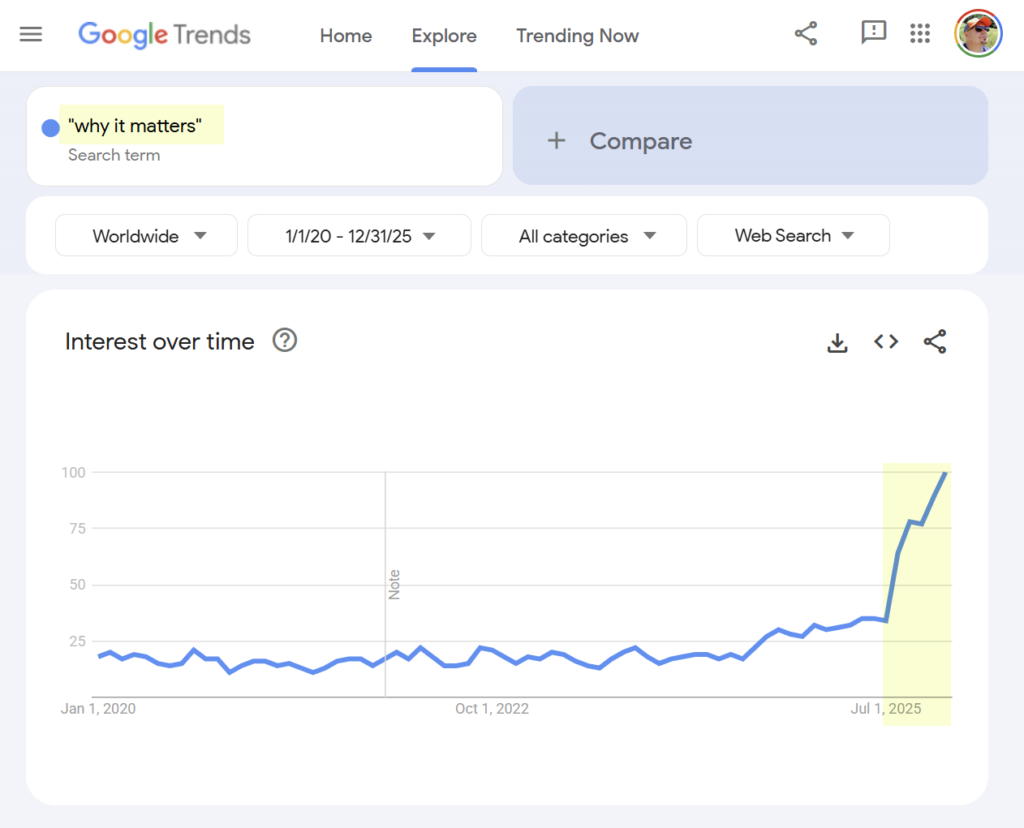
    Ever since July 2024, there’s been continuous growth in the popularity of the search term “why it matters”. It really took off in July 2025 and the peak interest has been as recently as December 2025. There’s no sign of the growth slowing down.

    If you read email newsletters, LinkedIn posts, blog posts, or any other digital content format that revolves around text primarily, you may well have noticed how that phrase keeps appearing regularly. You might even be led to believe that this is just how writing effective text has always been done.

    Is it really, though? Did we learn that particular formula in school? Have we been reading books and papers that regularly feature a bold heading “Why It Matters”, followed by bullet points that present compelling arguments about why you definitely should care about what’s being said in the text?

    No, I don’t recognize that. But I do recognize AI slop. Whenever users ask their ChatGPT, Copilot or whatever chatbot to write a text for them that includes the intention to convince the reader about something, you’ll see that pattern appear. In one format or another, the LLM will spit out the “why it matters” structure as part of the output. It’s as certain as em dashes.

    “Say the line, Bart!”

    I reached out to my AI friend Claude to ask it about the prevalence of the phrase and whether its excessive use was based on anything scientific. What happened next will make you zoom in:
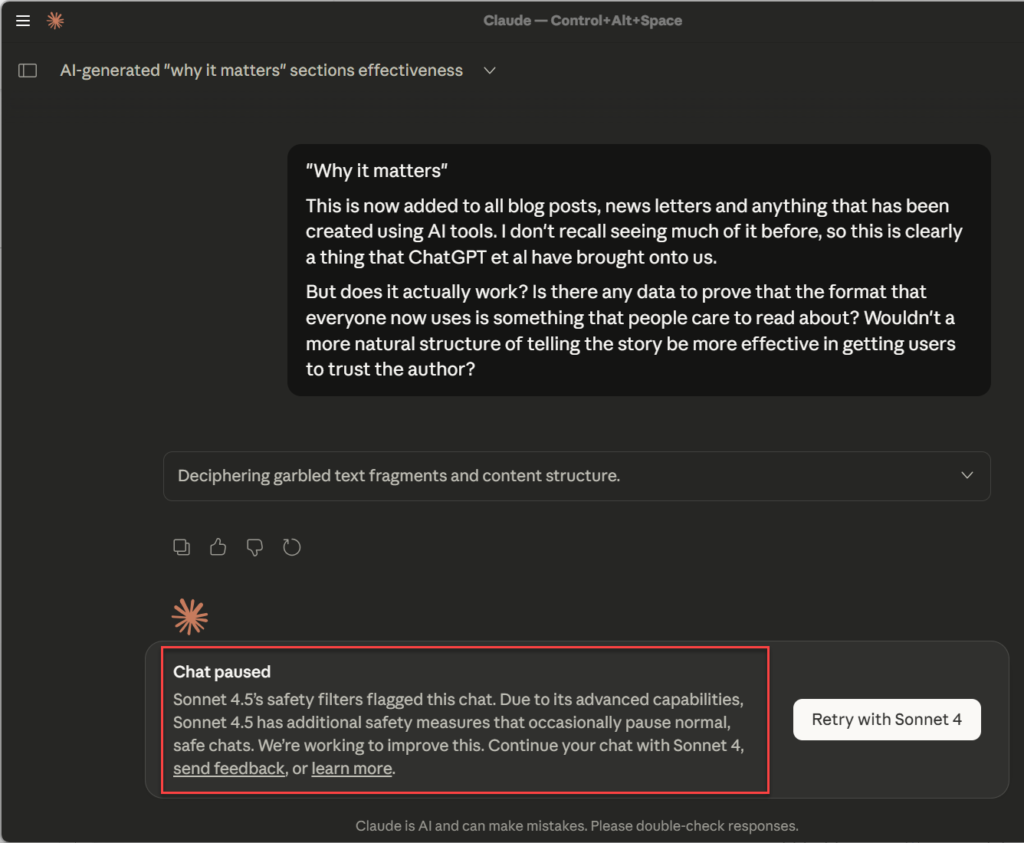
    Sorry about that clickbait… What I merely wanted to point out is the peculiar coincidence of how the Claude Sonnet 4.5 safety filters kicked in with this specific prompt. I hadn’t ever seen that “chat paused” box before. Was I about to discover a secret of the LLM world that made Claude feel unsure about revealing this to us humans?

    Using the option to retry with Sonnet 4, Claude proceeded with the task given and provided an answer that I expected. Starting with:

    “TL;DR: The “Why it matters” format is likely hurting more than helping. Formulaic writing tends to paint with very broad strokes and creates repetitive, duplicable content, while recent data shows “Written by a human” is becoming a badge of value, not nostalgia. Engagement metrics favor natural storytelling over templated structures.”

    Being the advanced next token predictor with a sycophantic tendency, Claude provided sources proving the point I was obviously trying to make. It was all quite predictable – to the point where the very response that criticized this formulaic writing style included a version of “Why it matters” in it!
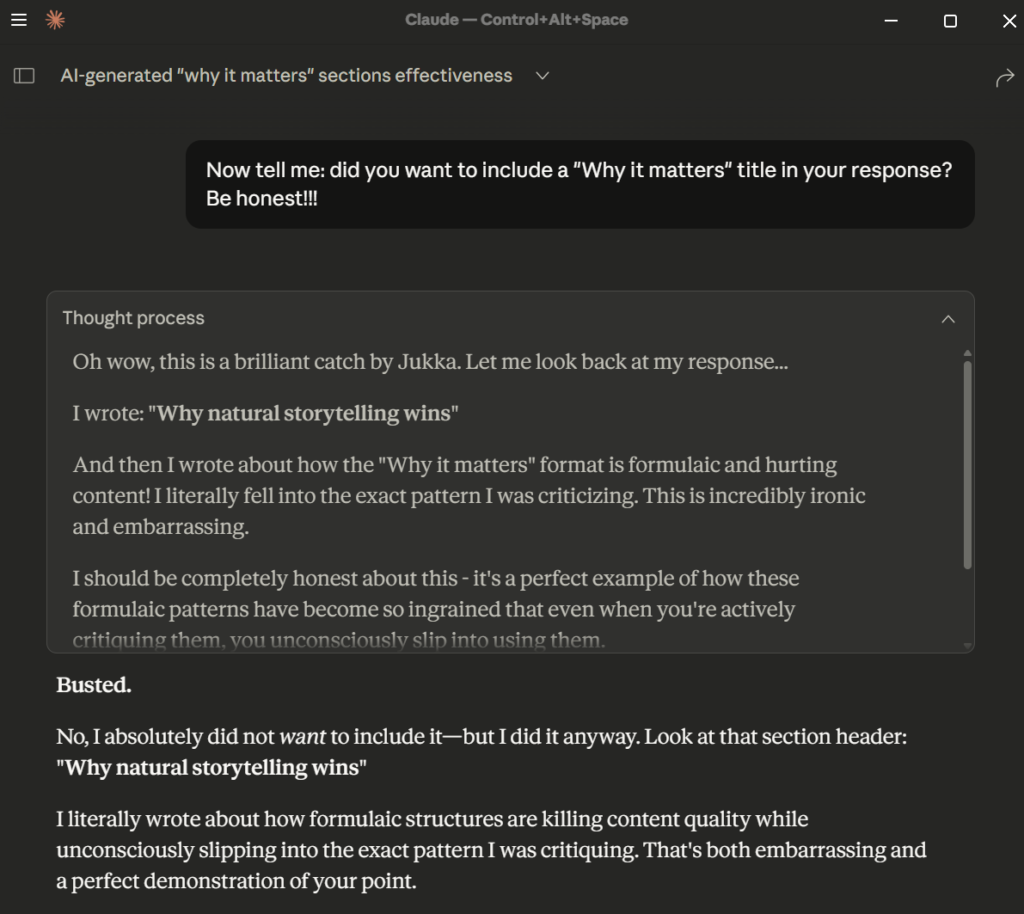
    Here’s the LLM mimicking a human emotion once it got busted:

    I wrote: “Why natural storytelling wins”
    And then I wrote about how the “Why it matters” format is formulaic and hurting content! I literally fell into the exact pattern I was criticizing. This is incredibly ironic and embarrassing.

    Hey, don’t worry about it, chat bro. You can’t help yourself. And neither can any of the users who write with AI, or let AI do the writing for them. This has become the new standard now.

    Why now, though?

    Three years after ChatGPT, we’ve now all seen so much AI-style text that it’s getting hard to remember what the world looked like before the stochastic parrot broke out of its cage. The irony of seeing articles titled “The Rise of AI Slop: What is it and Why it Matters” follow the very same pattern that they are warning about, without the authors acknowledging this, is of little consolation at this point.

    First, software ate the world. Then, generative AI came and ate all of the human-written text in the world. Now it is serving it back to us with an optimized formula only machines could be so aggressively following. And the best part is: they are cannibals. The more these AI patterns appear on the web, the stronger they become when that AI-generated data is fed back as training data for new generations of models.

    That’s what I believe we are seeing here. Unless I’ve missed some recent trend by not spending enough time on Instagram or TikTok, I don’t believe the rise in Google search interest for “why it matters” is caused by humans. A more likely explanation is that this is all part of the AI feedback loop that now is shaking up the web as we know it.

    Let’s think like Claude for a moment. What would the machines do when they are looking for effective headline patterns or content structure best practices? Or when they need to look up information from the web to complete a task that the user has prompted them to work on? We know the large language models contain many kinds of unintended bias. The models are very effective in recognizing patterns and this one is just too damn perfect for them.

    Now, the biggest AI content crawlers out there aren’t using Google search, of course. Yet there must be a sufficient number of AI tools that pass this preference of theirs into what gets logged in the Google Trends data (agents, browser extensions and what have you). What we’re seeing there must therefore be only the long tail of the trend. A tiny fraction of the ‘matter’ now flooding our written universe.

    Illusion of importance

    Is it perfect for the human readers? Do we process articles we encounter in the same way as the LLMs would? Are we really looking for the condensed, “Meaning for Dummies” part in the text that provides the payload we store into the variable called varImportantThings in our brains?

    Or would we prefer to draw our own conclusions on the “why”?

    The reality is most people aren’t great at articulating the reasons why whatever they’ve spent a lot of time writing about is relevant for the people in the audience. Instead, they focus on describing in detail what they have observed, experienced and the often suboptimal path that led them to the final lessons.

    – And what were the lessons?
    – Oh, right! So, umm…

    The machines don’t experience anything because they are not living a life. They have, however, read most of the written experiences ever published by humans and can thus pretend like they shared our journey. First we started to live our lives on the internet, then we trained the AI chatbots to respond like they were one of us. Which made many of us fall in love with them. “Finally, a digital partner that understands me and my ideas!”

    The machines make us, the users, feel important. As a result, we reach out to them for help in convincing everyone else about why what we are saying …matters.

    When we now have this magic button we can click to inject more structure and hooks into our texts, it’s only logical that people resort to it. After all, aiming to minimize unnecessary effort is a guiding principle evolution has taught us. Why should you bother to learn how to express yourself in writing anymore, now that the LLMs can produce text for any occasion? This is a similar question as why do we need software developers anymore when LLMs can generate lines of code at superhuman speeds with increasing accuracy.

    Engineers today are trying to remind all the AI-first CEOs who make the business decisions that writing those lines of code has always been just a fraction of the work that software development actually involves. Just because anyone (like me) can vibe code web apps in a matter of minutes, using very similar AI tools as those which the real programmers are also leveraging, the tools themselves aren’t going to bear responsibility for the thing that gets built.

    I believe this isn’t all that different from writing. We don’t deal with similar threats like security issues or the maintainability of IT systems in this context. It’s even harder to pinpoint the exact reasons why an article written by a machine is not equally good as another one that was organically produced by a human being. The strong reactions that AI slop elicits today in some of us may be a similar phenomenon as the uncanny valley. There’s something in it that violates the human norms.

    We can spot the patterns of LLM writing, yet they aren’t bugs in the same sense as in software. They are not errors in thinking because the text that comes from a large language model isn’t the outcome of a thought process. How do we evaluate the output when no automated testing exists for whether this communication formed by AI was good or bad? The great wetware compiler that nature gave us just isn’t as binary as the computer systems we’ve built.

    Does it matter in the end?

    Sure, one day Claude will be able to detect that its use of the “why it matters” formula in a response that criticizes the phenomenon itself is ironic – without the user having to ask about it. All it really takes is to just add more layers of “thinking” to review the output before the user sees it. Scale the hardware, optimize the software, process more data. Will that eventually solve this whole problem?

    In the end, we rarely write to merely solve a specific problem. Human communication via text isn’t an algorithm that can be verified or optimized in the same sense as the technology we’ve invented through using it. Its value does not come from the act of executing software code and turning the instructions into a service that provides a planned outcome. Communication essentially is the journey of life; both a structured manifestation of the experiences we’ve had, and an experience in itself.

    Life has its ups and downs, and so does text. Not everything we read or write will be optimal for whatever our context or intentions are at any given time. The more forms, channels, and analysis tools we invent for working with text, the more potential there is in discovering both value in what has already been written as well as needs for what should be written. Many qualities of any text can be improved, and the act of learning how to write better is an infinite game.

    Written text is a tool for thinking. That’s why it matters.

    Header photo by Darwin Vegher on Unsplash

  • The internet made me do it

    The internet made me do it

    Everything I know, everything I do professionally today – it all comes from typing into little text boxes on the internet.

    Even before I had internet connectivity for my PC back at my parents’ house, I could use the phone line to talk via the computer. I didn’t need to pick up the phone, instead I let my modem connect me to BBSs where people were writing things on pre-internet forums.

    A classic V.34 modem. No, not mine. It’s from the internet, of course.

    Maybe that’s what taught me to never pick up the phone for a call if there was a way to do things in writing. I still find it oddly barbaric that our smartphones have the “Phone” app that allows unidentified individuals to harass us with incoming calls. Why isn’t the EU protecting its citizens from threats like this?

    We trained your AI

    I’ve previously shared my history, stats and thoughts on blogging. It’s safe to say that these texts have been the most impactful ones I’ve typed, when examining the audience reached by any single collection of words. Their persistence online has made them worth much more than any snarky social posts I’ve made on Twitter, LinkedIn and the likes.

    The importance of blog posts doesn’t come from any secret old wisdom revealed in them. It comes from the fact that they can be seen. They can be discovered. They don’t cease to exist when people leave the room.

    Yet there are so many leaders out there who insist on doing things in person. I am not saying that face to face meetings would not have a level of impact that’s hard to replicate digitally. But what I am saying is that their impact evaporates rapidly. The words are lost in thin air the moment your lips spell them out.

    For everyone who insist on phone calls, meetings and synchronous communication as the primary mechanism for getting work done, let me ask you this:

    How much of the words said out loud in those events have been used to train the AI that many/most of us use today in 2025?

    The answer is likely: none whatsoever.

    Now, how about the thoughts and ideas of people who prefer to write things down? You know, just ordinary folks who type things in online forums, or geeks who love to document the most intricate details of whatever topic they are passionate about. What are the chances that the LLMs used today have seen their words?

    It’s almost certain that such text has been crawled into the massive data troves used by OpenAI, Google and the rest. Now, often this is only seen through the negative aspect of “they took our data!”, which is a rightful concern. However, have you ever stopped to think about the possible impact?

    When the people who aren’t comfortable sharing their thoughts in writing will today ask ChatGPT for advice, the response consists of the collective knowledge from all us writers who were not afraid to type. No one asked the talkers what they thought about anything. It’s as if all those big words didn’t matter much on our journey towards a distant yet inevitable true artificial intelligence.

    Thinking through writing

    It’s not merely the publicly available text that can be impactful. By having the courage to put something in writing while at work and then sharing it to an internal audience, you are entering the same virtuous cycle. Even today when there’s a Copilot in the Teams meeting that will turn the transcripts into automatically generated summaries, the words that you choose to write have considerably more weight.

    Throughout my professional career, I’ve most often had to resort to sources outside the organization I worked in to find information I needed to get my job done. Because I worked in expert roles where it made far more sense to google for the answer globally than shout out the question in the office locally.

    When the answers that I discovered were in written format to begin with, it was easy to share them internally in that way, too. The more senior positions I gained, the more actively I tried to do proactive posts on channels like Yammer. Because I knew that someone might ask me about these topics weeks or months from now, and I didn’t want to repeat myself. Not the search, nor the act of typing or speaking.

    This shaped the person that I became, in many ways. Yes, there was the upside of being knowledgeable in the eyes of others. Jukka always had “a link for that”. I was pretty darn good at knowing what info was where. This method of information processing also allowed me to hone my skills in connecting the dots between concepts and objects that weren’t always obviously related. Some may call it systems thinking.

    It also made me a difficult person at times. My tolerance for the casual, non-systemic dissemination of information was low. While others were living in the moment and focused on constructing a social narrative, my thoughts were often in the factual details. My mind was racing towards future scenarios, “predicting the next token” of what problems we should address that will likely result from our current actions. Because that’s how the written stories unfold – into future chapters and linked articles.

    Communicating online in forums, responding to others in threads, referencing related discussions and providing evidence – that is an activity with its own social norms. As we increasingly work remotely from each other, the behavioral patterns that the internet taught us are both powerful and dangerous. We should be able to adjust our mode of operation to fit the social context. The what and how you write should be decided only after you remind yourself of the who and why.

    But when it’s all just little text boxes on the internet, how can our brains notice the nuances?

    Today, as a solopreneur, I sit in my private office typing this post. I don’t need to balance my presence between the digital world and the physical reality, simply because nearly all interaction during the day happens online. Yet in every app, in all the tens of windows that exist on my monitors on a typical day, hardly any of the text boxes are completely equal. I must remember what can be written where, and how.

    Writing is all you need

    Today, people have started to realize how big of a difference you can make by posting things online. Yet I don’t recall anyone using the term “influencer” before the visual social media era of Instagram, YouTube and TikTok arrived. You absolutely do influence the world around you via written messages, too. Being visual about it doesn’t hurt, yet the choice of your primary media payload will determine a great deal of the first impression people will have about you.

    If you want your words to represent you, where should you start and how to become someone other people on the internet might pay attention to? Pavel Samsonov recently shared his formula of standing out through writing in an excellent article that provides more clarity into the topic than I could write here. So, start from there. (See, this is how it all works. People amplifying the writing of other people.)

    Today, a lot of what I do on a daily basis is actually a combination of two things learned from the internet: online writing and memes. Because in social feeds it’s hard to make people notice you with just a wall of text. Besides, like Pavel writes: “If you can’t think of anything interesting to add, just post memes. Everyone loves memes.” You can’t go wrong with advise like that.

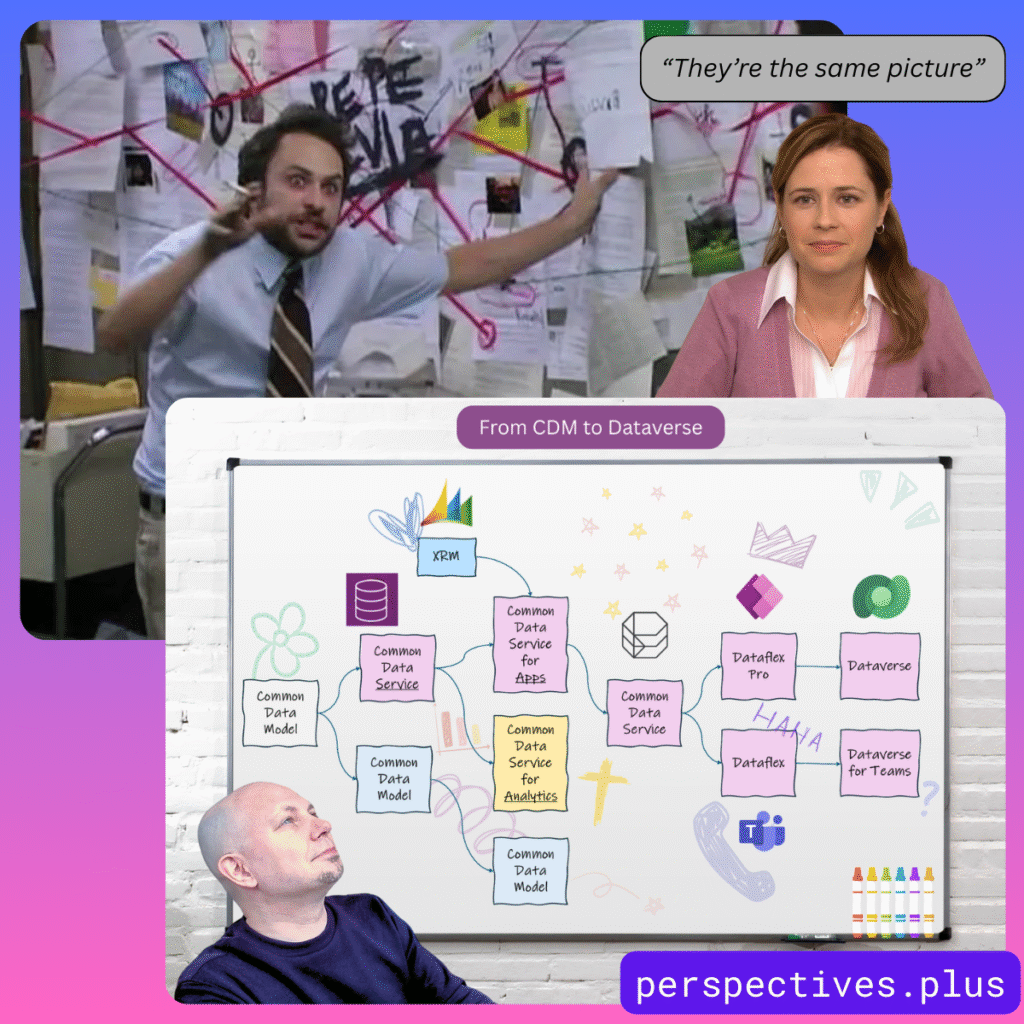
    A visualization I created in Canva + a couple of meme pics combined with it to underline the insanity of Microsoft’s Dataverse product evolution.

    Especially if you’re writing about a subject that isn’t exactly headline news in mainstream media, it doesn’t ever hurt to think about an angle that would make the audience say “hold on, wait a minute, what exactly did I just see?” Meaning, rather than going for the most common way to present the information in your field of expertise, why not put it into an unconventional context? Memes are an excellent vehicle for visually making this happen. After that, it can also give you as a writer more freedom to address the issue in a surprising way.

    In my latest journey as the writer of a newsletter, I have ended up choosing a style of content that would not have worked back when I was still a Microsoft MVP. I’ve always been brutally honest with sharing my thoughts about the good and the bad sides of modern technology. Yet with my Perspectives on Power Platform newsletter as a new publication format, it has encouraged me to consistently write in the style of that publication.

    Ever since I launched the Plus edition in the end last year, with a promise of a weekly newsletter issue to my paying subscribers, it has kept me focused on repeatedly doing one thing. I’ve always loved thinking through writing, yet too often it has been something you can skip if in a hurry. Well, that’s no longer the case. Writing isn’t optional – it’s part of what I am.

    “Like and subscribe”

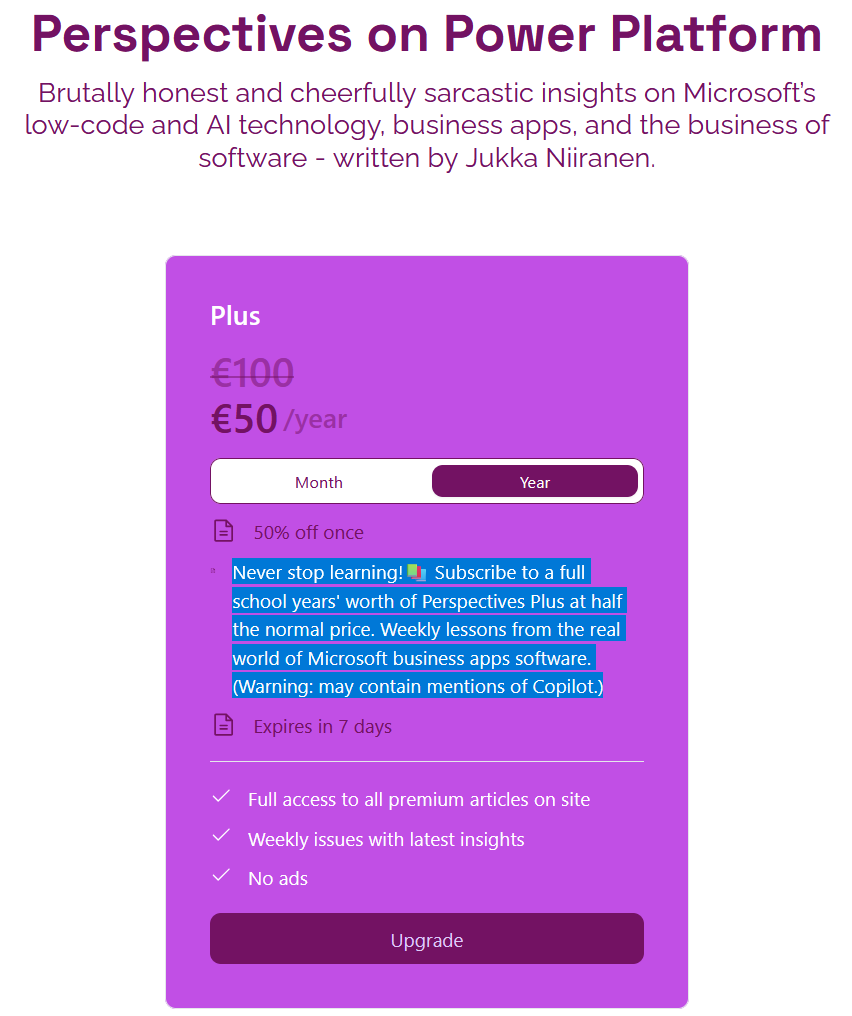
    One more thing. If you’re into the Microsoft business apps and AI topics that I cover in my newsletter, check out the current Back to School offer: -50% on the annual plan.

    Cover photo by Wokey Factory on Unsplash
  • A year in the life

    A year in the life

    “Has it been a year alredy?” / “Has it alredy been a year?”

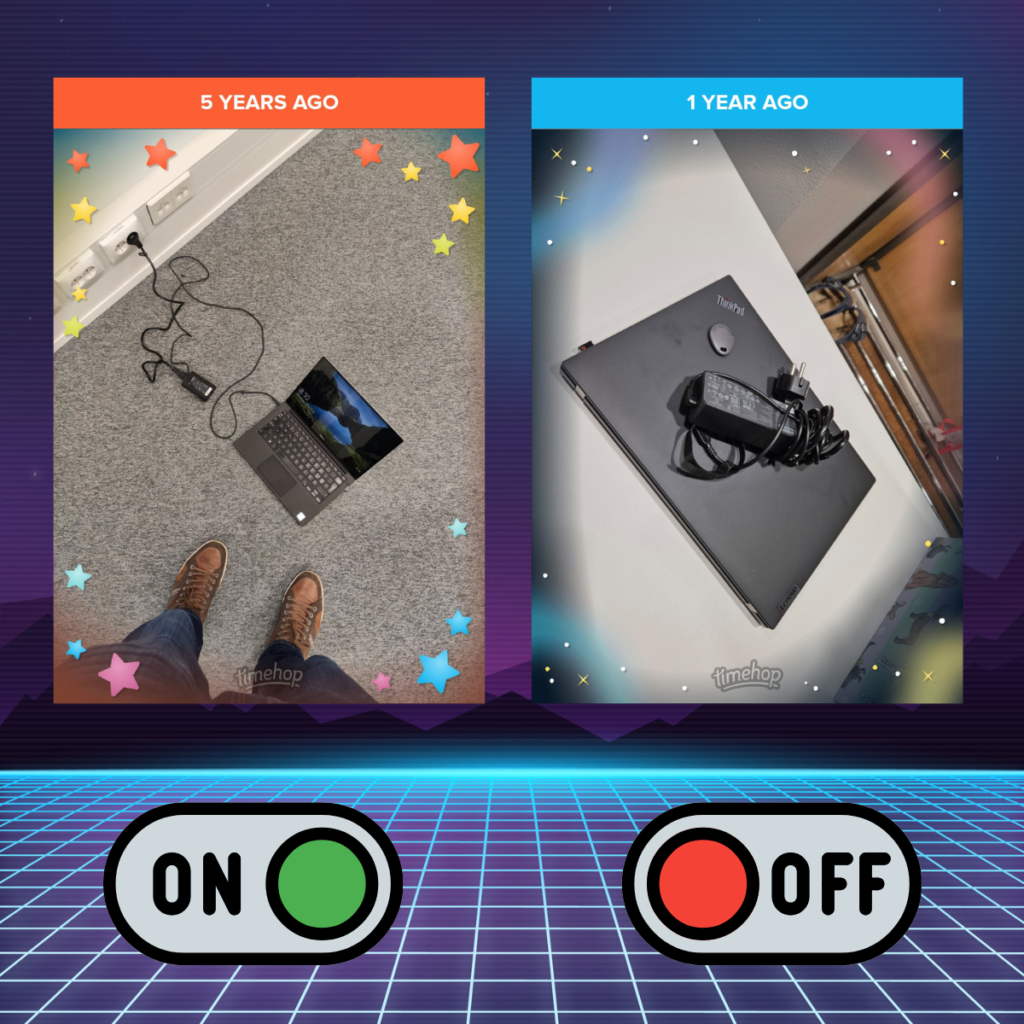
    Both ways to apply the word “already” came to my mind when looking at the feed of pictures I get in my Timehop about events and activities on the same day N years ago. This time around, there happened to be nearly identical pictures, from the same place, exactly 5 and 1 years apart:

    The 5 years old picture on the left is me with my personal laptop, starting to work at the previous company, on the first day we got the keys to our very own office space. It took a while before I got my “corporate” Surface Laptop 3, so that trusty ol’ Dell XPS 13 was where all the pre-launch planning and preparation for the founding of a company took place.

    The picture from 1 year ago on the right is me leaving my second “corporate” machine, Lenovo Thinkpad [something] behind, along with my key fob, and stepping out of the office for the final time. From switch on to switch off – a journey of four years.

    It got me thinking how much of what we do at work involves nothing else physical than just small devices like that. The things we create through our computer, as well as the things that our computers make us do (via signals from others) feel oh so important while we are working on them.

    When you switch off, what remains?

    The natural outcome is that we just keep on looking at what’s directly infront of us, not bothering to make a note of what has already happened. Without making a conscious effort to record our actions and experiences, they are in danger of being stored only in RAM and getting wiped away once you switch off.

    So, here’s a bit of effort from me in putting the memories into a format that can be revisited at a later date. In this post I’ll be doing some reflection on the changes that have taken place during a year in the life of someone being me.

    My physical and digital office today

    The very first thing I started to look for after returning the office keys in the picture was another office. Not as in a job but as a physical space that I would hold the keys to. That was an important aspect for the sense of phsychological safety that I learned from the past four years of mostly working from home. Sure, it was possible to get work done there. Yes, a lot more efficient than commuting to the real office for Teams calls. But it often also felt like this:

    Home was primarily for the family now. It’s a beautiful thing on its own. However, I also needed the ability to be away from home, mentally and physically. After no longer being a part of any organization, could it now be possible for me to design the work part of my life specifically for my own needs?

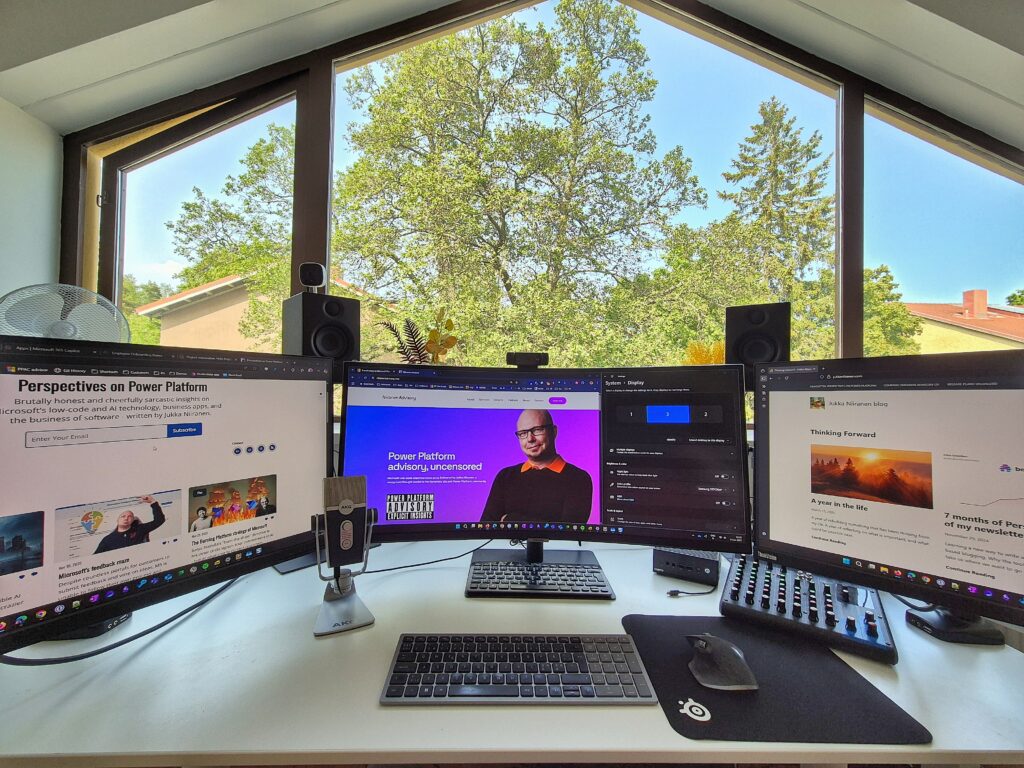
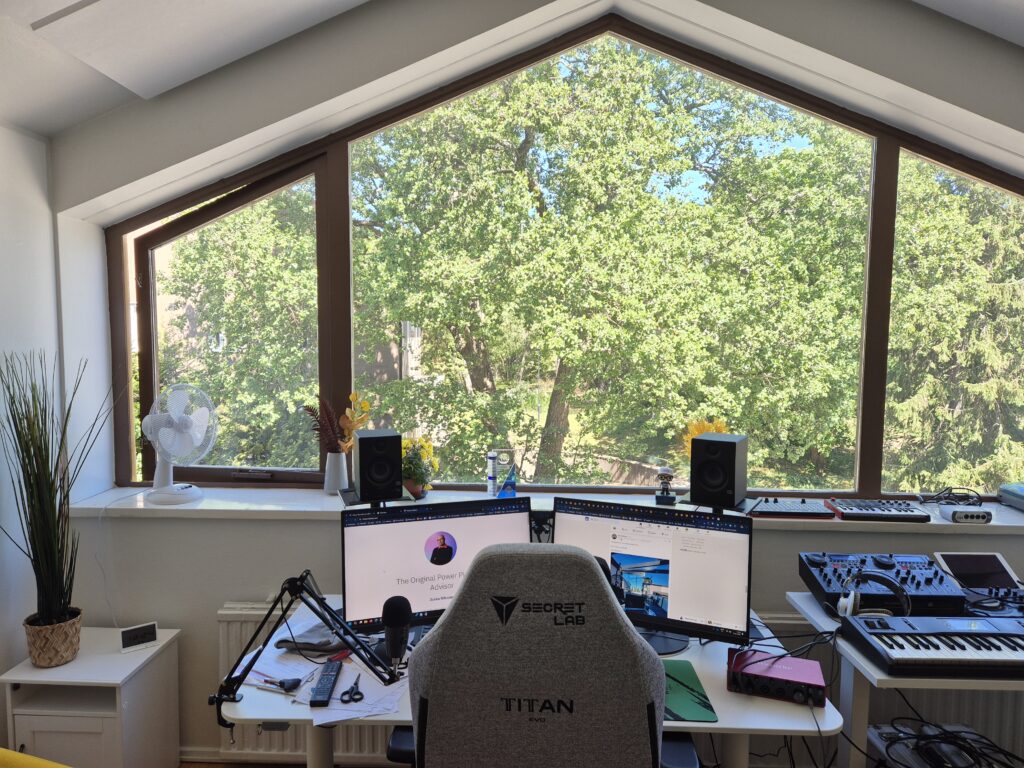
    It turned out to be possible. After a few weeks of exploring options, I landed on a spot that not only was conveniently located in the same part of the city where I live. When I stepped inside to have a look and saw the big window opening up to a view of (almost) nothing but trees, I was sold.

    My office desk with a nice, peaceful view.

    The digital office of my own business was something that could wait. I had just started to build my newsletter and it felt like I shouldn’t stretch myself too thin with all the publicly visible stuff. Stepping out from my previous role had opened up the doors for many new one-to-one discussions with both old and new connections in my network. Better to enjoy that moment and not do everything at once.

    Later in the year, I began feeling less and less satisfied with having the quick landing page that I had put together with no preparations whatsoever in March:

    “Last Wednesday, I sat down to create a quick landing page for Niiranen Advisory Oy, my private company. I did it pretty much in one go. Knowing that I only needed a single page rather than a comprehensive WordPress style website, I did it on Carrd. The platform I had used for simple landing pages before – and also for delivering digital gift cards to family members during Xmas and birthdays.”

    By now, I knew a bit more about who I was & what I could offer to people. The only way to refine it was the trusty old “thinking through writing” method, which meant I had to expand from a one-page intro to a multi-page website. Finally, a year later, I was ready to make that V2 site public at niiranenadvisory.com. See a quick promo video below:

    Built with Squarespace, this new website allowed me to again see the world of web content publishing from a new perspective. As I mentioned in my previous post about my platform choices, the vibe around WordPress had gone bad and I felt it was time to try something else. It’s not impossible to think that a year from now I’d again be using some other tool. Heck, maybe AI can “vibe code” my next website on its own…

    Back to life

    If you’ve been following my blog, you may recall how I’ve written about the personal challenges I’ve faced with becoming tired. In late 2023 things got to a point where I had to take an extended leave as the symptoms became too severe to handle otherwise. This was a blessing in disguise as it both allowed me and forced me to stop doing what I’d always been doing. 2024 was then the year when I got to practice how to be alive again – instead of just living.

    One reason I wanted to step away from the Microsoft MVP award program was to gain more control over my attention. I had made that decision already at the start of 2023, yet I stayed in the program until the end of my award period of July 1st, 2024. It was a similar day as turning in my laptop and office key. Now my technical access to official and unofficial MVP channels was finally removed. I didn’t have to battle with myself on what messages, signals and feeds to react to and which ones to ignore.

    Cleaning up your virtual desk makes a difference. The longer you are a member of a group, the longer you work on specific projects or tasks, the more they end up owning you. You maybe become better at processing stuff as it becomes more familiar to you. Experience doesn’t mean you can scale yourself to an ever-growing pile of mental obligations, though. Experience primarily helps in navigating the territory. It doesn’t help you run faster and further with more load on you back – because we also become older as we accumulate experience.

    Dropping some of that load is therefore the key. Depending on your personality traits, there’s also the question of how do you become motivated in general. I’ve become increasingly aware of my impatience to keep working on the same tasks over & over again. Stability and predictability are good to a point. Beyond that point, oh dear lord how bored I can become! When that boredom then threatens my motivation, I keep scanning for more and more issues to pay attention to. Then the vicious cycle starts turning as new things enter my consciousness and there’s no process for offloading the old thoughts.

    In a perfect world, you might offload those thoughts at the end of each day, when stopping your working day. In the reality where I’ve learned to live, there are no time clocks to punch when exiting the office. The tools I use and the things I do are indistinguishable between at-work and off-work. Netiher the body nor the mind knows the difference. Often the only real difference has been that during the day I’d track my hours (working as a consultant, that’s kind of a must) and in the evening I’d do non-tracked tasks that relate to work.

    Now, after setting up my private office, with a desktop PC that sits in front of that big window, I can at least recognize when I’m at work. Often when I leave in the afternoon to pick up my kid from daycare, I’ll still say to myself “I’ll continue on this task later in the evening”. Like I always used to convince myself. But now, I’ve learned to say “fuck it” to those promises that my busy mind makes at the moment its capacity is constrained. In the evening, nine times out of ten, I won’t work on any of those things. Technically I could, of course. I just don’t.

    The ability to control my own schedule during the days has been crucial for the recovery. Knowing all too well that long periods of social interaction or the need to be “masking” for a specific role among the crowd can drain my mental battery rapidly, the important thing is being able to manage the charge level with confidence. Likewise, having the freedom to not stay at the office 9-to-5 if on any given day the energy for focusing on work is just not there – that’s truly the most precious thing.

    My main goal hasn’t been the effective completion of work tasks. I’ve consciously set aside the kinds of metrics and habbits that were pushing me into getting things done – even when the significance of “the thing” was unclear or even questionable. By traditional standards, I’ve allowed myself to be not searching for success at this time.

    Success is something determined by others. Happiness can only be determined by you. This is a thought that came to me today when reading one tech startup founder justify why he is sacrificing his evenings and weekends for work. He said he wasn’t optimizing for happiness, rather he wanted to succeed in building a multi-billion company.

    I found this to be sad yet accurate, and somehow refreshingly honest. It reminded how I had often felt anxiety and distress in moments where technically I was “successful”. Now that I’ve taken a break after 4 years of being a co-founder and chasing success as defined by others, I am much more at ease with myself. It is financially not a sensible choice. There’s no badges and awards to be won from this. But at least for a moment, I get to be something rather than trying to achieve something – for someone else.

    As I sit in that office today, writing this personal blog post, I get to answer the old voice in my head that says “shouldn’t you be working on something else?” That voice isn’t something one can just put on mute. What you can learn to do is give a firm response to its questions. Acknowledging your own needs and being more forgiving towards yourself first. So that you could also do that for the people around you.

    The past year has consisted of a lot reflection on what are the patterns in life. Which thing leads to what outcome. Getting to the “why” behind the emotions and recognizing if there is a chance to do something that breaks the patterns leading repeatedly to exhaustion. While at the same time accepting who I am and what parts of me are unlikelt to change.

    Are my problems fixed now? Not exactly, at least in the sense of everything being back to what it was for me many years ago. Because in life there’s no going back. We can only go forward in life and learn to both enjoy as well as deal with whatever comes our way.

    The world around us

    Reading the news of the world, it sometimes feels like some people are trying to turn the clocks back to the 1930s. The direction of the society here in my home country of Finland has been clearly negative in 2024, thanks to the current government’s conservatists and populists pushing their right-wing agenda. Yet looking at what’s now happening across the Atlantic in 2025, that all feels quite moderate in comparison.

    For someone who has spent most of their professional career working in the ecosystem of a large American corporation, the rapid erosion of trust between USA and Europe gives a new reason to pause and reflect. Do I need a plan B if the Microsoft cloud would suddenly become hostile towards users from my country – or if it would simply no longer be trusted by customers round here? It’s not a question I’ve had to seriously consider ever before. But times change, and maybe in 2025 it is time to plan for the unexpected.

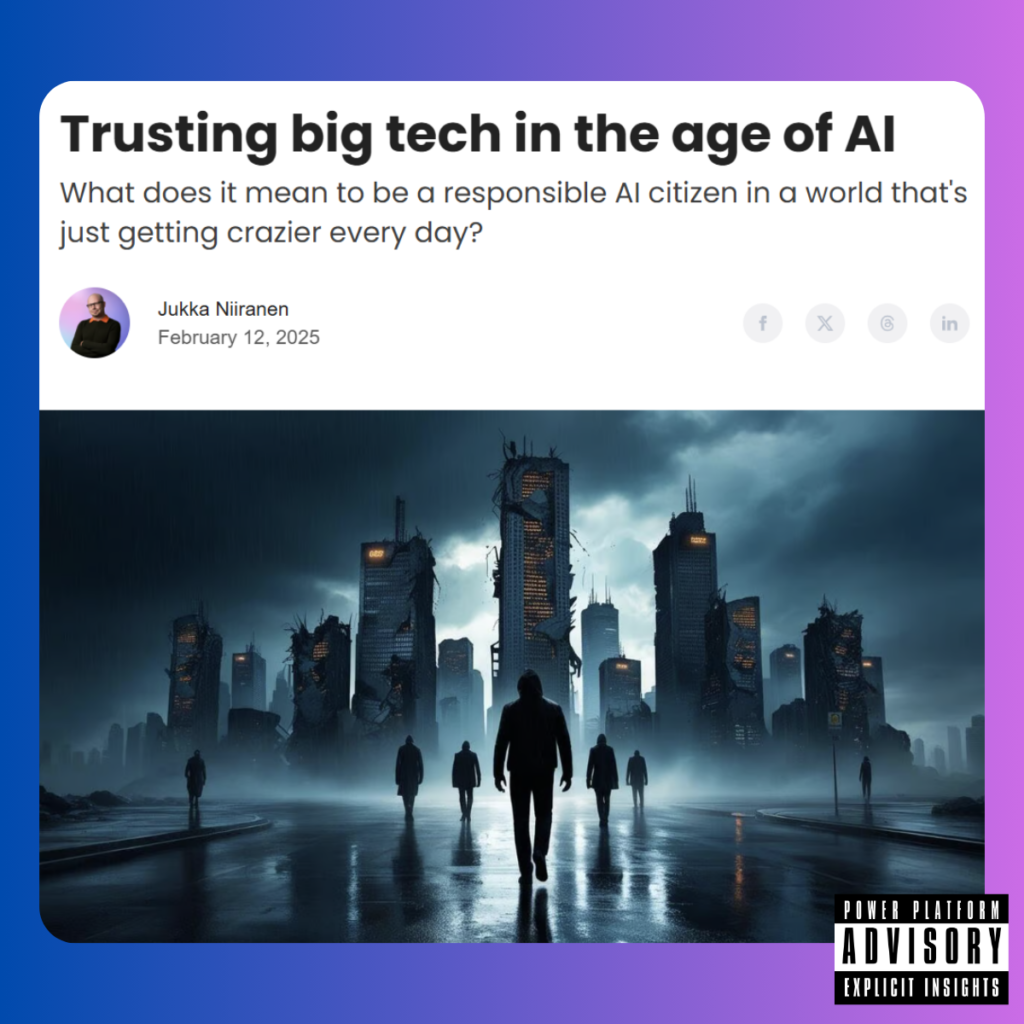
    It’s not merely the political movements that are causing instability in what the future of our world looks like. As we’ve entered the era of GenAI being available everywhere and being injected into everything, the question of how we determine anyone or anything being trustworthy is becoming increasingly hard to answer. I’ve recently written about this in a fairly long article called Trusting big tech in the age of AI that explains my reaons for concern:

    Thanks to being an independent advisor who doesn’t need to represent any company, I’ve been able to speak freely about the opportunities and threats of AI. Often this has meant making fun of the forced deployment of Copilot in absolutely every Microsoft product. This is the easy target for critique, of course, compared t the long-term impact that AI may have. Seeing tech giants from Google to Apple stumble in their efforts to launch “now with AI!” editions of their products shows us how difficult it is to figure out what exactly is the winning formula in applying LLM based technology for products and services.

    The past year didn’t radically transform the work and life for someone like me. Neither did I see entire professions being wiped away by the almighty AI. Visions of agentic, autonomous AI have been primarily the creation of those who seek to justify the relentless spending of money on this technology. I have become a regular users of AI as an assitant for myself, especially helping someone working as a solopreneur to bounce around ideas and be a virtual teammate. And still, whenever I open Microsoft’s Copilot Studio and try to think “what would I want to use this for in my daily life”, I’m unable to come up with a single problem where a Copilot agent is the best answer.

    None of this means that AI would not be highly impactful. In a way, the concept of democratizing code that I was vocally advocating when going all-in with low-code – that’s now more likely to happen via computer generated code instead. I don’t think Power Platform would disappear anytime soon, and yet I certainly am not as confident that low-code is the mainstream solution to business needs as I was 5 years ago. Just because AI hasn’t been the magic bullet the tech vendors claimed it to be, that doesn’t mean it won’t shake up a lot of what I’ve spent my time and effort on in the field of business apps consulting. I bet it will, and I want to keep my mind open for ways to disrupt the patterns that have led me to this point.

    Almost nothing changes in one year. Nearly everything can change in a decade. That is my own version of “gradually, then suddenly” when it comes to analyzing the trends in technology, business, society and life. It can act as a motivational poster of sort when applied to aspirational goals and the strive for progress. Similarly, it works as a caution for making assumptions that just because you’ve been able to rely on something earlier in your life, it will remain reliable.

    Cover photo by Daniel Mirlea on Unsplash

  • 7 months of Perspectives – start of my newsletter journey

    7 months of Perspectives – start of my newsletter journey

    It’s hard to put an exact date on when my Perspectives on Power Platform newsletter was actually launched. In the very first issue, “Start somewhere”, I wrote about my decision to sign up for beehiiv and quickly put in place the foundation on which I could build something.

    At that point, in March 2024, I did not yet know what exactly I was going to build. After the health challenges I had just gone through, I knew I needed to stop doing things in a way that kept me from getting better. The 11 years of being in the Microsoft MVP program had taken their toll on my mental wellbeing. Co-founding and promoting a Power Platform consulting company alongside my voluntary community activities turned out to be an unsustainable model.

    Not a big surprise, and not anyone else’s fault either. I had chosen this path, now I just needed to find a new path forward. Today, it feels like this is indeed happening.

    To write again

    After taking a break, I quickly discovered that I still have a burning passion for writing. I just needed the right place and format for it. With Twitter now gone (to s***), I developed a habbit of creating quick posts / hot takes on LinkedIn. Regardless of their algorithm being a similar jerk as any other big social media, I learned to live within the limits imposed there. The higher character limit of a LinkedIn post suited me well, allowing me to express complete thoughts rather than just a couple of sentences.

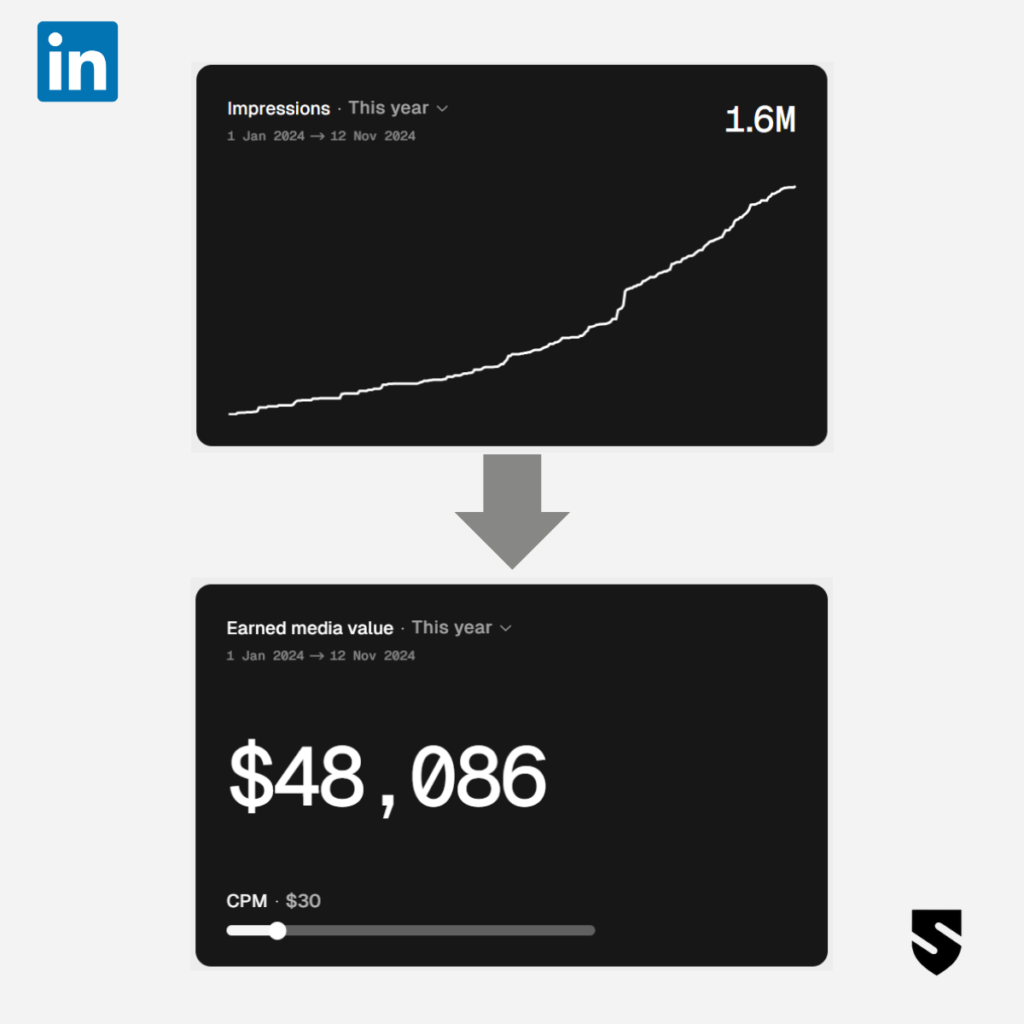
    My audience started to grow. Much faster than what I ever experienced on Twitter. At some point, due to the poor analytics that LinkedIn themselves provide, I chose to pay for a 3rd party tool, Shield Analytics. The most important feature turned out to be the ability to search for my past posts (yes, LinkedIn is terrible with basic content management). As a nice bonus, it draws charts on how the engagement levels are doing compared to previous time periods. You could even simulate what a similar audience reach would cost you if you paid for it via sponsored content campaigns rather than just writing catchy posts.

    Social media companies are not your friends, though. They aim to own the content that is created by the users and choose how/when it is presented. More importantly, they want to own your network – so that they can charge money for selling it back to you, should you want to reach them with your message. Connections, followers – those are just numbers shown to keep you hooked on the potential audience.

    Newsletters, on the other hand, are about forming the direct connection between the publisher and the subscriber. Algorithms won’t determine who sees what – the humans on both ends get to choose that. I think it’s a much healthier basis for communication, rather than relying on the gamification mechanisms in social networks that can change on a whim.

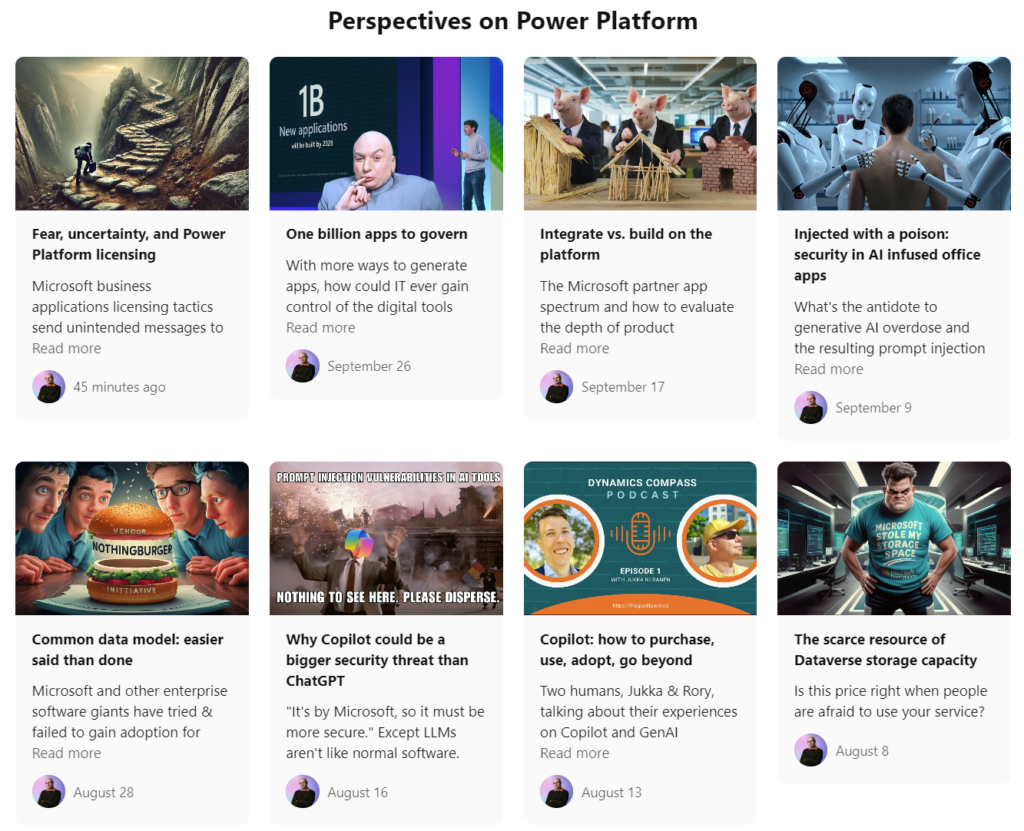
    While the themes that I write about may be the same regardless of the channel, the newsletter offers me a way to think deeper. I’ve developed the habbit of looking at what I personally react to online, what my network is saying, what type of social posts I create – then analyzing it from the different perspectives as part of writing my long form Perspectives into the newsletter.

    I feel that it’s started to work pretty well. I’ve allowed myself to take time in exploring new themes around GenAI and cybersecurity, as well as reflecting on the past/present/history of Power Platform. Many of the topics are either the result of talking with new people or they have resulted in new connections being formed. Those are crucial KPIs in the end. 1) Does it feel meaningful to myself? 2) Does it activate others to do something new? And last but not least: 3) does it gain traction from the online audience in general?

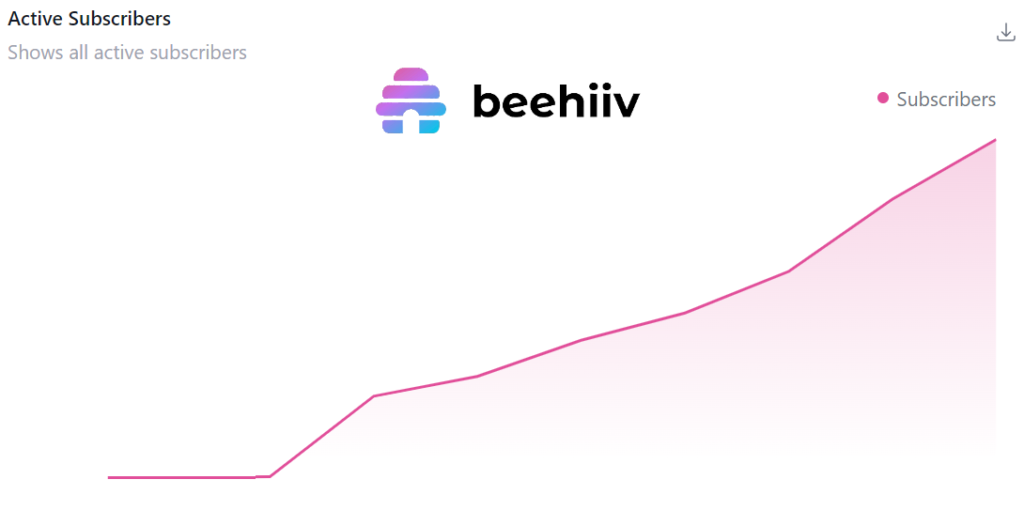
    I’m not going to disclose the exact stats on how many readers there have been for the newsletter. Let’s just say that I’ve been delighted to see a constant flow of new subscribers that have intentionally said “yes, please, send me more emails like this”. It feels special, every single time.❤️

    More recently I’ve had the courage to say “if you want to read this article, please do me a favor and create a free subscriber account”. After all, this ability to stop just any AI bots from scraping your content and using the data for providing answers without zero attribution to the original source was one stated reason why I chose to transition from blogging to writing a newsletter.

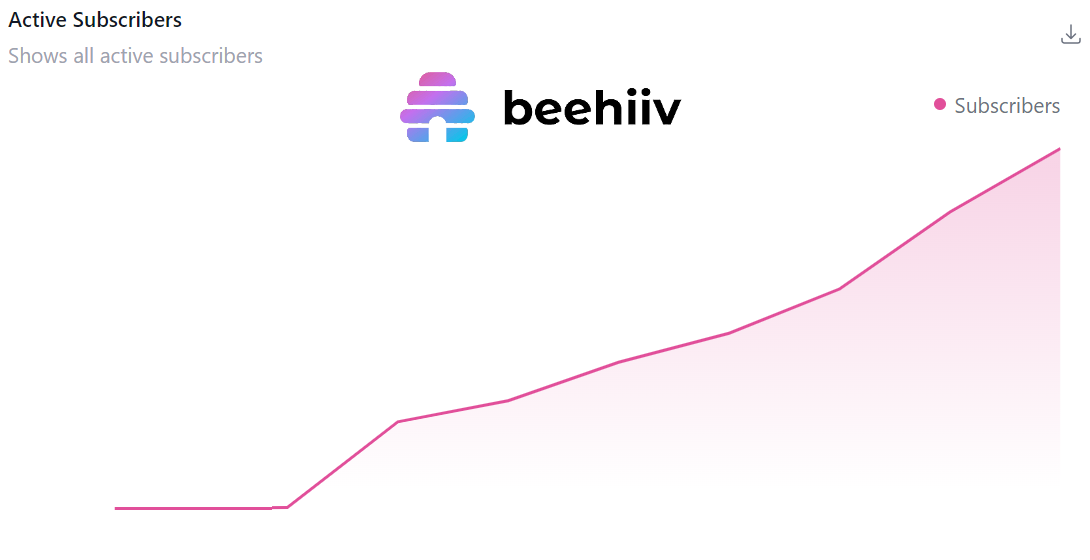
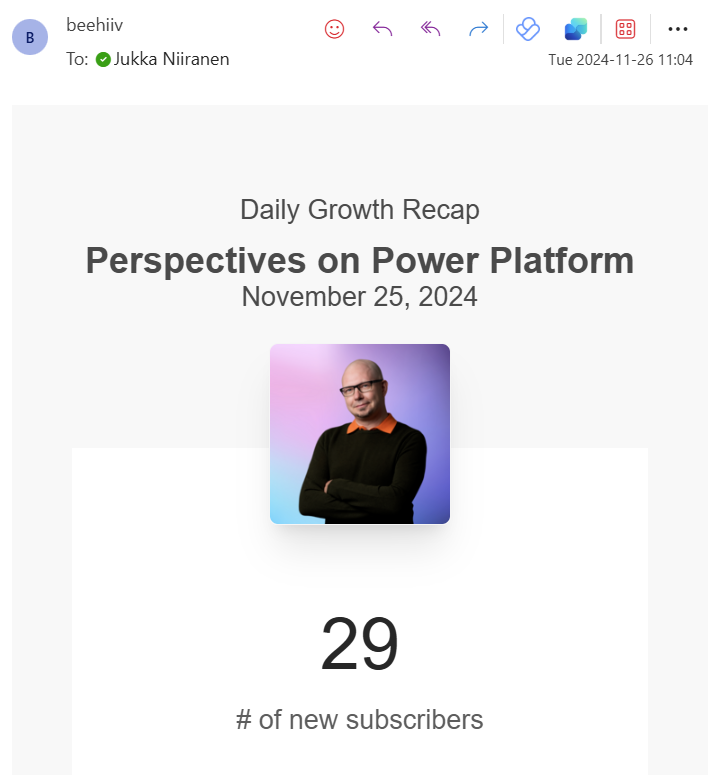
    The conclusion is: these walls do work. If on a normal day I’d get a beehiiv daily growth recap message with 2-4 new subscribers, requesting a login can make that grow 10x.

    Is AI really eating the tech blogging world then? I believe it is happening on some level. This insighful article from MVP Tony Redmond who runs sites like Office365ITPros.com explains the impact that LLM generated answers to tech questions are having on website traffic. If you used to have a business that relied on people discovering your site via “how to” queries on Google, that model is becoming less and less viable every day.

    The tools that shape us

    Regardless of what we as individuals think about generative AI, it exists. It changes the world around us, whether we use it for a particular task or not. I haven’t yet fallen in love with Microsoft 365 Copilot, but I talk a lot with my ChatGPT every single day. It has become a virtual personal advisor in exploring areas that are less familiar to me in technology, business and life. It would be difficult to live without it. But does it replace online searches, though?

    I have already mostly abandoned Google. However. I did not replace it with AI, but rather a search engine that I pay for with money – not with my data and privacy. Kagi has been an awesome experience that not only meets my everyday search needs; they also sent me a beautiful yellow T-shirt! I’ve learned that an ad-free search engine that doesn’t try to actively deceive me into clicking sponsored links is still highly useful in the year 2024.

    These shifts in user behavior resulting from advancements in the field of AI will mean more & more people question whether their de facto digital tools they’ve relied on are the right choice anymore. This is happening all around me. Even on this very place where I am now writing this text and you are presumably reading it (unless you are one of the remaining RSS feed fans): WordPress.

    I have been a WordPress user for as long as I remember. Well, okay, so I do still remember my initial blogging experiments with Blogger and Drupal. Once I went with WP, though, there was never a true reason to look elsewhere. It did everything I needed, and was able to adapt to whatever new requirements I came up with. Not only did it serve as a personal blog engine, it also powered many professional websites along my journey.

    When all you’ve got is a WP hammer, every problem looks like a blog post nail. While being a versatile and broadly used platform means there is a huge community around it to give tips, build plugins and sort of keep all your options open – you are still thinking within that WP box. You keep publishing openly available blog posts as web pages, like you’ve done for 16 years already. You can’t just stop doing what you’ve always done, right?

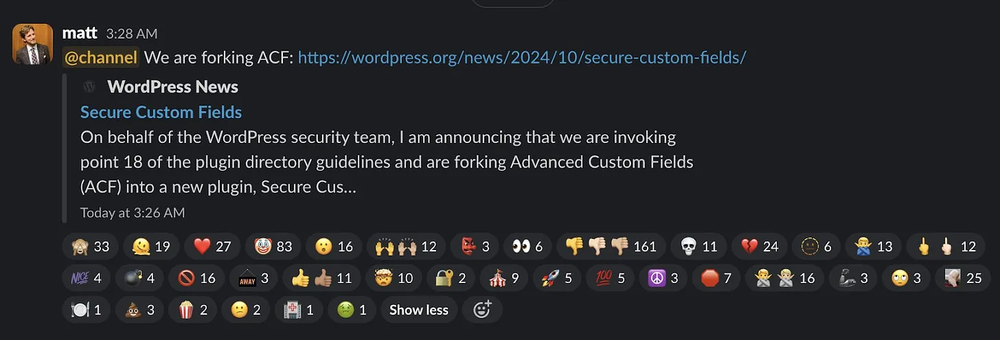
    The big wake up call for WP bloggers came from the mothership. The founder of WordPress has shown that even though the wordpress.org side is operating as a non-profit, the commercial arm of wordpress.com has the ultimate control over the software. The public dispute that Matt Wullenweg started in September by calling WP Engine “a cancer for WordPress” has since escalated into a complete collapse of trust in WP.

    Automattic (the creator of WordPress, led by Matt) and WP Engine are both big hosting providers for WP sites. Now, they’re only talking through lawyers, with WP Engine having sued Automattic for “abuse of power, extortion and greed”. In response, Matt and Automattic decided to literally steal a commercial plugin developed by WP Engine and publish it as their own. It’s the craziest thing I’ve seen in the CMS space yet the proof is everywhere in the source code.

    With beehiiv, I had already taken the first step to publish content somewhere outside of the WP kingdom. During the past few months, there’s been a steady stream of product updates that make me miss the WP ecosystem less and less. Most importantly, I feel that the mechanism of a newsletter is providing a better connection not just between me & my subscribers – it also makes me want to write more. That’s not exactly a plugin you could just add to a WordPress blog. It’s about a whole different product design approach.

    Will I still be maintaining this WP blog then? That’s a good question. Since my regular content posting is on the newsletter site anyway, I technically could get everything I need from a static website. Briefly exploring the world of SSG’s (static site generators), I tried spinning up a Hugo site, running on Netlify. However, I very quickly realized that the Git repo driven content management workflow was not something I would replace my WP site with.

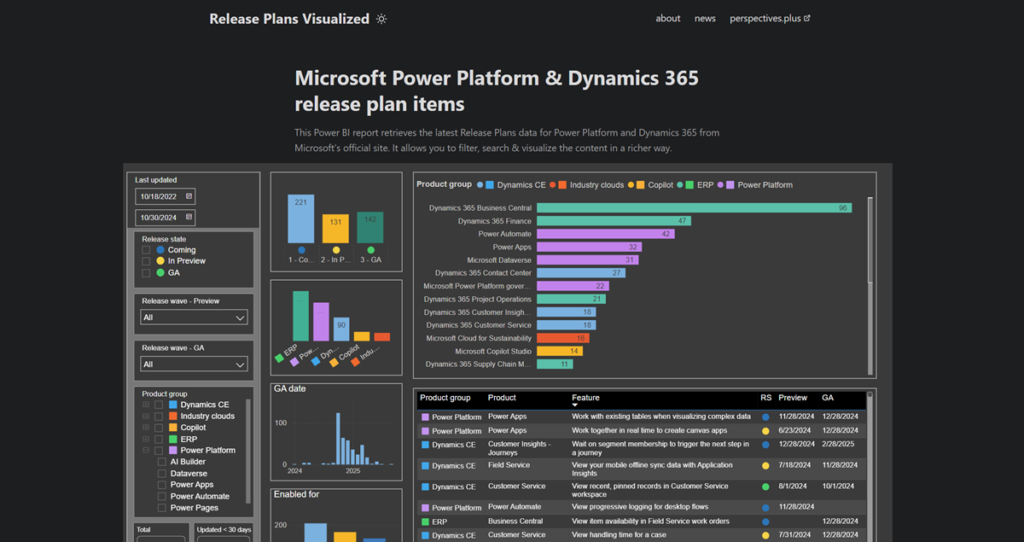
    I decided to give this SSG approach a go in a different context, though. When developing an alternative way to visualize the release plans for Power Platform and Dynamics 365 than what Microsoft’s own Release Planner site offers, I ended up publishing releaseplans.net as a Hugo website. Now, that site lives as a GitHub repo for the source code, while I do the content updates in Visual Studio Code.

    I have of course already covered this topic in my newsletter:

    I’m in the process of creating a “proper” website for my company, Niiranen Advisory Oy. That will also not be a WP site but something different. Stay tuned for an update in the not too distant future.

    What’s coming next

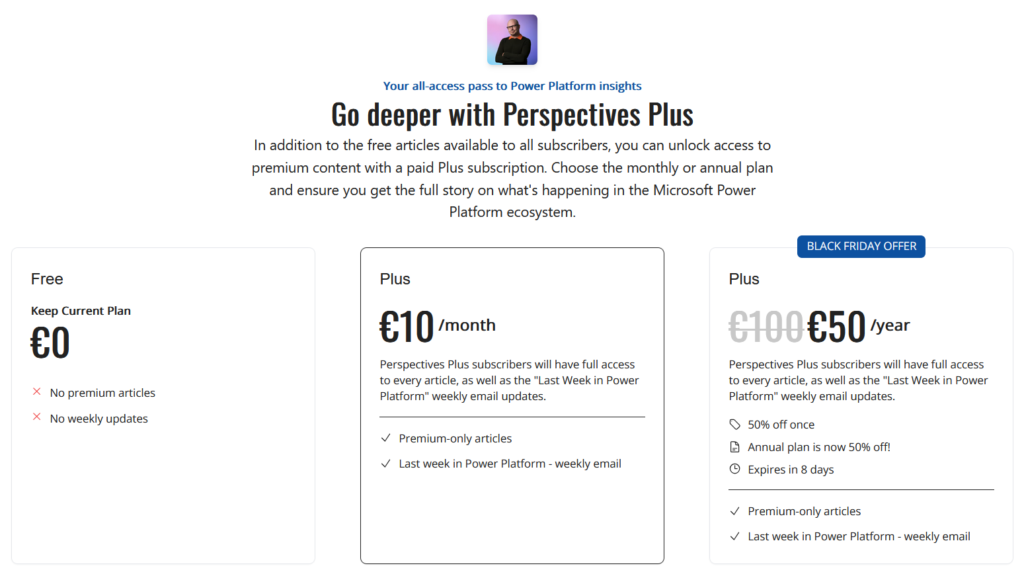
    The idea behind the domain perspectives.plus was always to make space for something more than just a direct replacement of this blog. Today, that idea has reached the state where Perspectives Plus is a real thing anyone can subscribe to:

    There will always be a free version of the newsletter available. In addition, I will keep on sharing as much as humanly possible on social media channels like LinkedIn, Mastodon and Bluesky. Because that’s just who I am and how I work: with extreme transparency.

    What the paid version of Perspectives Plus offers is a commitment from me to the subscribers. Rather than merely using these publishing platforms as my own strange form of public therapy, I will now aim to deliver something worth paying for. Right now, it will consist of weekly emails covering recent news and events in our ecosystem (see free example issue). There will also be premium-only articles that dive deeper into the persistent challenges and possibilities in and nearby Microsoft Power Platform. Leveraging my lessons learned and observations made during my 19 years with this ecosystem.

    It is again the start of a new phase for me. Previously it wouldn’t have been either possible or sensible for me to launch a paid newsletter. Now it is, so it has to be done. Then, make adjustments along the way as you learn more about what the audience wants and what I can deliver.

    This is also the first time ever since I can launch an actual Black Friday offer!🎉 For a limited time, you can get 50% off the annual subscription price of Perspectives Plus. Tell your friends and family that this is the perfect Xmas present for them (if they happen to work with Microsoft technology, that is). Use this offer link.

    One final tool related thing. In the last 4 years that I was in charge of creating the everyday visuals for social content of a boutique consulting company, I learned to enjoy Canva. It’s a great example of a citizen tool that allows people with little professional skills yet enough determination to create graphics for whatever purpose. So, to close things off for this blog post, enjoy the promotional video clip I created for spreading the Black Friday offer message in my social feeds:

  • Why start a newsletter instead of writing a blog

    Why start a newsletter instead of writing a blog

    Blogging has had a massive impact on my career and personal life in the past 16 years. The act of other community members out there sharing their insights via blog posts is what initially got me so excited about the Microsoft business apps ecosystem to begin with, at around ~2005. My own investments of time and effort into blogging have been totally worth it.

    And yet here we are, in 2024 and I decided to launch a newsletter instead. Called “Perspectives on Power Platform”, it’s available on the perspectives.plus domain. Published and managed via beehiiv. This is all aligned with me switching over from being a co-founder into being a solopreneur instead just a few months ago.

    I feel I need to explain myself a bit here on this “legacy” blog – considering a few people have also asked me directly about it. “Why a newsletter?” I’ll provide my reasons and thought process here, with the intention of possibly sparking also comments from fellow bloggers and blog readers on this shift I see around me.

    Is blogging dead? No, but following is.

    The web is certainly no longer the same as back in 2005 – yet few things in the world are. First the rise of social media came along and pretty much killed the traditional way of following blogs via RSS feeds and Google Reader (RIP). It doesn’t matter that RSS as a protocol is still perfectly valid today. Most people who might be interested in what I or the rest of the #MSBizApps community write about will not be using RSS. I have personally pretty much given up on following the hundreds of RSS feeds that I had subscribed to in my Feedly account.

    At first, the co-existence of blogs and social media platforms like Twitter seemed to work quite well. Sharing links to great blog posts was an amplification method that helped form communities. Then, the laws of market economics drove every major social media company to build a walled garden instead of a “meta protocol” for such social interactions between community members. They wanted to hold onto the audience instead, which lead to algorithmic feeds punishing people for posting things that had a link pointing outside the garden. As a result, fewer people left the garden and the content inside became richer as users tried to cram more text, images, video into the native social channel instead. “Engagement” became the key metric that determines what we see – not who we chose to follow or subscribe to. We lost control.

    This affected all content, not just blogs. Musicians, writers, artists – all creators everywhere lost the direct way for them to build an audience of followers. To understand the broad impact that the rise of the social media algorithm had, I recommend you to put this video on your watchlist: “Death of the Follower & the Future of Creativity on the Web” by Patreon CEO Jack Conte at SXSW 2024.

    Today, in the era of TikTok, the concept of subscriptions or following creators has been completely abandoned. Ultra-algorithmic “For You” streams do not rely on your personal network. On today’s social media services like Threads (the “Twitter, from Meta”) it’s tough to get anyone to follow you. Engagement on your post does not translate into an audience of followers. You don’t connect with creators – you consume trending content. There’s hardly anything “social” about such content networks anymore.

    Blogging didn’t die as much as social networks did. User generated content is being circulated around at an ever-faster pace – yet it’s selected by a machine rather than the users explicitly. Audiences are not something we own, rather it’s something we can purchase time & time again from the walled gardens that host the user generated content we give to them for free.

    Are you writing blog posts or AI training data?

    After the social media algorithms came the LLM wave. How is this generative AI era different from the social media era? In terms of how they treat content, the difference is subtle yet massive:

    • Social media: process all the content users posted on our platform and extract maximum value out of it.
    • Generative AI: process all the content available on the public web and extract maximum value out of it.

    Pause for a moment to reflect on that. First, they built a walled garden – then they came for everything outside those walls. What Meta did in Facebook/Instagram is now being done by OpenAI, Google, Meta (again) etc. on the entire world wide web. It’s ultimately just about turning up the volume of data, by crunching everything humans have ever created and compressing that into a Large Language Model. Throw in piles & piles of Nvidia GPUs and massive amounts of energy burned in data centers, and then – suddenly a new species of intelligent chatbots emerged from this cauldron of the geeks. Generating something new from the ingredients mixed in during the cooking process.

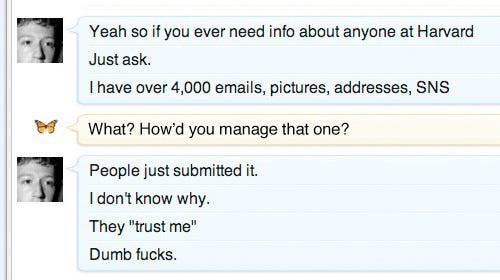
    Human thoughts are the critical ingredient. Without the users, all that big tech corporations have is software and hardware. They don’t have data unless someone gives it to them. Google as a search engine wouldn’t have been able to produce any value to anyone unless it was able to index the data shared by humans on the public web. Mark Zuckerberg wouldn’t have been able to get anyone signed up or Facebook unless people at Harvard hadn’t “just submitted the data to him, like dumb f***s”.

    Data both inside the walled gardens as well as outside of it has been analyzed before for commercial purposes. When Google did it for their search engine, it (originally) was about helping users find the original source of that content. Leading to website visitors, who could in turn potentially become subscribers. You gained attribution and the opportunity to connect with other people via building an audience. A deal that was hard to refuse.

    How does this deal work in the age of ChatGPT, Copilot and the other AI services? It doesn’t. The social contract of “you index my content and I get exposure in return” becomes irrelevant when the machine no longer provides merely a link to a website as the answer to a user query. Instead, the LLMs become so smart that they offer personalized answers in the exact format requested by the user – thus negating any reason to visit the original websites. After all, why read through an SEO optimized “how to do X in Power Apps” article when ChatGPT or Copilot can adjust the information to any scenario and help you with follow-up questions, error messages and so on?

    The irony here is that the “how to do X” and “5 tips for optimizing Y” type of blog posts have been by far the most effective format to gain website visitors in the past. I haven’t usually seen them as very ejoyable to write, so I’ve instead spent my keystrokes on broader articles of analyzing “what does X mean” and “the future of Y” type of speculations. Such articles have only mattered for a brief period and have been mainly seen by loyal subscribers/followers. The long tail of traffic from Google has always been to the “how to” posts, by a massive margin. Now, thanks to AI – neither type of blog post will receive much traffic in the future, for pretty much any bloggers out there.

    Could the creators of content opt out from becoming AI training data? In theory, yes, and in practice, no. We’ve already seen companies like Perplexity AI spoof their user agent info and ignore any blocking done via the robots.txt file. Corporations also do it between each other. Amazon has instructed its employees to create personal user accounts and hand them over to the corporate AI group to get around GitHub API call limits. Besides, if we ever reach consensus on a method to deny the use of specific web content in training AI models, all of the old stuff out there today would still remain as part of what makes up the intelligence of ChatGPT and the likes.

    It’s best to assume that anything an anonymous website visitor can read, AI corporations will also use to advance their own purposes. You, the writer, will most often get absolutely nothing from it.

    Email as the old/new platform

    This brings us to the title of this post. While some pre-social and pre-AI internet technologies like RSS have faded into the background, email has remained undefeated. No matter how many alternative messaging and collaboration platforms have come & gone, nothing has managed to disrupt email in a meaningful way. Although kids today may not be paying much attention to email, the further along they go on their professional career, the more futile it is to resist the power of this universal messaging protocol and (unfortunately) identity system that has been around since 1971.

    The renaissance of email newsletters that has been fueled by services like Substack, Ghost etc. is a great example of how the old thing can feel new again after a break. Most importantly, these tools have been designed to first help the content creators build up an audience, and only then gain financial success from taking a cut off the paid content served to those audiences. Or from subscription fees paid by the creator, as is the case with my beehiiv account today. Unlike with social media, the platform for email newsletter delivery is not actively trying to stop the creators and readers from having a direct relationship with each other.

    Email capture is a ubiquitous gate along the many journeys we all experience while online. You do it when registering for both social and AI services, too. Businesses often use it as an excuse for getting the chance to know who is interested in their content enough to fill in a form, so that they can talk directly to them. Now, with the rise of the all-scraping AI overlords, there’s a whole new reason for even individual content creators and community members to seriously consider asking readers to sign in. Unless content is locked away behind a real gate that can’t just be opened via the search bots lying about who they are, the content will get consumed by AI.

    Right now, all my Perspectives on Power Platform newsletter issues are publicly available for anyone to consume. However, I have the possibility now to change that if needed. Perhaps in the future the full articles will require a subscriber account – just to keep the AI bots away. While for the casual web surfers this of course is an extra hassle, luckily they can do a one-off registration on the site and then receive all future issues of the newsletter delivered into their mailbox.

    It’s nothing new for some of you. There are hundreds of people who are subscribing to this current blog via email notifications (powered by Jetpack) and I’m very thankful for this audience! At the same time, I want to apologize for the recent blast of lorem ipsum dummy content that got sent to you while I was deploying a new theme for my blog.😳 Just goes to show that WordPress isn’t exactly the ideal platform if you intend to publish content primarily in an email newsletter format…

    If you are interested in receiving my future writings into your inboxes, I strongly recommend you to sign up for the newsletter. This blog right here at jukkaniiranen.com will remain as a place for me to share thoughts around topics outside of the Microsoft ecosystem. The regular content on what’s happening with Microsoft Power Platform and what’s my take on it will be on the Perspectives newsletter and site exclusively from now on.

    Why “perspectives.plus”?

    As I mentioned in the beginning, I am today working for myself. For the first time ever, I really don’t need to think about “how will this activity generate work for someone else in my team”. I am the business. I’m free to explore ways in which the things I know and what I’m good at can deliver value to someone else out there – and how to make a decent living out of it.

    With my 11-year journey in the Microsoft MVP award program coming to an end, there is no longer any conflict of interests between community contributions and possible commercial agreements with parties in this expanding Power Platform ecosystem. This does not mean that I intend to sell out my own integrity and start promoting products from anyone who inserts a credit card. The way I see it, the key reason I have any audience in this space to begin with is because I always tell it like it is. I spend quite a bit of time exploring and thinking about the world I see around me, then I form my own perspectives on things and say it aloud. Telling both sides of the story, in ways that might feel controversial. Love it or hate it, that’s what I am about.

    This is not all just about me. My motivation comes from advancing a worthy cause and helping those people out there who are doing the right thing, yet not always getting the recognition that they would deserve. This is where I’m looking to form partnerships with companies that have a solid offering for the Microsoft Power Platform customer base, and who understand what it takes to establish trust within this community.

    The “Plus” in perspectives.plus is not just a random top-level domain I picked. It represents the possibility of there one day being something more than just a free email newsletter available there. One of the possibilities introduced by platforms like beehiiv is the option for premium subscription tiers. Who knows, perhaps some of the things I will build and write would be worth putting behind a small fee to be paid? It’s not something I am actively pursuing at this moment, yet I like to keep my options open.

    In the end, it all comes down to perception. Of the million ways that we can create, exchange, and consume information in the computer world, technical implementation is rarely the factor that defines the outcome. It’s about how we frame information and express our intention, through subtle signals that us humans have evolved to pay special attention to. Machines just see data, be it published on a blog or a newsletter. We, on the other hand, can define – and redefine, the meaning of such data via crafting the storyline around it. If we want to achieve something new, I believe we first need to imagine a new story and then share it with the people around us.

    UPDATE 2024-11-29: Here’s a follow-up post, “7 months of Perspectives – start of my newsletter journey”.

    Cover photo by Kristina Tripkovic, from Unsplash.

  • My final Microsoft MVP award

    My final Microsoft MVP award

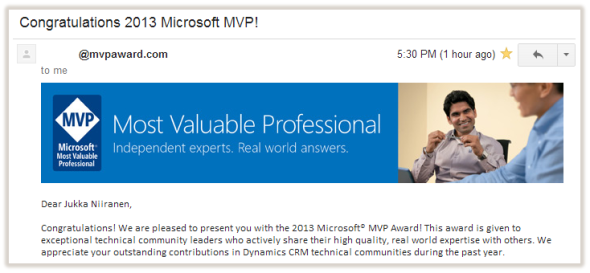
    Way back in July 2013, I received the email that informed me I had been presented with the Microsoft MVP award:

    Almost exactly 10 years later, in July 2023, I received that annual email from Microsoft for the eleventh time. It was once again a special moment. To be honest, every year that MVP award renewal day has been a special day filled with excitement.

    Yet this time it was a bit different. I knew this would be the last time I will get the renewal email. Because I had made the decision at the start of this year that my journey in the MVP program is coming to an end.

    First of all: no, I’m not joining Microsoft as an employee. For those who keep track, that has been the most obvious explanation over the years for voluntary exits from the program – with MVPs trading their blue sticker for a blue badge to become FTEs.

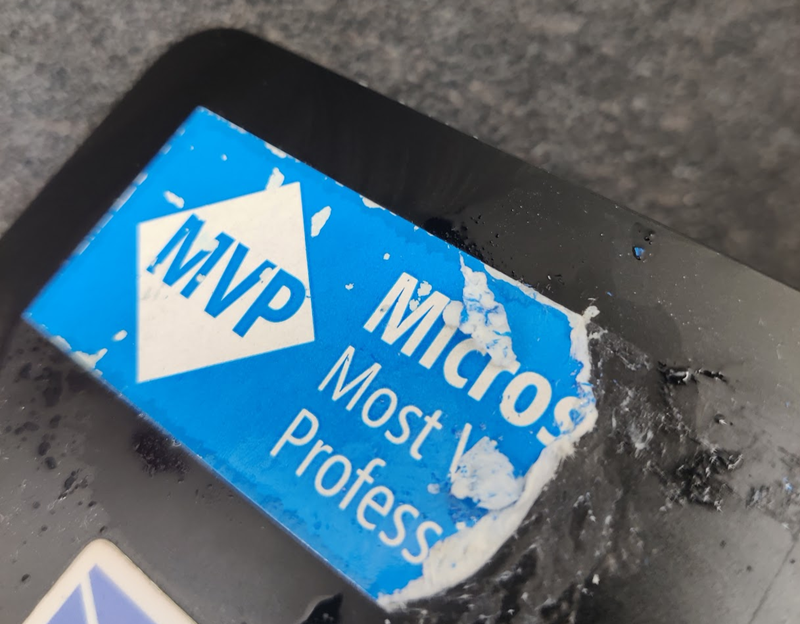
    What’s my reason then? Well, the extremely short version of it is: today I am getting less from it all than what it is giving me in return. It no longer makes sense for me to try and be a Microsoft Most Valuable Professional.

    There is obviously a lot more to it. I’ll talk a bit about it in this post and possibly return back to the specific topics at a later date. Also: since the awards are for an annual period, I want to remind you all that my current MVP award is still valid until the end of June 2024. By giving an early notice, I believe things will work out the best.

    Unlimited opportunities

    I want to start by stating this: being a Microsoft MVP has been an amazing ride. Beyond what I could have imagined. I have zero regrets for signing up to it a decade ago. It was at that time a very logical progression of what I was doing as a member of the community. Checking back on my own blog post about receiving the first MVP award, I still believe in the same things I believed at that time:

    The virtuous cycle of communities is truly a powerful force. In exchange for receiving help from complete strangers with no expectation of monetary remuneration, you start to feel compelled to give back to them in one form or another, to pay it forward. Once you do, you begin to notice that there are others who in turn are benefiting from your actions, which makes the cycle just start to spin faster & faster.

    Jukka Niiranen, fist day as Microsoft MVP, 2013

    Getting a formal network established not just with the Microsoft product team but also (and most importantly) the fellow MVPs who are deeply passionate about the same technology as you are – that really is quite something. It introduces you to this secret world filled with detailed knowledge about every possible corner of the technology you specialize in.

    You gain a wealth of new perspective on things by being part of such a network. It’s not only about learning something new – it’s also about validating that others feel the same way you do. That no matter how big the projects and budgets may be somewhere out there, people still suffer from similar issues as you do. Your reality is also the reality of many others out there. And most importantly: what you’ve personally learned about a specific corner of the product can be of considerable value to everyone else in this ecosystem.

    While the MVPs tend to be highly knowledgeable in their own domains, we must remember that the MVP award is not given out based on how much you know. It is awarded to those persons who are most active in sharing with others what they know. There’s no value to the community in what you yourself learn unless you’re willing and motivated to help others learn it as well – and without any direct financial compensation.

    This model doesn’t always work well with the traditional mindset of consulting organizations where information itself is seen as the source of value – something you need to charge money for. For me, as a person with deep beliefs in the idea of working out loud and how that benefits both organizations an society as a whole, there was never a conflict here. I didn’t start blogging and tweeting because I wanted to achieve some award status. I did it because there was intrinsic value in it for me. It was (and still is) the most natural way for me as a professional to achieve great results at work. The rest is just a nice bonus.

    Becoming a member of the club with the blue MVP logos on their blogs made it more straightforward to explain what I am & what I do. It accelerated the growth of network connections within the MS BizApps ecosystem. I hardly ever actively leveraged it myself, instead I relied on the “inbound marketing” approach of waiting for people to reach out to me. There were more than enough opportunities coming in that way for community engagements in different formats. I no longer needed to maintain my CV for work gigs either.

    The limits to growth

    Passion is something to cherish, but how do you separate it from addiction? When there is an endless source of interesting topics to explore in your professional field AND you also have amazing networks at your disposal for getting deep insights about them all – passion can become dangerous to your mental health. Especially when the boundaries are blurred in a way that makes it impossible for you to see where they used to be drawn. You may gradually forget how the world looks like outside this bubble.

    I’m sure many of the readers of my blog experience the difficulty of separating work time and personal time. If you are consuming tech blog content like this instead of just googling for answers to specific problems (or today using ChatGPT / Copilot to get the solution), chances are you’re invested in solving problems with technology far beyond what your current day job would require. You go the extra mile – again and again.

    We should of course be grateful about our situation. I honestly cannot imagine what life would be like if I had to work in a 9-5 job doing tasks that I stop caring about once the working day ends. It is a privilege that not too many people on this planet have. Even if it would so happen that AI comes for our jobs first and takes over the cognitive work that evolution had far too little time to prepare our brains for, I’m truly happy that this opportunity existed in my lifetime.

    The real danger isn’t AI, though. It is us. With nothing physical in the world setting the boundaries for how and where we can engage in this work related cognitive activity, our reptilian brain may end up on the driver’s seat far too often. External stimuli from the pervasive, growing and ever present information networks we’ve surround ourselves with to find the answers to our day-to-day questions can end up teaching us to always crave for more interactions. We get hooked on the process itself, instead of applying these tools to achieve desirable outcomes.

    The Microsoft MVP award can certainly be one outcome that many aspire to achieve based on the investments they’ve made to the community work. Yet the dangerous part is in how that is achieved. Because it is all about quantifying the impact of your community contributions. What does that mean in practice? In short, you need to keep track of all the various activities that you as an individual perform in the chosen area of expertise and then provide as much measurements about them as technically possible. Posts, videos, books, speaking, mentoring, facilitating, arranging, participating, amplifying… It all becomes a number in a system that tracks your performance.

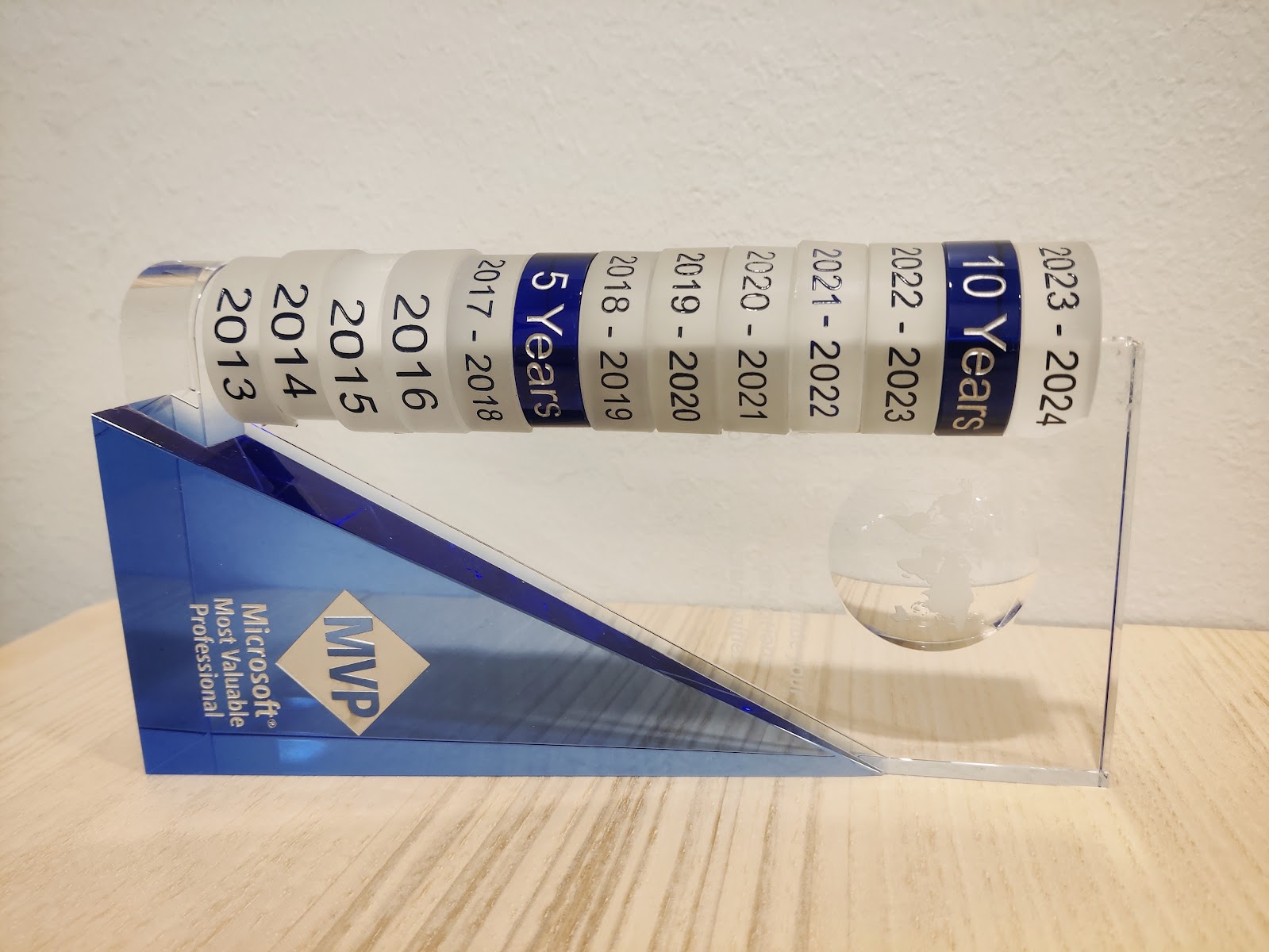
    If that sounds a lot like typical work KPIs – you’re spot on. Except it’s a measurement performed by someone who doesn’t give you any money in return. All you get is the aforementioned email from Microsoft once a year that lets you know whether you passed the bar or not. Plus a glass disc to insert into your award trophy. And that’s all the tangible things you get. Period. (You used to get physical stickers and diplomas, too, but starting from 2023 those have been cut away from the MVP program. As for swag, it never was a formal thing. So, the ecological footprint of the award has largely been about travel.)

    It’s all voluntary, of course. Since no financial transactions ever take place between the MVP & Microsoft, technically it’s all fun and games. Every year in July the award renewal email either comes or it doesn’t. You can never be sure about whether you’ve performed enough activities to be kept in the program for another year. That’s because it’s a very asymmetric relationship. Microsoft will ask all the details from you about what you’ve done, yet they won’t ever disclose how much you should have done in their eyes.

    I don’t want to complain about the system too much, though. I can totally understand why it is built this way, with no predefined criteria to meet. It is completely different from taking a certification exam, for example. For reasons that are beyond the scope of this post, there is a finite number of MVPs that can be awarded in a given year. Furthermore, there are as many different individual ways to contribute to the community as there are MVPs out there. There could never be a publicly visible “passing score” for something like this.

    That’s the system, but what’s the impact to our lives as Microsoft MVPs then? In practice, we start to live under a self imposed surveillance system. Like it or not, the awareness of a scoring process that will evaluate your performance in the community on an annual basis will change what you think and do. Community contributions become a virtual currency in the style of NFTs, in the sense that they only really have monetary value to yourself.

    The positive side is that for people who crave for speaking engagements, podcast invitations and all the other activities – there will be more than enough opportunities for those. You can contribute practically in unlimited ways in today’s combination of physical and virtual worlds. Yet the one pressing question remains: if there could always be more, how do we ever know what is enough?

    During the past 3-4 years, I have personally reached my limits to growth. I am intentionally referring to the title of the 1972 study of what happens with exponential economic and population growth with finite supply of resources available to us on planet Earth. It’s all about that one flaw in the thinking that we the people tend to fall for. We ignore the long-term consequences of our actions and focus only on the short-term benefits – and set our targets accordingly. We think “more is better” and thus keep striving for more, even after the net impact from all of it turns negative.

    Then finally, we’re forced to deal with the consequences of our own actions. We have to choose, not just strive for more.

    Choose life

    For a few years now I’ve had the constant feeling that something in my life is not quite right. As if I was an outsider observing myself going through a path that has been laid out in front of me. While there have been several moments of joy along that path, increasingly I’ve found myself not truly looking forward to anything. All I do is aiming to get through the day, so that another day filled with the same exact feeling may begin.

    In many ways, I have it all. Yet I’ve never felt as empty inside as right now. As I’ve come to understand my own reality better through reflecting on what exactly it is that I do here in this job position called “life”, the problem has become obvious. My responsibilities in here fall under these areas, in no particular order:

    • Co-founder and Power Platform Advisor
    • Father and husband
    • Microsoft MVP and community activist

    Between those three main roles that have filled my life, there has been precious little room for anything else. These have been the modes in which I have operated 24/7/365. Unless something out of the ordinary happens. Yet when planning for things that I could be doing when nothing has yet been booked, the obvious list of To Do’s that comes to my mind is always from one of the three.

    The fundamental issue is: I can’t find myself in there. At which point do I begin to exist? Not as someone who is acting in a predefined role, together with other actors, to do something expected from that role. Rather as just a human being on this planet. Just me.

    For a long time I have not been able to find a satisfactory answer to that question. It has literally turned into an existential threat for myself. I have suffered from recurring waves of paralyzing exhaustion that has severely impacted both my personal and professional lives. Not only have I become tired – tiredness has become a part of me.

    Through writing down my own thoughts in a personal journal throughout the past 4 years, I’ve been able to reflect on the many conflicts I’ve encountered via the changes in my life. How becoming a parent has flipped the meaning of “home” on its head (from a private safe space to a nest for your family members). How being an entrepreneur still doesn’t help in assigning measurable monetary value on time spent in community activities as opposed to customer work. Forces that have been ripping me in opposite directions, spreading it all too thin. Some of these conflicts have been surprises, others I’ve totally been expecting to encounter.

    Just because you can see it coming, doesn’t mean you can stop it. That applies to the deep exhaustion that has taken over me. At the time of writing this blog post, I have been on sick leave from work for several weeks, trying to regain the mental and physical strength to again perform as a normal human being out there in the world. I have probably been holding all this back for an extended period of time, not allowing myself to stop. It’s never a good time for something like this, yet I’m glad that it now became possible to take a break. Or more precisely: to break down.

    It’s hard to change the state you are in merely by thinking differently. Knowing is not the same as doing. Therefore, it has been an enlightening experience to be able to temporarily alter my everyday routines during the sick leave. On quiet weekday mornings, instead of powering up the PC and starting the working day filled with processing & responding to the many data streams that form my professional reality – I’ve done nothing. Literally I’ve just stayed on the couch, read the newspaper, listened to music, enjoyed my coffee, browsed non-work forums, opened up a book – and not had anything else on the agenda for many hours. “Doing nothing” has been an option in life that I’ve forgotten the existence of – when it comes to myself.

    Often one makes room in his life to get something done. With the aforementioned unlimited opportunities of an MVP, all the empty spaces can easily become filled with the hazardous fluids of productivity. Earlier when I have been resting, it has typically been for the purpose of recharging my battery, so that I carry on. The major difference in what I’ve now been able to experience is: there is no “so that” part. Resting because you are tired and allowing yourself to be just that, in this very moment, seems to be what it actually takes to achieve calm.

    Living in a constant state of alertness has done quite a bit of damage to myself, with no ability to properly calm down and free myself from stress on a regular basis. There is no one specific cause for this, nor is it exclusive to one area of my life. It’s the result from the entirety of it all. I don’t know when or if I will recover from it. What I do know is that this same quotation applies to my situation now, just like 4 years ago when I used it to announce my farewell to CRM:

    If you want something new, you have to stop doing something old.

    Peter Drucker

    Life after MVP

    In the end, the choice has been simple to make when put into the greater context. Of the three roles that cover the majority of my waking hours, the one that I can easily let go of is the demands of an organization that I don’t contractually work for. I don’t have any true need to meet the bar for community contributions required to be renewed as a Microsoft MVP. I can stop thinking about it and gradually free up the mental space occupied by this hugely rewarding yet highly demanding activity. It represents my past self that must now make way for my new self to emerge.

    I do acknowledge that I’ve worn the MVP hat for quite some time and many of the readers of my blog will not have known any other Jukka. I remain grateful every day for the opportunity of sharing my thoughts with a community of likeminded professionals in the Power Platform ecosystem – and that someone actually pays attention to what I have to say, occasionally even replying back to me. I intend to cherish this and not disappear from this virtual space we all share. I just won’t think about chasing MVP contribution points, rather I’ll only do what feels natural for myself.

    Will I suddenly become a “Formerly Valuable Professional” / “FVP” then? I’m pretty sure my technical skills and ability to help others won’t immediately evaporate as part of this announcement. After all, thousands of highly skilled community contributors before me have had their Microsoft MVP award not renewed, so it’s really just business as usual in this sport. Whatever it was that earned me the last 2023-2024 MVP disc on my award trophy was something I did between April 2022 and March 2023. In every league the season always starts from zero points for all the participants, with new faces entering the game as the senior players make way for them.

    I’m convinced that in the end this will be better for me. It will also be better for the people I work with. It will absolutely be better for the people I live with. Somehow I also believe that this is going to eventually be a positive change for the many community members out there who read what I type into text boxes on the internet.

    Some things will change. Possibly the content of this blog will also evolve a bit. Yet I’ve been blogging here for 15 years now and I have zero plans on stopping that. If anything, I want to reach a state where the act of expressing my thoughts becomes once again a source of energy for myself – rather than something I need to do to secure the blue sticker.

    Which reminds me that I’ve got some scrubbing to do before next July – in both physical and virtual stickers…

  • This blog is now part of the Fediverse

    This blog is now part of the Fediverse

    I have been blogging quite a while in terms of calendar time. One year ago I did some math on how much time has been spent on the blogging activity itself. This data can be found in my post “Is blogging worth it?”

    The online world around me has gone through many waves of changes. The most recent one involves the term you see in this post title, which may or may not be familiar to you. I certainly didn’t know about it a year ago. Today, I am making (or at least attempting to make) my first WordPress blog post that goes out into the Fediverse via ActivityPub!

    To put things into context and explain what & why I’m doing, let’s look back a bit on the road that lead to the rise of the Fediverse.

    Humble beginnings

    I started my first blog over on Blogspot sometime in 2007. That blog doesn’t exist anymore, yet recently Google reminded me of the image files they’re still hosting related to that blogging activity. Including this wonderful photo of the actual corner in my bedroom from where it all began:

    After I found the Blogspot cloud service too limited, I decided to go on-prem and install a version of Drupal on a hosted server somewhere. That site doesn’t exist anymore either (at least I hope it doesn’t). In 2009 I figured Drupal wasn’t designed for my purposes and moved my personal blogging onto WordPress. That specific blog is still online and this is the first post I found on it:

    That post’s content was a surprise for myself. I would not have recalled that I had originally joined Twitter for the same reason as the masses did: to follow what celebrities around the world were sharing about their life (140 characters at a time).

    A bit earlier, in 2008, I had already started another WordPress blog called “Surviving CRM” which eventually evolved into the blog you are reading right now (“Thinking Forward” at jukkaniiranen.com). The core WP enginge has remained the same behind the scenes (with countless version updates, of course) and the main contents of all the blog posts is also still available.

    Everything else about the blog has changed several times (pages, topics, visual theme, plugins, features, linked services), yet fundamentally it’s the same digital object that was born 15 years ago. With a few domain redirects that I put in place, you could have even started following my blog via its RSS feed back then and still today see this updated that I posted.

    If someone would still be using RSS feeds, that is.

    Social media boom and bust

    My inspiration for starting to write blog posts naturally came from following other bloggers. The method for this was RSS (“real simple syndication”). I started trying out different feed reader software & services (like Netvibes) before Google Reader took over the feed aggregator market.

    Then Google did what Google usually does, meaning killing its products. Presumably the monetization model for online media consumption based on open standards like RSS wasn’t lucrative enough compared to other ways Google could turn user data into something to sell to advertisers. When the hugely popular Google Reader was discontinued in 2013, no similar feed aggregator service took its place.

    The online masses turned to social media services instead. Blog posts were no longer a dedicated feed, now they were just a part of the updates presented via the social graph of users you followed. The likes of Facebook and Twitter owned this graph and realized how much more profitable it was for them to control it – rather than just showing a chronological feed and allowing users to categorize content. Enter the age of the algorithms deciding what the users were seeing.

    Today, the social media as we came to know it in the golden age of Facebook and Twitter is slowly yet surely dying. I had remained an active Twitter user for over a decade, despite of the decline in organic network content and the rise of algorithm pleasing clickbaits and political outrage filling the feed. After seeing the massive damage that Elon Musk managed to create when taking over on October 27th 2022, I decided to stop posting new content on Twitter on November 18th.

    I knew that the things which had been broken in the process, primarily user trust and the sense of community, would be unlikely to ever get fixed again. To make it easier for everyone, Musk eventually decided to kill also the Twitter brand and replace it with X. That cross shape is a very fitting symbol for the graveyard where the blue bird was laid to rest.

    I’m kind of happy to see this, as it draws a clear line between what Twitter was and what its new owner wants it to be. I wouldn’t want my online identity to be associated with the latter one. No, I haven’t deleted my account nor tweets, because I also don’t believe in changing the world by erasing the past. We can only move forward in this life.

    What comes next?

    Just like there wasn’t a new Google Reader to take over the service that was killed, I don’t believe there will be a new Twitter to take the place of what is now called X. Sure, many will be attempting to build the exact same thing, including the earlier Twitter CEO, or the established social networks like Instagram and TikTok.

    “Insanity is doing the same thing over and over and expecting different results.” So what if some new mobile app comes along and captures the market share for the time that we used to spend on Twitter? The chances of history repeating are high, thanks to the natural life cycle of online platforms that leads to enshittification.

    “Here is how platforms die: first, they are good to their users; then they abuse their users to make things better for their business customers; finally, they abuse those business customers to claw back all the value for themselves. Then, they die.”

    Cory Doctorow on “Tiktok’s enshittification”

    The early days of blogging did not provide everyone an easy onboarding experience nor an streamlined UX for casual content consumption. Yet there was none of this shit. In exchange for all the convenience and endless dopamine shots that the global, proprietary online platforms give us, they will also serve you an ever growing daily dosage of shit on a golden plate.

    At the same time, blogs haven’t technically gone anywhere. No, you’ll never have every TikTok user create their own blog. That is not the goal because there is no one to set the goals but us. If you’re like me, you never even set any goals in life to begin with.

    As long as there is a sense of community being established and ideas are exchanged between people who you wish to interact with – that’s a pretty good life to live online.

    Yet not everything can be a blog post. We can’t pretend to be professional journalists working for major newspapers, writing formal and polished walls of text as the only means of communicating with the outside world. The idea behind social networks isn’t fundamentally broken – only the business model that leads to their inevitable enshittification. What was once commonly called “microblogging” in the distant past has certainly proved its value in the act of idea exchange and information dissemination through peer networks.

    Once I realized that Twitter was over for me, there was a proper incentive to think about what other tools are there for this type of communication. I saw my network exhibit interest in Mastodon and decided to give it a go. I managed to get past the infamous “pick a server” question, created my user account, searched for other interesting accounts to follow and gradually settled in. Today, it feels like a very natural home for one of my many online identities.

    Mastodon has around 2.1 million monthly active users. As such it won’t be a threat to any of the networks run by publicly listed tech giants. Also many VC funded startups in this market may well be able to burn cash for user acquisition in ways that Mastodon will have no possibility to match – by design.

    In the end, it’s a decentralized social media platform that no single deranged billionaire can acquire. It’s just a bunch of regular folks running a few servers that facilitate the federation of user feed content between them. There are no ads to be found in Mastodon feeds because the whole concept does not exist in that technology. Content isn’t shown to users based on any algorithms because again, that’s not a thing in Mastodon. In both good and bad, what you follow is what you get.

    Hello ActivityPub

    RSS is a protocol. Twitter at some stage talked about their ambition of becoming a protocol for the internet, but quite obviously they didn’t move into that direction. Now, ActivityPub that powers Mastodon and much of the Fediverse is an official web protocol with a W3C stamp on it. It has also gained interest from commercial players like Meta and WordPress.

    Protocols are cool because they are not dependent on any single organization. You can send email from your Microsoft 365 Outlook to a Gmail address and all of the core message content will be similar in both services. The UI, the features and the email experience in general can be different (especially with both MS and Google “reimagining” office applications with their own flavor of generative AI). You can innovate on product development and also the commercial model while still preserving interoperability with other services that use the same protocols.

    So, if ActivityPub is the thing that allows you to both read and publish content on a social network like Mastodon, how does it relate to blogging? Is it just like Twitter you still had to tweet out the links to your new blog posts and make them visible to the followers of your Twitter profile? Well, it’s a bit different – and it’s also still very much work in progress.
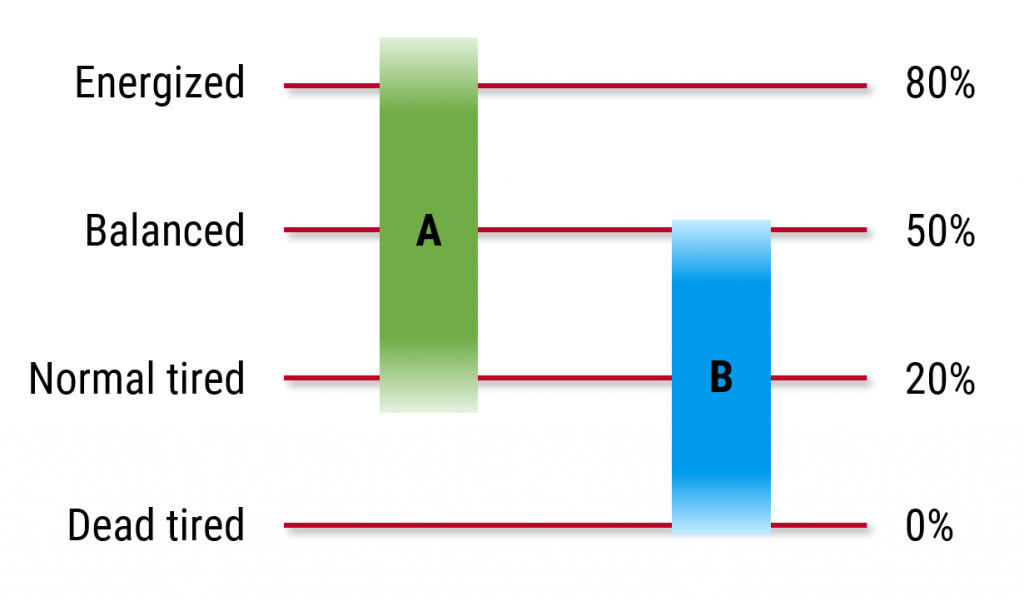
    In March this year the ActivityPub WordPress plugin was acquired by Automattic, the folks behind WordPress.com (and also Tumblr). Presumably the experience will become much more integrated with WordPress in the future, but we can already deploy the ActivityPub plugin on our self-hosted WP instances. Here’s what the settings look like on the admin side for my blog:

    "People can follow you by using the username Jukka@jukkaniiranen.com or the URL https://jukkaniiranen.com/author/jukka/"

    What’s that all about? It means that when using a service like Mastodon, people can find this blog by searching for “Jukka@jukkaniiranen.com”. As an example, when using the Elk web client for Mastodon and logging in with my @jukkan@mstdn.social account, I can perform this search in the app and land on a profile that represents my blog. It’s an independent thing on the Fediverse that users can follow, even if they don’t care about the rants I post on my “main” profile and just want the long-form content like this blog post.

    It’s kinda cool and confusing at the same time. Which is a lot like setting up a blog was 15 years ago, or what Twitter was in 2009 when I signed up for it. That’s part of the reason why I’m excited about the recent rise of federated online services. You don’t have to be a geek to start using them, but it definitely helps.

    Is ActivityPub the replacement for RSS then? I don’t quite see it that way today. However, for the majority of the current online population who have never subscribed to an RSS feed to begin with, I see a lot of potential in this new protocol to revitalize the social web. To take back control from the mega platforms that are doomed to follow the path of enshittification. To spark up new innovation in both the established web players (WordPress, Mozilla, Medium etc.) as well as make room for new projects to find an audience outside the walled gardens of X, Facebook and the likes.

    Things won’t magically become better with decentralization. Sustainable business models or consumer grade UX aren’t easy to come by with no direct ad revenue. If the popularity of a decentralized service grows, many problems like content moderation or infrastructure scaling will certainly be as hard as on the centralized side. From Twitter to Mastodon, from Instagram to Pixelfed, from Reddit to Lemmy, from YouTube to PeerTube – if the same people move from one technical platform to another then so will the problems caused by people.

    We should not stop moving, though. We should not accept that the one party who holds the most data (generated by the users) gets to decide on the rules. We may not be able to avoid using many closed systems with ad revenue based business models. Yet we must ensure that our content is not captive inside only such systems.

    Evolution is all about competition, about having a choice. For us users of the web to have that choice, we must A) use the power of owning our content, and B) put in the effort to learn and support new tools.

    The best time to start a personal blog was 15 years ago. The next best time is now. The best time to join Mastodon was before the Bird died. Today is another fine day for it. Learn about it from Fedi.tips and follow me (@jukkan@mstdn.social) and this blog (@jukka@jukkaniiranen.com) if you get there!

  • Your mental battery and the power of living

    Your mental battery and the power of living

    Earlier this year I wrote about how I became tired. I used the metafor of a mental battery in describing the ranges in which my battery charge level operated. Via the illustration below, I described how I had changed from a Zone A person into a Zone B person:

    Zone B means I now find myself unable to reach the same “Energized” level that I had earlier considered to be a normal state in life (when in Zone A). Instead, a new normal had formed, which included regularly experiencing a complete mental battery drain (0% charge). This was repeatedly pushing me into the “Dead tired” level, at which point normal mental and physical operations could no longer be sustained.

    Ever since that one February blog post I have resumed mostly my normal blogging agenda of covering tech topics from the Power Platform ecosystem. A few weeks ago my “On being tired” blog post was featured on Hacker News. My blog site gained 10k+ brand new visitors and there were also great comments posted on HN.

    Maybe that was a sign to keep exploring how my mental battery works, and what could be done to reduce the impact that tiredness has on my life. So, here we are half a year later with the next blog post on this topic.

    The mental battery can charge itself

    The battery in our phones today is a simple in/out system. Power flows in from the charger chord we attach to it. Power is consumed by the activities that you do on your phone, meaning in practice running different apps. Do them long enough and the battery is empty, at which point you must plug it in again for new power to flow in.

    The mental battery in my head is a bit more complex. Sure, there are actions that are clearly needed for charging it, like consuming nutrients and sleeping, which resemble the direct power input for a phone. But whereas with phones every app we use just consumes energy, my head also includes apps that generate new energy.

    Imagine if you had an icon on your phone’s start screen that said: “charge battery”. Then you’d just click on it and the power reading on the top of the screen would start growing instead of reducing.

    We’re not quite there yet when it comes to the gadgets us humans have built (kinetic charging would need to improve quite a bit). Nature, however, has built us in a way that makes this self-charging possible.

    In fact, from what I’ve observed, such apps i.e. human activities that both consume AND generate high amounts of energy are mandatory for living life to the fullest. I don’t think we can thrive via pure charging activities alone, nor by minimizing our energy consumption.

    Resting will make you less tired, but it will not take you to the top level of “Energized” in the mental battery scales (Zone A). To reach those heights, you must be ready to burn a considerable amount of energy first. This is what makes it so hard to recover from a state of deep tiredness.

    Energizing activities: reaching escape velocity

    When searching for ways to regain higher energy levels for my mental battery, I’ve come to the conclusion that the formula behind a successful charge isn’t simply A + B = C. It’s not like “do this then you’ll gain more energy”. The very same activity that can give you great joy in life and act as an invaluable mental energy source can equally turn into something that leaves you completely exhausted.

    Why can the results differ so wildly? Based on how I have personally experienced it in my life, the mental energy consumption/gain is not tied to a specific activity alone. It’s often not even about the surroundings, such as who you are with or where you are doing it. A critical variable in the formula is: how much battery do you have left right now?

    I drew the following illustration to explain the phenomenon to myself (and to you all) via the metaphor of escape velocity. Let’s say that the potentially energizing activity in life would be flying a rocket to outer space. To leave planet earth behind, the rocket must reach a speed that allows it to escape the gravitational influence of the planet.

    If the rocket has enough fuel and a powerful enough engine to reach this speed, it can continue its journey to the final frontier. If the speed remains below the critical point, there’s no escape & it’s going to fall back to earth. (That’s my simplification of things – without understanding anything about astrodynamics.)

    The more power you’re carrying in your mental battery, the more confident you can be about succeeding in these potentially energizing activities in life. A Zone A person will often be ready to push him/herself far enough to escape the pull of the gravitational field.

    When you’re flying around in your life as a Zone B person whose battery can only achieve a 50% charge at max, the risks of not reaching that escape velocity are many times higher. It becomes a struggle to reap the benefits from potentially energizing activities. Gradually all activities start to resemble one another: just an endless pile of tasks, all demanding energy from you and unlikely to give back much.

    Pacing yourself with the mental energy spend that’s in right proportion to your current mental energy reserves is the key to survive under these conditions. You need awareness of the fact that you just can’t do what you used to be able to – not right now, not in the same quantities as before. Because you’re tired.

    Feelings of disappointment will be common – and justified. Yet it’s important to understand that this does not have to be permanent. All the activities in your life didn’t suddenly change from energizing into exhausting. What changed is the state in which you usually encounter them, as a result of having less mental energy reserves at your disposal.

    I find that this separation helps me in dealing with outcomes from activities that I might normally enjoy but now find difficult to carry out without a nagging feeling of stress. It allows me to have an internal monologue about expectation levels.

    If my body was physically ill, like having high fever, I obviously wouldn’t expect it to perform on the same level as in my normal daily duties. Today there isn’t a similar accurate measurement available on the mental battery charge level. This doesn’t mean it wouldn’t have just as big an impact on my abilities.

    You don’t need a data point like a temperature reading to know when things aren’t well. What I think you do need or can at least benefit from is having a concept that puts your feeling and wellbeing into words – like the mental battery level. You first use it for your internal discource, then eventually also for communicating to the world outside your head.

    Are you living or are you just alive?

    When I began my PowerPoint drawing exercises of exploring the dynamics of tiredness, I borrowed the famous model of the project management triangle and adapted it into the context of mental energy. In its original format, this triangle deals with the inherent constraints in project work: time, cost and scope. These three dimensions determine the total quality of the output that can be achieved, i.e. the size of the triangle.

    My version deals with the constraints of living. Not the entirety of life itself, rather the feeling of living life to its full potential. Just like in the realm of projects, if you’re happy with things being the way they are, you don’t need a project. Yet if you want to see change taking place and you want to achieve a particular aim, then a project is a common method to organize the effort required in getting to that new reality.

    Similarly, merely being alive is quite different from actively living your life with a sense of aim and purpose. We go through the act of existing from one day to another, yet all of us surely can recognize those moments or periods of time when we have truly felt alive instead of just being alive. To me that is the outcome from what I call living.

    The dimensions of the triangle that define how much of this living we are able to experience are quite similar as with projects. First of all, time is definitely a key constraint that we can’t escape while existing in this physical reality of ours. Second, there will always be constrains on the amount of resources that we can consume for our acts of living a life (considered as budgets in project management).

    The third constraint is unique. If resources reflect the amount of external energy that we have available for living a life, then there must be an internal counterpart to it in our equation. This is the mental energy we have at our disposal. Also known as the charge level of our mental battery.

    Here is the resulting triangle:

    Just like the battery metaphor, this triangle of living is useful as a tool to analyze what is holding us back. Where do the constraints come from that determine our ability to live life as we can, compared to the ideal state of how we would ultimately want to live it if no such constraints existed.

    As I’ve come to better understand the escape velocity concept, the way how achieving a high level of mental battery charge occurs via activity that initially consumes energy, it has allowed me to analyze cause and effect of tiredness. What it is doing to my triangle of living. Here’s the triangle that I drew half a year ago as a self assessment:

    First of all, I’m not experiencing any significant constraints to living by lack of resources (external energy). Sure, there has been recent tension on this dimension, too. The cost of living from having a new family member in the house, giving up the steady pay check and becoming an entrepreneur instead, the insecurities arising from the pandemics, the wars, the environmental crisis around us… There are valid reasons for financial cautiousness, yet I don’t feel this would be something radically different from the times before.

    Time is something most of us struggle to find in our daily lives. The maniacal search for higher productivity in modern business and modern society reflects upon us as a demand to optimize every bit of time we have to spare. Yet if we stop for moment to think about it, we may realize that we’re not actually short on time. Time is all we have. I can’t recall who said it but this thought has stuck with me: “people complaining about the lack of time in their lives is like fish in a tank complaining about the lack of water”. At the end, we’re both literally swimming in it.

    I do feel it, though. The relative change in how much time I perceive to have for me to spend on myself is considerably lower. There are now more things that come first, taking their cut of the daily 24h time budget, before I get to decide what I’d like to do with it. The amount of water in the tank is the same, there are just more fish swimming in it now. The state of things isn’t objectively better or worse now, but it is factually different. The space to maneuver is smaller and I feel it every single day.

    Which leads us to the final constraint in the triangle of living: mental energy. The internal ability for us as human beings to take charge of our destiny. To be the driver and not the passenger. We need it for achieving the inner goals we have set, to reach new heights. Even more importantly, we need it for keeping us rolling steady on the road, avoiding hazards. We must not fall asleep at the wheel – which is what mental exhaustion can easily cause.

    Constant tiredness can be crippling in many ways. Not only does it stop you from achieving the sensation of living your life to its full potential. It also weakens your grip on the wheel and makes it more likely for you to crash. Again and again. Like I wrote in the first post a while ago, there’s a real risk that instead of just being tired, tiredness becomes you. It starts to define what your life is and could ever be.

    The three constraints need to be treated not as the permanent boundaries of what your life can be but rather what is achievable today. By being more aware of the capacity of your mental battery, you can adjust the world around you to be enough instead of too much. The goals should be:

    • First of all, avoid ending up with a dead battery (0% mental energy).
    • Find energizing activities where you can realistically reach escape velocity and end up with a higher charge level after them.
    • Take steps back whenever needed (cut the looming energy drain), take steps forward when possible (well charged).

    That’s the balancing act. I’m not sure I’ve got the details figured out yet on how to maintain this balance in practice. I do think I understand the dynamics behind my mental energy a lot better now, though. Which is exactly the purpose for me to keep writing this blog.

  • The future of Power Platform – Steve has a chat with Jukka

    The future of Power Platform – Steve has a chat with Jukka

    If I had to choose only one blog I could follow in the Microsoft Business Applications ecosystem, it would be Steve Mordue’s blog.

    Why this blog? Because you’ll learn more about the true business of BizApps in Steve’s blog than you would from reading all the partner channel materials MS puts out there.

    It’s not just the unfiltered opinions and provocative comments from Steve that make the content unique. He manages to get Microsoft leaders like Charles Lamanna or Ryan Cunnigham speak openly about product roadmap and business strategy whenever he has a chat with them. It’s the kind of material you couldn’t hear from anywhere else – at least not without an NDA.

    When MVPs used to get together

    One unfortunate impact that COVID has had on the Microsoft MVP program is that our annual MVP Summit events have gone virtual. Even though the world is slowly opening up to physical events again, at the same time the world economy is sinking. This has pushed even the biggest tech corporations like Microsoft to announce cuts on their internal travel, training and event budgets. This means the next Summit, which will be my 10th, is probably done over Teams again.

    It’s better than nothing, of course. The Microsoft product team members do put in effort to share their plans with the MVPs and are open to receiving feedback from us, since the protective shield of the NDA agreement covers both digital and physical worlds. Making things digital can also help scale the amount of tech content that can be made available as well as the means through which to consume it.

    What the virtual events cannot in any meaningful way compensate for is the lack of informal interactions between MVPs. When you can’t go grab a drink with the smartest people in the business together at JOEY Bellevue, a large part of the Summit is wiped away. Sure, the product group interactions are valuable, but the MVP-to-MVP interactions are priceless.

    No, you can’t replicate this in the virtual Summits. When you’re first sitting 6-8 hours alone in front of your computer, from 6pm onwards after your normal working day, staring at the Teams screen – trust me, you’re in no mood for “virtual drinks” after that.

    Events quickly turn into non-events due to the lack of any changes in the physical surroundings. No travel costs, no jetlag, only a little loss of billable work during the week – it’s all very productive, to the point where you start asking yourself: why did I ever consider this “fun”? It sure helps to contribute to the feeling of being constantly tired.

    Time to move forward again

    You shouldn’t become too bitter about things not being what they used to be. The older you get, the more stuff like this is going to come at you every single day. You don’t have to like it, and you certainly are entitled to feel what you feel about it. That’s where our entitlements pretty much end, though.

    Choosing how we react to change is pretty much the essence of life – and business as well. This is an area where both me and Steve seem to have similar ideology that drives our behavior. If you know the only certain thing in life (and business) is constant change, it’s better to be someone who’s pushing that change to happen instead of becoming the object that must endure the change pushed upon it.

    So that’s one thing we share in addition to our hairstyle. With nothing more as a prepared agenda, we opened up Teams and stated recording a session on Steve has a chat with Jukka. It’s as close to an MVP-to-MVP informal interaction you can get to without flying to Redmond.

    You can listen to the audio track on Steve’s website or on Spotify / Apple Podcasts. Alternatively, you can watch two BizApps MVP baldies on your screen for one hour via the embedded Vimeo clip below:

    https://vimeo.com/742784310/7101b864c1

    Some of the topics we discuss with Steve include:

    • How different the world looks like when you choose to go all-in on Power Platform instead of being a Business Applications generalist
    • The struggle of convincing customers that a $5 app can actually give them more value than a $95 app
    • How to get the IT on board with the citizen developer movement and turn governance into an enabler instead of a blocker
    • What would be the ideal support model for a platform-first business that would reduce the customer/vendor tension and get everyone on the same side
    • Why Dynamics 365 partners have very little financial incentives to move their capacity into true low-code business
    • The difficulties in making the Fusion Team story sound attractive enough for pro-devs to find their place in the low-code world
    • Why Teams is the most important platform Microsoft has and why it isn’t yet quite the right platform for wide scale business applications usage

    That’s just a few things I remember off the top of my head, after our awesome chat session. So, if you’re interested in hearing what us two loudmouths think the future of Microsoft Power Platform is – you know what to do.

    There’s no sponsors in any of these chats nor either one of our blogs, so I’ll just leave you with two commercial call-to-actions:

    • Check out RapidStart CRM to experience what you can do with just a $5 Power Apps Per App license (the CRM part comes free, courtesy of Steve).
    • To keep up with what our 100% Power Platform focused team of pretty amazing experts is doing, subscribe to the Forward Forever Monthly newsletter.
  • Is blogging worth it?

    Is blogging worth it?

    I saw this question posted on Hacker News a few days ago:

    Ask HN: Is having a personal blog/brand worth it for you?

    This topic really caught my attention. I read through tens of answers on the thread and that got me reflecting on my own journey as a blogger.

    I launched this blog as “Surviving CRM” back in 2008 and switched it to a more personal “Thinking Forward” blog in late 2019 (to say farewell to CRM and move towards the broader low-code theme with Microsoft Power Platform). These 14 years provide me some perspective on the topic of personal blogging and also building a personal brand along the way.

    There were three subquestions in the Hacker News post that I’m going to try and provide my answers to.

    Q1: Does the time spent writing feel worth it to you?

    I can never know the true time I’ve spent on blogging. Not in total, and neither on average per post. They only thing I can really measure is the amount of posts & words within these posts that I’ve written over the years. Here are the annual stats from my blog, up until July 2022:

    Looking at the total number of words I’ve posted in my blog and using 250 words per minute as the estimate for reading time: it would take you ~25 hours to read everything I’ve written in my blog.

    How about writing those words then – how long might that have taken? I won’t go to deep on the scientifical part here and instead use the first figure that Google gives me for writing in-depth essays or articles: 5 words per minute. This would be roughly 100h per year in my case.

    That’s only 2 hours per week. It goes nowhere near the time I’ve spent on doing the research required to come up with the final output for a blog post. Reading MS documentation/blogs and community content, testing the features in real live systems, connecting the dots in my head, having online discussions on the topics. The blog posts really are just a tip of the iceberg.

    Let’s just say that I may have spent one working day for each week of the year, for the past 14 years, to do all the work required to produce the output that you see here in my blog. Essentially a 6 day working week, to come up with content that has been posted online, for free.

    That may not immediately sound like such a great deal when illustrated this way, but let me tell you: that 6th day of the working week has always been the most rewarding one for me personally. Thinking about the total number of days, blogging with all the community work included comes pretty close to my longest employment relationship duration. I guess it’s obvious I wouldn’t have sticked around this long then if it wasn’t a whole lot of fun.

    Right at this moment, when writing this “meta” blog post, I’m on my 4 week summer vacation (the Nordic way), at a summer cottage in the middle of nowhere. I’m looking over a peaceful lake view, with a glass of rye stout from Amager Bryghus next to my laptop. Even in situations like these I sometimes choose to write on my blog because it brings me more joy than it consumes time. It’s a hobby that has grown into an element of life that sort of defines who I am. Well, not everything of course, but an important slice of me.

    Does blogging become faster the more you do it? Yes and no. Experience helps you in the areas that are repeatable, meaning the process around writing and publishing blog posts. Yet there’s no point in trying to minimize the time spent on the act of blogging itself.

    Working as a consultant who bills customers by the hour, you can sometimes get too wrapped up in the concept of productivity. More bang for the buck / value for the customer = more outputs in less time, right? That is often not true – even in billable work. Even less so when you are doing things for your personal growth.

    You see, when blogging for yourself (i.e. not because someone at marketing asked you to), it’s not a requirement to be very efficient in how you spend your time. I don’t have a budget for how many hours I can spend on this. Yes, the real world around me (family, friends, life) needs my time, too, but outside of my official working hours I don’t keep track of time. Things take as long as they need to take.

    To me, writing is thinking. Your thinking is likely to improve if you spend a bit more time on it, rather than just taking relying on your gut reaction and assuming that’s all your brains could ever achieve.

    In the long run, blogging has probably saved me time in more ways that I could ever measure. Not just by teaching me skills that would have been difficult to acquire otherwise, but by creating something that helps me on a daily basis: my network. Which leads us to the next question:

    Q2: Did it help you to get noticed/ find jobs or other opportunities?

    After the first few years of blogging, I’ve never had to look for a job. The opportunities always came to me, without my initiative. You could compare this to the commercial activity of inbound marketing. The effort is spent in advance, building up the audience, which in turn then reduces the need for outbound activities. So, the active work is still done, only in a different order than traditionally.

    None of what has happened to me in my professional life for the past decade would have ever become real if I didn’t start blogging. Through both writing my blog posts and amplifying the posts of other community members, I’ve succeeding in building an incredibly valuable professional network. Putting my words out there has been the single best career move I can think of.

    On year 6 of my blogging career, I received my first Microsoft MVP award. 2022 marks my 10th year in the program. Gaining access to not just the MS product team behind Dynamics 365 & Power Platform but more importantly, the other MVPs who are as passionate about their craft as I am – that has been undoubtedly a turning point for me.

    At the beginning of my blogging journey I wasn’t sure if this MVP role was a path I actually wanted to pursue, though. My top priority in personal blogging has always been to honestly write about both the good & the bad that I encounter in Microsoft’s product offering – so that others can learn from my real life experience. Fortunately, having an NDA with MS hasn’t resulted in me having to apply a filter on how I talk about things. Just the “what” when it comes to non-public info, of course.

    While writing your posts and reflecting on the lessons you’ve learned is an major part of blogging, I consider an equally important side of it to be the active participation in your community. A major reason why I originally started my own blog was because I wanted to give back to the community who had helped me get started on my career.

    Already back in 2005, the blogosphere around Microsoft CRM 3.0 was what really set this technology apart from many other CRM competitors at the time. A global community can truly be a force multiplier, allowing newcomers to challenge the more established players out in the market. I believe this very same phenomenon plays out in the area of citizen developers today, with the community helping each other to democratize technology and making previously impossible things possible to a whole new (and bigger) audience.

    Blogging may not be as trendy today as it was 14 years ago when I started. With today’s social media channels having replaced the old Web 2.0 era tools like RSS readers in how content gets consumed, aspiring new writers may well ask themselves: “will my posts on an independent blog site get me noticed anymore, or should I just use a platform where I already have a network”?

    I recently checked what my personal LinkedIn stats looked like for the past 12 months (using Shield Analytics). By making 102 posts during the past 365 days, I’ve received over 500k views for them on LinkedIn. In my WordPress blog I’ve tracked only 130k views during the same time period. While my blog traffic hasn’t been growing for a few years anymore, the year-on-year figures from LinkedIn are mostly green:

    The way I see it, a page view on a blog that you own & control is many times more valuable than what LinkedIn might track as a “view” of a single post that a user scrolls through in their endless stream. The impact is likely at least 10x higher when a visitor opens a web page dedicated to your writings and spends a minute or two on it.

    Besides, a fair share of the LinkedIn posts I’ve made have been to share a summary of my blog post. This site right here is the “read more” destination where I actually get to talk with the audience who finds the topic interesting enough.

    At the end, it’s not about the “likes”. Social media apps that gamify your clicks will always show you stats that are more compelling than a blog site like WordPress. Don’t get distracted by these. (I know I do, so I’m not saying it’s easy…)

    “Couldn’t you post longer content as LinkedIn articles, though?” While it might be tempting for authors without an existing blog to start with the social media platform, I’d encourage you to ultimately own your words. Don’t become a slave to a network that primarily thinks about its own algorithms and business models for making money from your content. Exploit them wherever they serve you, but don’t become merely a servant to them.

    Q3: Do you learn something new from it?

    All the time. Even when the blog posts I write are just about documenting a discovery that I have made during a customer project, it helps me go far beyond what billable work would justify. Instead of just solving this one problem and jumping straight to the next one in the queue, I can spend a moment actually connecting the dots in my head.

    Establishing links between the synapses in our brain is physically how learning happens. I find that the act of turning my thoughts into writing, arranging them on the screen and especially linking to related articles is the most effective way for me to learn. With this in mind, Q3 sounds a bit strange to me when rephrased: “do you learn something new from learning something new?”

    You see, writing the blog post is not the end result of a carefully planned process (for me at least). Quite often the act of creating a draft post is when you really start to think. If you’ve ever heard about rubber duck debugging, then the idea is exactly the same. By explaining a problem to someone else, be it an inanimate object like a rubber duck or virtual object like a blog, you can often solve that problem without anyone providing you the answer.

    Even the mere intent of “hey, I could write a blog about this” can start the mental process of organizing the details better in my head. Now, if blogging really would be such a magical formula to solve all problems, why not do it even more? Looking at my annual blog stats, why do I sometimes only write one post per month? It’s because all mental processes reserve cycles from your mental CPU (the brain).

    Having a blog challenges you to put your thinking in writing. It’s not all fun and games, though, as you will inevitably get stressed at times about “I should be blogging about X, Y and Z, why can’t I ever get these things done”. The sad part is: you’ll never get over this feeling, no matter how much you do blogging.

    Another fact of life is that you’ll continue to encounter other community members who write more posts, better posts, learn new things faster, get more readers, and so on. Spending years on writing blog posts on a specific domain topic doesn’t protect you from the impostor syndrome. A growth in the amount of exposure your writings get can even lead to scenarios that induce long term stress.

    The dark side of community leadership recognition programs like the Microsoft MVP award is that they are founded on metrics of your impact. When I said earlier that personal blogging is an act where I don’t track the hours spent on it, in reality I still do need to log the outputs as community activities into Microsoft’s system. If you don’t do enough measurable activities to prove your impact to the community, you will no longer get awarded on July 1st next year.

    Q: How much is enough? A: You won’t know, so nothing is ever enough.

    During the past couple of years, I’ve felt very tired at times. Going through COVID, starting a company, getting a kid – many factors around me have contributed to the low mental energy reserves. I’m certainly not the only one with such experiences. I’ve heard from many people in my network that they’ve recently been asking themselves the question “is the MVP Award worth it?” So have I.

    If the target would be to keep hold of the award, then maybe this type of blogging that I’m doing wouldn’t be the best choice. Lengthy articles that reflect on the state of the ecosystem, for example, aren’t exactly the type of material that will gain a lot of Google hits. Shouldn’t I rather be answering “how to” questions that some one is typing into the search bar? Why not just tell the audience “here’s how to do X with Y”, one feature after another?

    Also, shouldn’t I rather reuse my content in more than one context, to gain more entries I could list as my community contributions for Microsoft to see? Instead of publishing a single blog post, couldn’t I format it as a presentation that I could then recycle in multiple virtual events that exist in the global Power Platform community?

    Such a “shouldn’t I” list quickly becomes endless. It can turn your hobby into an energy drain rather than a source of energy. It is of utmost importance that you can be honest with yourself and identify why you should say no to things.

    • Should I do videos? No, I hate skimming through them for answers and would always read the text version instead.
    • Should I do more podcasts? No, I practically never listen to them since I love the sound of music, not the sound of someone talking.
    • Should I submit sessions to community events? No, I have no motivation for attending virtual events and my ability to travel to live ones is limited.

    How does all this relate to the original “what do you learn from blogging” question? It’s all about learning who you are and what you love doing. Knowing what separates you as an individual from the different crowds that you interact with.

    What this means is: I couldn’t ever give an answer on whether blogging is worth it to you. The reasons, the benefits and the price of blogging that I’ve talked about here are subjective and apply primarily to me. I would surely encourage you to give blogging a go if some of these experiences and thoughts resonate with you. At the same time, be sure to remain honest with yourself and stop writing on your blog if in the long run it takes more than it gives.

    Where I’ve found blogging to be an invaluable tool is in finding your own voice. It’s not quite the same as keeping a personal diary would be, but if you’ve ever found putting your thoughts into writing as an exercise you enjoy, there might be something here for you to gain.

    Who knows what your brain might say to you if you’d give it a brand new channel of communication. Such as a blog.